
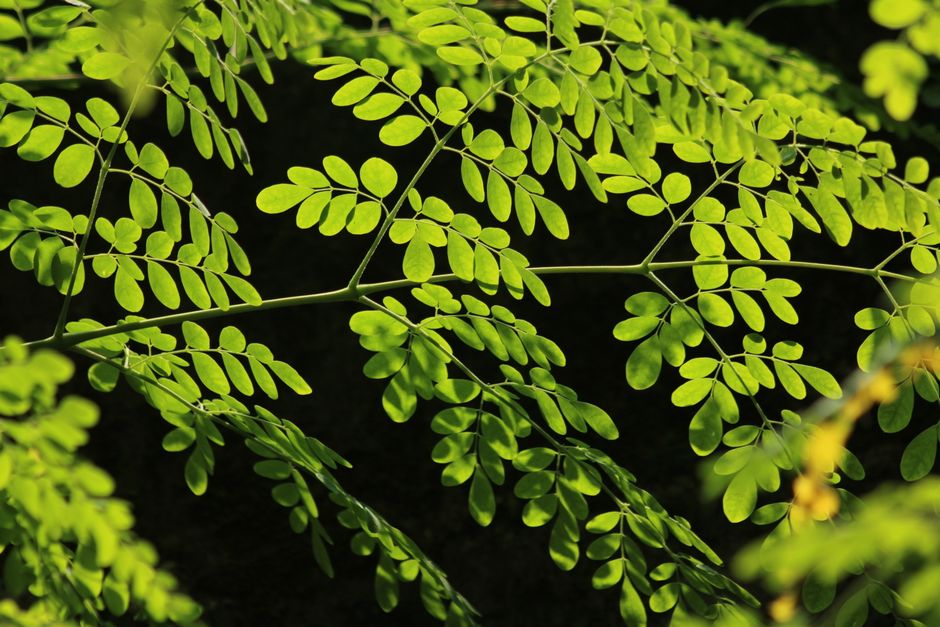
Moringa is a tree, and almost every part of it gets eaten or used as medicine in parts of Asia and Africa. Its leaves are the main event: they are unusually dense in several vitamins and minerals, and they contain plant compounds that have drawn research interest. What moringa can realistically do is add meaningful nutrition to a diet and supply antioxidants. What it cannot do, based on current evidence, is treat or prevent disease.
The gap between those two statements is where most marketing lives. You will see moringa sold as a cure for diabetes, inflammation, infections, and fatigue. Some of those claims trace back to laboratory studies on cells or animals. Very few rest on large, well-controlled human trials. This article separates what is well established from what is early, and what is simply not supported.
What Nutrients Does Moringa Contain?
Moringa leaves are genuinely nutrient-dense, and this is the best-supported fact about the plant. The USDA maintains nutritional data for raw moringa leaves, and the numbers are striking for a leaf vegetable.
Per 100 grams of raw leaves, you get roughly 9 grams of protein, 185 milligrams of calcium, and amounts of vitamin A and vitamin C that compare well to many common vegetables. The leaves also supply iron, potassium, and magnesium. Dried leaf powder concentrates these nutrients by weight because the water has been removed.
Two practical points matter here. First, nutrient content varies widely depending on the plant, the soil, how the leaves were dried, and how they were stored. A powder tested in one study may not match the bag you buy. Second, nutrient density is not the same as a therapeutic dose. Eating moringa as a vegetable is one thing. Taking a capsule is another.
For readers in the US, moringa is usually bought as a dried powder or a supplement capsule rather than fresh leaves. That changes the picture somewhat, because the drying and processing steps affect how much of certain vitamins survive.
Is Moringa a Complete Protein or a Superfood?
Moringa is not a complete protein in any practical sense, and “superfood” is a marketing term with no regulatory meaning. The leaves contain all nine essential amino acids in small amounts, which is why some sources call it complete. But the total protein per serving is low, so the amino acid profile matters little in practice.
Calling a food a superfood implies it does something other foods cannot. Moringa does not. It is a nutritious leafy vegetable, comparable in role to spinach or kale, with a somewhat different nutrient mix. That is a fair description and a useful one.
The more useful framing is this: moringa is a good food in places where leafy vegetables are scarce or expensive, and a supplemental powder in places where they are not. Neither use makes it a superfood. Both make it reasonable.
Does Moringa Lower Blood Sugar?
The evidence that moringa lowers blood sugar in humans is limited and mixed. Some small studies in people with type 2 diabetes have reported modest reductions in fasting glucose after taking moringa leaf powder. These trials were small, short, and varied in dose and preparation. That is not a strong enough base to recommend moringa as a treatment.
Laboratory and animal studies have shown effects on glucose metabolism, and these findings are often cited in marketing. Biological plausibility is not the same as demonstrated clinical benefit. A compound that affects blood sugar in a petri dish or a rat does not automatically do so in a person at a safe dose.
If you take diabetes medication, moringa is worth discussing with your clinician before adding it, because anything that affects blood sugar could in principle interact with your treatment. No clinical guidelines currently recommend moringa for diabetes management.
What Does the Evidence Say About Moringa and Inflammation?
Moringa contains plant compounds, including flavonoids and other polyphenols, that show antioxidant and anti-inflammatory activity in laboratory studies. Whether that translates into meaningful anti-inflammatory effects in people is not established.
Some small human studies have looked at markers of oxidative stress and inflammation after moringa supplementation, with results that are suggestive but not consistent. The studies are few, the sample sizes small, and the outcomes varied. The evidence is early.
This is a common pattern with plant foods. The compounds are real. The laboratory activity is real. The human clinical benefit at supplement doses is usually much harder to demonstrate, and often turns out to be smaller than hoped.
Can Moringa Help With Weight Loss?
No clinical evidence currently confirms that moringa causes weight loss. Some marketing leans on the idea that moringa is nutrient-dense and may support metabolism, but no well-controlled human trial has shown a meaningful weight-loss effect.
What is true is that moringa leaves are low in calories and high in fiber and nutrients, which makes them a reasonable addition to a balanced diet. That is a nutritional point, not a weight-loss claim. Replacing a higher-calorie food with a leafy vegetable can help with calorie control, and moringa fits that pattern like any other leafy green.
Anyone selling moringa as a weight-loss product is going beyond the evidence.
Is Moringa Safe, and Who Should Avoid It?
Moringa leaves are generally considered safe when eaten as a food in normal amounts. The picture is less clear for concentrated supplements, and there are specific groups who should be cautious.
- Pregnancy: The leaves and pods are used as food in some regions, but concentrated moringa supplements are not recommended during pregnancy. Some traditional uses and animal data raise concerns about effects on the uterus, and there are no adequate human safety trials for supplement doses in pregnancy.
- Breastfeeding: Safety data for moringa supplements during breastfeeding are limited. No clinical guidelines currently exist for supplement use in this group.
- Medications: Because moringa may affect blood sugar and blood pressure, people taking medication for either should talk to their clinician first.
- Kidney and liver conditions: Data are limited. Discuss with a clinician before using concentrated supplements.
The roots, bark, and seeds are a different matter from the leaves. Some preparations of these parts have been linked to toxicity concerns, and they are not the same as eating the leaves. If a product does not clearly state which part of the plant it uses, that is a reason to be cautious.
One non-obvious point: the safety record of moringa as a food in regions where it is commonly eaten does not automatically extend to high-dose capsules sold in the US. Food use and supplement use are different exposures, and the safety evidence for one does not cover the other.
How Does Moringa Compare to Other Leafy Greens?
Moringa holds up well against common leafy greens on several nutrients, though the comparison depends heavily on whether you are comparing fresh leaves or dried powder. Here is a rough comparison per 100 grams of raw leaves, using USDA data where available.
| Nutrient | Moringa (raw) | Spinach (raw) | Kale (raw) |
|---|---|---|---|
| Protein | ~9 g | ~2.9 g | ~4.3 g |
| Calcium | ~185 mg | ~99 mg | ~150 mg |
| Iron | ~4 mg | ~2.7 mg | ~1.5 mg |
| Vitamin C | High | Moderate | High |
The calcium and iron in moringa, like the calcium and iron in spinach, come with compounds that can reduce absorption. Spinach is famously high in oxalates, which bind calcium. Moringa also contains antinutrients, so the listed mineral content is not the same as the amount your body absorbs.
Dried moringa powder concentrates these nutrients by weight, which is why a small scoop can look impressive on a label. But you eat far less of it than you would fresh leaves, so the practical nutrient contribution is smaller than the dry-weight numbers suggest.
How Should Moringa Be Used?
Moringa is best treated as a food. Fresh leaves can be cooked into soups and stews, and dried powder can be added to smoothies, oatmeal, or baked goods. The powder has a strong, somewhat bitter, earthy flavor that does not suit everything.
If you choose a supplement, look for a product that states which part of the plant it uses and provides a clear amount per serving. Be skeptical of blends that list moringa among many ingredients without amounts. Be more skeptical of products that promise disease outcomes.
There is no established clinical dose for moringa supplements for general health, because the research does not support one. Any specific milligram recommendation you see is a marketing choice, not a clinical guideline.
If you are considering moringa for a specific health reason, especially if you take medication or are pregnant, talk to your clinician first. That is not a formality. It is the difference between using a food and using an unregulated product with unclear dosing.
Frequently Asked Questions
What can moringa do for your health?
Moringa adds meaningful amounts of protein, calcium, iron, vitamin A, and vitamin C to the diet when eaten as a leafy vegetable. It has not been shown in strong human trials to treat or prevent any disease.
Is it safe to take moringa every day?
Moringa leaves eaten as a food are generally considered safe for most adults. Daily use of concentrated supplements has not been well studied, and pregnant women should avoid supplement doses.
Does moringa really lower blood sugar?
Some small human studies suggest modest effects on fasting glucose, but the evidence is limited and mixed. No clinical guidelines recommend moringa for diabetes management.
Can moringa help you lose weight?
No clinical evidence currently confirms that moringa causes weight loss. It is a low-calorie, nutrient-dense food that can fit into a balanced diet, but that is not the same as a weight-loss effect.
