
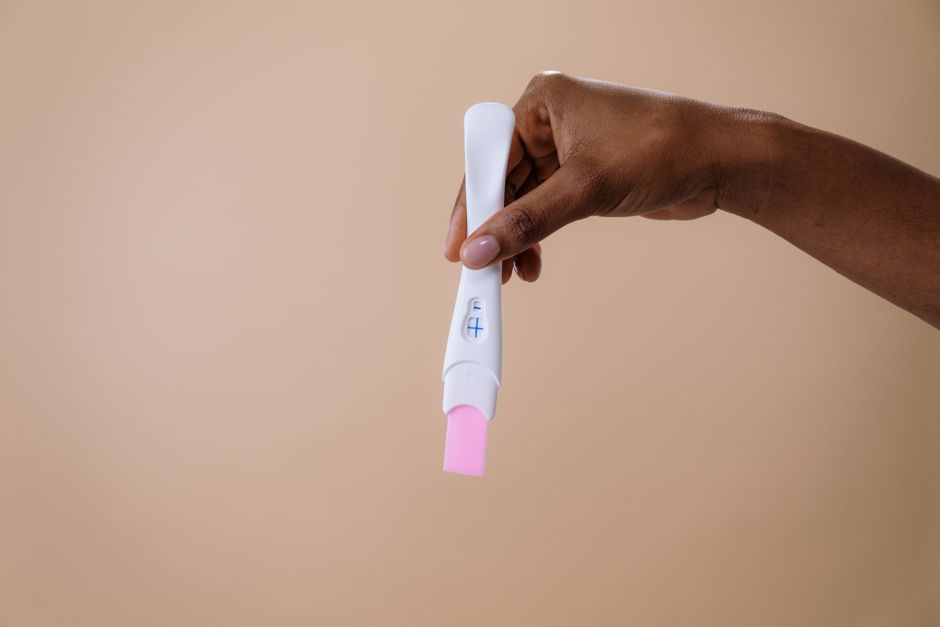
A positive pregnancy test usually means one thing: you are pregnant. The test detects a hormone called human chorionic gonadotropin (hCG), which your body only produces in significant amounts during pregnancy. However, there are rare situations where a test shows positive but pregnancy is not the cause. These false positives are uncommon, but understanding why they happen can help you interpret your result accurately and know when to contact a doctor.
How Do Home Pregnancy Tests Work?
Home pregnancy tests detect hCG in your urine. After a fertilized egg implants in the uterus, the developing placenta starts making this hormone. hCG levels double roughly every 48 to 72 hours in early pregnancy.
Most home tests are designed to trigger a positive result when hCG levels reach a certain threshold. The amount varies by brand, but many tests are sensitive enough to detect hCG at levels of 20 to 25 mIU/mL. That is why testing too early can give a false negative — the hormone simply has not built up enough yet.
False positives are different. A false positive means the test detects something that mimics hCG, or hCG is present for a reason unrelated to pregnancy. This is not the same as a test error where you read the results incorrectly or the test line fades over time.
Can Medications Cause a False Positive Pregnancy Test?
Yes, but only certain medications. Most over-the-counter drugs, including pain relievers, antibiotics, and birth control pills, do not affect pregnancy test results. The common myth that antibiotics cause false positives is not supported by evidence.
The medications that can cause false positives are those that contain hCG. These are primarily fertility treatments. Some fertility medications, such as injections used to trigger ovulation, contain hCG. If you take one of these and test too soon, the medication itself can produce a positive result even if you are not pregnant.
Other medications linked to false positives include some treatments for infertility that contain the hormone. If you are undergoing fertility treatment, your doctor will usually advise you on the right time to take a home pregnancy test. Testing too early after an hCG trigger shot is a well-known cause of misleading results.
Certain rare medical conditions can also cause the body to produce hCG-like substances. Some tumors, including rare ovarian or breast tumors, can secrete hCG. This is extremely uncommon, but it is one reason a positive test without pregnancy warrants medical follow-up.
What Medical Conditions Can Cause a Positive Test Without Pregnancy?
A few medical situations can produce hCG or hCG-like molecules. A chemical pregnancy is one of the most common. This happens when a fertilized egg implants but stops developing very early. The body produces enough hCG to trigger a positive test, but a miscarriage occurs shortly after, often before a missed period is even noticed.
An ectopic pregnancy is another condition that produces hCG. In this case, the fertilized egg implants outside the uterus, usually in a fallopian tube. hCG levels may rise more slowly than in a normal pregnancy, but a home test will still show positive. Ectopic pregnancy is a medical emergency and requires prompt treatment.
Recent pregnancy loss can also leave hCG in your system for weeks. After a miscarriage, abortion, or childbirth, hCG levels gradually drop to zero. Testing during this window can produce a positive result that is unrelated to a new pregnancy.
Some rare ovarian conditions can also affect results. Ovarian cysts themselves do not typically produce hCG, but certain types of ovarian tumors can. These are uncommon, and your doctor can investigate with blood tests and imaging if needed.





Can Test Errors or Expired Tests Cause False Positives?
Test errors are possible but less common than people think. An evaporation line is the most frequent cause of a confusing result. This happens when urine dries on the test strip and leaves a faint line that looks like a positive result. Reading the test after the recommended time window increases the risk of mistaking an evaporation line for a positive.
Expired tests can also give inaccurate results. The chemicals on the test strip degrade over time, which can affect how the test reacts. Always check the expiration date before using a test.
Blood in the urine can also interfere with results. If you have a urinary tract infection, kidney issues, or are menstruating, trace amounts of blood in your urine sample could potentially affect the test. This is rare, but it is another reason to follow the instructions carefully and test with a clean urine sample.
What Should You Do After a Positive Pregnancy Test?
If you get a positive result, take a second test a few days later to confirm. Use a different brand if possible. If the second test is also positive, the result is almost certainly accurate.
Contact your doctor to schedule a blood test. A blood test measures hCG more precisely than a urine test. Your doctor may also order an ultrasound to confirm the pregnancy is in the uterus and developing normally.
If you have symptoms like severe abdominal pain, shoulder pain, dizziness, or heavy bleeding, seek medical care immediately. These can be signs of an ectopic pregnancy, which requires urgent treatment.
If you are not trying to conceive and a positive test is unexpected, it is still important to see a doctor. They can confirm the result and discuss your options. Do not assume a false positive without medical confirmation.
How Common Are False Positive Pregnancy Tests?
False positives are rare when tests are used correctly. Most positive results are true positives, even when the pregnancy is not viable. The distinction matters: a test that detects hCG is usually correct that hCG is present. The question is why hCG is present.
Research indicates that false positives occur in less than 1% of pregnancy tests when used properly. Most false positives trace back to fertility medications containing hCG, recent pregnancy loss, or rare medical conditions. Test defects and user errors are less common causes than many people believe.
The most frequent scenario is not a false positive at all. It is a true positive that ends in early miscarriage. Chemical pregnancies are thought to account for a significant percentage of all conceptions, and many women never know they were briefly pregnant.
When Should You See a Doctor About Test Results?
See a doctor for any positive pregnancy test, even if you suspect it might be wrong. A blood test can give you a definitive answer about whether hCG is present and at what level.
If you are experiencing pain or bleeding alongside a positive test, do not wait. Ectopic pregnancy can be life-threatening, and early treatment protects your health and future fertility. Symptoms to watch for include sharp abdominal pain, pelvic pain, vaginal bleeding, and shoulder tip pain.
If you recently took a fertility medication containing hCG, ask your doctor when you should test. They can advise you on the timeline based on the specific medication and your treatment protocol.
Frequently Asked Questions
Can birth control pills cause a false positive pregnancy test?
No. Birth control pills do not contain hCG and do not interfere with pregnancy test results. Only medications that contain hCG, primarily certain fertility treatments, can cause false positives.
How long after a miscarriage will a pregnancy test stay positive?
hCG levels can remain detectable for several weeks after a pregnancy loss. The exact time depends on how far along the pregnancy was, but it is normal to see a positive test for up to four to six weeks after a miscarriage.
Can an expired pregnancy test give a false positive?
An expired test can give inaccurate results, including false positives or false negatives. The chemicals on the test degrade over time, so you should always check the expiration date and use a fresh test if you have any doubt about the result.
Is a faint positive line still a positive result?
Yes. A faint line is still a positive result if it appears within the recommended reading time. The line indicates hCG is present, though the level may be low. An evaporation line that appears after the reading window has passed is not a reliable positive.
