
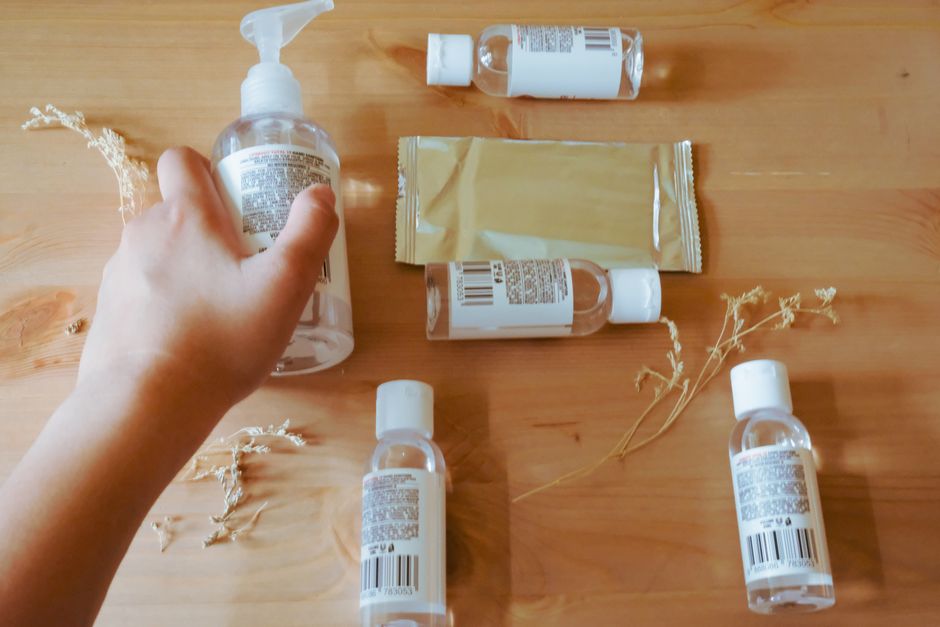
Denatured alcohol is ethanol that has been made undrinkable by adding small amounts of other chemicals, and its most common household use is as a solvent and cleaning agent. If you want an alternative, the right substitute depends on the job. Rubbing (isopropyl) alcohol works for most disinfecting and cleaning tasks. White vinegar, hydrogen peroxide, or plain soap and water handle many others. For dissolving resins, paints, or shellac, you may need a stronger solvent such as acetone or mineral spirits.
The key point is that “denatured alcohol” is not one product. It varies by country and brand, and the added chemicals differ. That means a substitute that is safe and effective for one task may be a poor choice for another. This article breaks down what works for each common use, and where the evidence is genuinely thin.
What Is Denatured Alcohol, Exactly?
Denatured alcohol is ethanol with additives that make it unfit to drink. Governments require this so that industrial ethanol is not taxed as a beverage and cannot be consumed recreationally. The additives are called denaturants.
Common denaturants include methanol, acetone, methyl ethyl ketone, and various bitter or toxic compounds. Because the exact mix is not standardized, two bottles labeled “denatured alcohol” can behave differently. Some evaporate faster. Some leave residue. Some are more toxic than others.
This matters for substitution. When you replace denatured alcohol, you are really replacing a specific set of properties: how well it dissolves things, how fast it evaporates, and whether it leaves anything behind.
What Can I Use Instead Of Denatured Alcohol For Cleaning?
For most general cleaning, isopropyl alcohol is the closest and most reliable substitute. It is widely available, evaporates quickly, and leaves little residue. It is sold at different concentrations, most commonly 70% and 91%.
For disinfecting surfaces, 70% isopropyl alcohol is generally the better choice than higher concentrations. The reason is well established: water helps the alcohol penetrate the cell walls of microbes, and a 70% solution stays in contact long enough to work. Higher concentrations can evaporate too fast and coagulate proteins on the surface before fully penetrating.
For removing sticky residue, ink, or light grease, isopropyl alcohol works well. For general grime on counters and floors, plain soap and water is usually enough and is gentler on surfaces.
- Disinfecting hard surfaces: 70% isopropyl alcohol
- Removing adhesive residue: isopropyl alcohol or a citrus-based solvent
- General cleaning: soap and water
- Glass and mirrors: white vinegar diluted in water, or a commercial glass cleaner
One caution: isopropyl alcohol is not the same as ethanol, and it is toxic if swallowed. Treat it with the same care as any solvent.
What Can I Use Instead Of Denatured Alcohol For Disinfecting?
Isopropyl alcohol at 70% concentration is the standard substitute for disinfecting. It is effective against many bacteria and viruses on hard, non-porous surfaces.
It is not effective against everything. Alcohol does not reliably kill bacterial spores, and it performs poorly on dirty or porous surfaces because organic matter and texture interfere with contact. For those situations, other disinfectants may be more appropriate.
Hydrogen peroxide is another option. A 3% solution, which is the typical drugstore strength, is used as a household disinfectant. It works against many microbes but can bleach or discolor some fabrics and surfaces, so test it first.
For high-stakes disinfection, such as after illness or in food preparation areas, follow established public health guidance. In the United States, the Environmental Protection Agency maintains a list of registered disinfectants, and those products carry claims that have been reviewed. Homemade substitutes generally do not.



What Can I Use Instead Of Denatured Alcohol For Crafts And Finishing?
This is where substitution gets harder, because denatured alcohol is often chosen for its solvent power rather than its cleaning ability. There is no single replacement.
For shellac, denatured alcohol is the traditional solvent. Pure ethanol can be used, but it is expensive and often regulated. In practice, many woodworkers use denatured alcohol specifically because it works and is cheaper than beverage-grade ethanol. If you cannot get it, some people use isopropyl alcohol, but it dissolves shellac more slowly and less completely.
For thinning certain paints, inks, or resins, the correct solvent depends on the product. Acetone, mineral spirits, and xylene each dissolve different things. Using the wrong one can ruin a finish or fail to dissolve the material at all.
The reliable approach is to check the product’s safety data sheet or manufacturer instructions. These list the recommended solvents. Guessing based on what “seems similar” often does not work.
Can I Use Vodka Or Rubbing Alcohol As A Substitute?
Vodka is ethanol diluted with water, usually to about 40% alcohol. That is far weaker than denatured alcohol, which is typically over 90% ethanol. For cleaning or dissolving, vodka is usually too dilute to work well.
Rubbing alcohol is the common name for isopropyl alcohol. It is a different chemical from ethanol, and it behaves differently. For disinfecting and general cleaning, it is an excellent substitute. For dissolving shellac or certain resins, it is a partial substitute at best.
Do not assume the two are interchangeable for every task. They share some properties but not all.
What Should I Avoid Using As A Substitute?
Some substitutes are unsafe or ineffective, and it is worth naming them directly.
Do not use methanol (also called wood alcohol) as a household substitute. It is highly toxic, and skin contact or inhalation can cause serious harm. It is one of the denaturants added to ethanol precisely because it makes the product undrinkable, and it is dangerous on its own.
Do not mix cleaning chemicals to create a substitute. Combining bleach with ammonia or with acids can produce toxic gases. This is a well-documented hazard, and it causes real injuries every year.
Be cautious with “natural” solvent claims. Some plant-based solvents work, and some do not. Marketing language is not evidence. If a product claims to replace denatured alcohol, check whether it lists what it actually dissolves and at what strength.
How Do I Choose The Right Substitute?
Match the substitute to the task, not to the label. The table below summarizes the common cases.
| Task | Reasonable substitute | Notes |
|---|---|---|
| Disinfecting hard surfaces | 70% isopropyl alcohol | Less effective on dirty or porous surfaces |
| Removing adhesive residue | Isopropyl alcohol or citrus solvent | Test on painted surfaces first |
| General household cleaning | Soap and water | Usually sufficient |
| Dissolving shellac | Ethanol, or isopropyl as a partial substitute | Isopropyl dissolves more slowly |
| Thinning paints or resins | Check the product data sheet | Solvent depends on the product |
| Fuel for alcohol stoves | Specifically formulated stove fuel | Do not improvise with other alcohols |
If a task involves heat, flame, or enclosed spaces, be especially careful. Alcohol vapors are flammable, and substitutes can differ in how quickly they ignite and how much vapor they produce. Ventilation matters in every case.
Is There A Substitute That Works For Everything?
No. Denatured alcohol is used across many tasks precisely because no single alternative covers all of them. Isopropyl alcohol comes closest for cleaning and disinfecting. For dissolving specific materials, the correct solvent depends on the material.
The honest position is that “what can I use instead” has a different answer for each job. A disinfectant substitute is not a solvent substitute. Treating them as the same thing is where people run into trouble.
When in doubt, read the product label or safety data sheet. That is the most reliable source, and it is specific to what you actually have in front of you.
Frequently Asked Questions
Is rubbing alcohol the same as denatured alcohol?
No. Rubbing alcohol is isopropyl alcohol, while denatured alcohol is ethanol with added chemicals. They are different substances and are not interchangeable for every task.
Can I use vinegar instead of denatured alcohol?
White vinegar works for some cleaning tasks, such as glass and light mineral deposits, but it is not a solvent and will not dissolve shellac or resins. It is also not a reliable disinfectant for many microbes.
Is 70% or 91% isopropyl alcohol better for disinfecting?
70% is generally the better choice for disinfecting surfaces, because the water content helps it penetrate microbes before it evaporates. Higher concentrations can evaporate too quickly to work as well.
Can I use denatured alcohol substitutes on my skin?
Isopropyl alcohol is sometimes used on skin for minor cleansing, but it can be drying and irritating, and it is toxic if swallowed. Denatured alcohol should not be applied to skin because its added chemicals can be harmful.
