
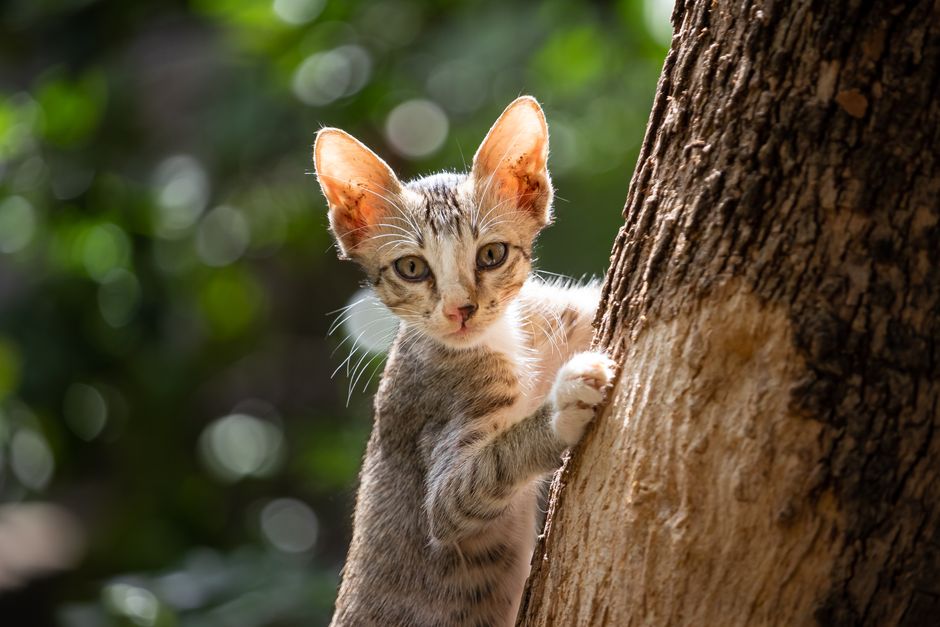
Most flea products sold for cats are not safe for kittens. Age and weight determine what you can use, and getting this wrong can cause serious harm. For kittens under 8 weeks old, the safest approach is a warm bath with mild dish soap and a fine-toothed flea comb — no topical medications, no flea collars, and no oral flea treatments. Once a kitten is at least 8 weeks old and weighs at least 2 pounds, some topical products become an option, but only those specifically labeled for kittens of that age and weight.
Why Are Flea Products More Dangerous for Kittens Than Adult Cats?
Kittens are not small cats. Their livers and kidneys are still developing, and they process chemicals differently than adult animals. A dose that would be trivial for a grown cat can overwhelm a kitten’s system.
This is not a theoretical concern. Permethrin, a common insecticide found in many dog flea products, is highly toxic to cats at any age. Exposure causes tremors, seizures, and in some cases death. The risk is even greater for kittens because of their smaller body mass and immature detoxification pathways.
Even products designed for cats carry age and weight restrictions for the same reason. A topical medication applied to a 1-pound kitten delivers a proportionally larger dose relative to body weight than the same product applied to a 10-pound adult cat. The manufacturer’s age and weight minimums exist because those thresholds were tested for safety.
Kittens also groom themselves and their littermates constantly. A topical product applied to one kitten can be ingested by another through grooming. This is one reason why some veterinarians recommend separating treated kittens for a period after application, following the product label instructions.
What Can I Put on a Kitten for Fleas If It Is Under 8 Weeks Old?
A warm bath with mild dish soap is the standard approach for very young kittens. Dawn dish soap is commonly used by rescue organizations and shelters for this purpose. The soap breaks down the flea’s exoskeleton and drowns adult fleas on the kitten’s body. It does not kill flea eggs or larvae in the environment, and it provides no lasting protection.
Here is how to do it safely:
- Use warm — not hot — water. Kittens lose body heat quickly.
- Use a small amount of mild dish soap. Avoid perfumed or antibacterial varieties.
- Lather gently around the neck first to prevent fleas from fleeing to the face.
- Keep the kitten’s head and ears out of the water.
- Rinse thoroughly and dry the kitten immediately with a warm towel.
- Use a fine-toothed flea comb to remove remaining fleas and flea dirt after drying.
Flea combing should be done daily. Dip the comb in soapy water after each pass to drown the fleas you remove. This is labor-intensive but it is the safest option for kittens this young.
No topical flea medication, flea collar, or oral flea treatment should be used on a kitten under 8 weeks old. No clinical guidelines currently exist for safe chemical flea treatment in this age group.
When Can I Start Using Flea Medication on My Kitten?
Most topical flea products approved for kittens set the minimum at 8 weeks of age and 2 pounds of body weight. Some products have higher minimums — 12 weeks or 5 pounds, for example. The label on the specific product is the authority here, not general advice.
Even at 8 weeks, not every product is appropriate. The active ingredients matter. Products containing permethrin should never be used on any cat at any age. Products containing essential oils — particularly peppermint, eucalyptus, citrus, clove, and tea tree oil — can also be toxic to kittens and should be avoided.
What tends to be safer at the appropriate age and weight:
- Topical products containing selamectin, labeled for kittens at the correct weight
- Topical products containing fipronil, when the label specifies safety for kittens 8 weeks and older
- Some oral products containing nitenpyram, which kills adult fleas quickly, though dosing must match the kitten’s weight and a veterinarian should confirm appropriateness
This list is not a recommendation. It is a starting point for a conversation with your veterinarian. Product formulations change, and new products enter the market. Your vet knows your kitten’s health status and can match a product to it.





Can I Use Dog Flea Products on My Kitten?
No. Never. This is one of the most common and most dangerous mistakes pet owners make.
Many dog flea products contain permethrin at concentrations that are lethal to cats. Cats cannot metabolize permethrin the way dogs do. Even indirect exposure — petting a dog that was recently treated and then handling a kitten — has caused toxic reactions in cats.
Symptoms of permethrin poisoning in cats include:
- Muscle tremors and twitching
- Loss of coordination
- Hypersalivation
- Seizures
- Hyperthermia
- Death in severe cases
If you suspect your kitten has been exposed to a dog flea product, contact a veterinarian or animal poison control immediately. Do not wait for symptoms to appear.
Flea collars designed for dogs are also unsafe for kittens. Even cat flea collars are generally not recommended for kittens under 12 weeks, and their effectiveness is limited compared to other options.
What About Natural or Home Remedies for Fleas on Kittens?
Many natural remedies circulating online are not safe for kittens. Essential oils are a particular concern. Tea tree oil, peppermint oil, eucalyptus oil, and citrus oils are all toxic to cats, and kittens are more vulnerable than adults.
Some remedies are safe but limited in what they accomplish:
- Dish soap baths kill adult fleas on contact but provide no residual protection.
- Flea combing removes adult fleas and eggs but will not solve an infestation.
- Diatomaceous earth is sometimes used in the environment — not on the kitten — to dry out flea larvae. Use food-grade only and keep it away from the kitten’s face and airways.
- Apple cider vinegar is sometimes suggested as a repellent. No clinical evidence confirms it works on fleas, and it should not be applied to a kitten’s skin.
No essential oil should ever be applied to a kitten. No clinical evidence supports their safety or effectiveness for flea control in kittens.
How Do I Treat the Environment Without Harming My Kitten?
Fleas spend most of their life cycle off the animal. Adult fleas on your kitten represent roughly 5% of the total flea population. The rest — eggs, larvae, and pupae — are in your carpet, bedding, and furniture.
If you only treat the kitten, the infestation will continue. Environmental control is not optional.
Safe steps for the environment:
- Wash all bedding — yours and the kitten’s — in hot water weekly.
- Vacuum carpets, furniture, and cracks daily. Seal and discard the vacuum bag immediately.
- Steam clean carpets if possible. Heat kills flea eggs and larvae.
- Keep the kitten confined to areas you can clean easily until the infestation is under control.
- Consult a veterinarian about environmental flea products that are safe for use around kittens. Some premise sprays and powders are not safe for young animals to contact.
Treating all pets in the household at the same time is important. If one pet goes untreated, fleas will survive and reinfest the others.
When Should I Call a Veterinarian?
Call a veterinarian if your kitten is under 8 weeks old and has a significant flea infestation. A vet can safely remove fleas and assess whether the kitten is anemic.
Flea anemia is a real risk for small kittens. Fleas feed on blood, and a heavy infestation can cause dangerously low red blood cell counts in a kitten weighing only a pound or two. Signs include pale gums, weakness, lethargy, and reluctance to eat. This is a medical emergency.
Also call a vet if:
- You are unsure which flea product is safe for your kitten’s age and weight
- Your kitten has been exposed to a dog flea product or any permethrin-containing product
- Your kitten shows tremors, excessive drooling, or unsteadiness after any flea treatment
- The flea infestation persists after consistent bathing and combing
Veterinarians have access to flea products and treatment protocols that are not available over the counter. For very young or very small kittens, professional guidance is not just helpful — it may be necessary.
Frequently Asked Questions
Can I put flea medicine on a 6-week-old kitten?
No. Flea medications are not approved for kittens under 8 weeks old, and no clinical guidelines exist for chemical flea treatment in this age group. Use a warm bath with mild dish soap and a flea comb instead.
Is Dawn dish soap safe for fleas on kittens?
Mild dish soap in warm water is widely used by rescue organizations to kill adult fleas on very young kittens. It kills fleas on contact but provides no lasting protection, so it must be repeated regularly.
What happens if I use dog flea medicine on my kitten?
Many dog flea products contain permethrin, which is highly toxic to cats and can cause tremors, seizures, and death. If your kitten has been exposed, contact a veterinarian or animal poison control immediately.
At what age can a kitten safely use flea treatment?
Most topical flea products approved for kittens require a minimum age of 8 weeks and a minimum weight of 2 pounds. Always check the specific product label, as requirements vary by product and active ingredient.
