
Most sciatica pain improves without surgery, and a few simple steps at home can help you move more comfortably while your nerve calms down. The sciatic nerve runs from your lower back through your buttock and down each leg, and when it gets irritated or compressed, you feel it as sharp, burning, or shooting pain. Short periods of rest are fine, but staying active within a comfortable range is usually better than lying in bed for days. Heat, gentle movement, and over-the-counter pain relievers handle most mild cases while the underlying irritation settles.
What Is Sciatica and What Causes It?
Sciatica is not a diagnosis. It is a symptom — pain that travels along the path of the sciatic nerve.
The sciatic nerve is the longest nerve in the body. It starts in the lower spine, passes through the buttock, and branches down the back of each leg. Anything that presses on it or inflames it can produce the familiar shooting pain, numbness, or tingling.
The most common cause is a herniated disc in the lower back. The soft cushion between two vertebrae bulges or leaks, and the material presses against a nerve root. Other causes include spinal stenosis (narrowing of the spinal canal, more common with age), bone spurs, and a condition called piriformis syndrome, where a muscle deep in the buttock irritates the nerve.
Most people assume sciatica means something is seriously wrong. In the large majority of cases, it is not. The nerve is irritated, not damaged. That distinction matters because irritated nerves often recover on their own, while damaged nerves need more attention.
What Can I Do To Relieve Sciatica Pain At Home?
Start with heat and gentle movement. These two things help most people more than anything else in the first few days.
Heat relaxes tight muscles and increases blood flow to the area. A heating pad or warm shower applied to the lower back and buttock for 15 to 20 minutes can ease muscle spasm that often accompanies nerve pain. Some people find ice helps more in the first 48 hours if there is swelling; others prefer heat throughout. There is no strong evidence that one clearly beats the other, so use what feels better to you.
Gentle movement keeps the nerve from getting more sensitized. Walking short distances on flat ground, if you can do it without making the pain worse, is often helpful. The key phrase is “without making it worse.” If walking increases your leg pain, stop and try something else.
Over-the-counter pain relievers such as ibuprofen or acetaminophen can reduce pain enough to let you move. Ibuprofen and similar drugs (naproxen, aspirin) reduce inflammation as well as pain. Acetaminophen reduces pain but not inflammation. Follow the label directions exactly. If you have kidney disease, stomach ulcers, heart disease, or take blood thinners, check with a clinician or pharmacist before using anti-inflammatory drugs.
Stretching can help some people and aggravate others. A gentle piriformis stretch or a knee-to-chest stretch may ease tension, but if a stretch sends pain shooting down your leg, stop. Nerve pain that worsens with a stretch is a signal, not a challenge to push through.
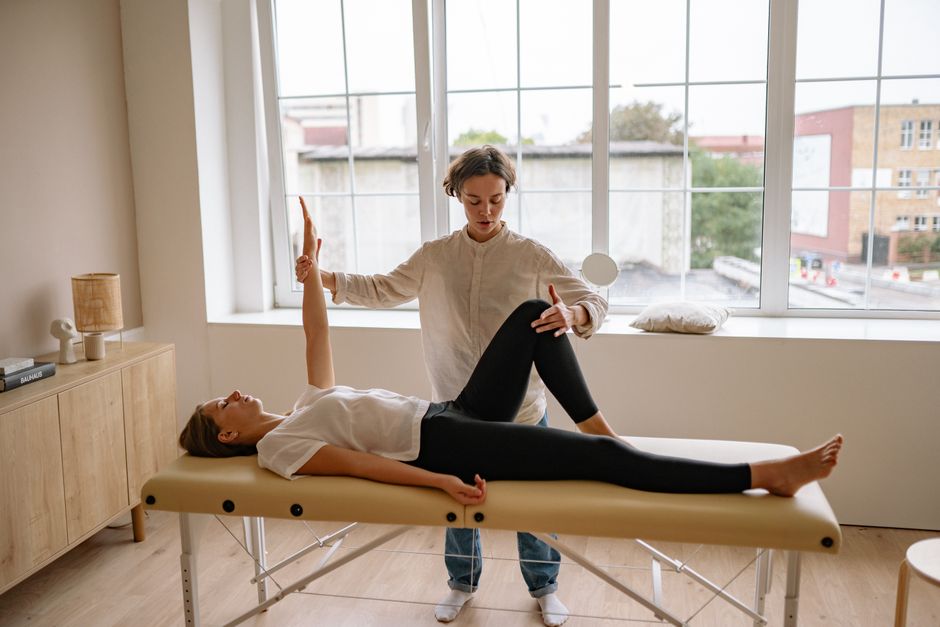
A physical therapist can teach you specific exercises tailored to your situation. If home measures are not enough after a week or two, that is a reasonable next step. Some clinicians recommend physical therapy early; the evidence for how much it speeds recovery compared with simply staying active is mixed.
Which Exercises Help and Which Make It Worse?
Exercises that keep your spine in a neutral position tend to help. Exercises that bend or twist your spine under load tend to make things worse.
Helpful movements generally include:
- Walking on flat ground for short periods
- Lying on your back with knees bent and feet flat (constructive rest position)
- Gentle knee-to-chest stretches, one leg at a time, only if they do not increase leg pain
- Pelvic tilts — small, slow rocking motions of the pelvis while lying down
- Bird-dog and other core-stabilizing exercises once acute pain has settled
Movements that often aggravate sciatica:
- Bending forward to touch your toes
- Sitting for long periods without getting up
- Twisting your torso while lifting
- Hamstring stretches that pull hard on the nerve
- Any movement that sends pain farther down your leg
The rule is simple. If a movement makes the pain travel further down your leg or into your foot, it is irritating the nerve. Stop. If a movement keeps pain in your back or buttock and does not worsen it, it is probably safe.
This is one of the non-obvious points about sciatica. Flexibility is not always the goal. A tight hamstring is not causing your sciatica in most cases. Forcing a stretch can make a sensitized nerve angrier.





When Should You See a Doctor for Sciatica?
See a doctor promptly if you have progressive weakness in your leg, numbness in the saddle area (groin and inner thighs), or loss of bladder or bowel control. These are signs of a rare but serious condition called cauda equina syndrome, which is a medical emergency.
Other reasons to seek care:
- Pain that is severe and not improving after a few weeks
- Pain following a fall or accident
- History of cancer
- Unexplained weight loss along with back pain
- Fever with back pain
- Pain that wakes you at night and does not ease with position changes
Most people with sciatica do not need imaging right away. Clinical guidelines generally recommend against routine MRI in the first several weeks unless there are red flags, because most herniated discs improve on their own and imaging findings often do not match symptoms. Many people without any back pain have disc bulges on MRI.
Does Bed Rest Help or Hurt?
Prolonged bed rest makes sciatica worse. This is one of the clearest findings in back pain research.
Staying in bed for more than a day or two leads to muscle weakness, joint stiffness, and increased sensitivity to pain. It also slows recovery. Current clinical guidance generally recommends staying active within a tolerable range rather than resting in bed.
That does not mean pushing through severe pain. It means finding the level of activity you can do without significantly worsening your symptoms and doing that. For some people that is a short walk to the mailbox. For others it is walking around the house. The amount matters less than the fact that you are moving.
If you must rest, rest in a comfortable position — often on your side with a pillow between your knees, or on your back with a pillow under your knees. Avoid prolonged sitting, which increases pressure on the lower spine.
What About Heat, Ice, and Other Home Remedies?
Heat and ice are the most commonly used home remedies, and both are reasonable for short-term comfort. Heat is generally preferred for muscle tightness and spasm. Ice may help if there is acute inflammation in the first day or two.
Other remedies people try include:
- Topical creams containing menthol or capsaicin. Some people find them helpful. Evidence for sciatica specifically is limited.
- Massage of the lower back and buttock muscles. Can ease muscle tension but does not treat the nerve itself.
- Foam rolling of the glutes and thighs. May help muscle tightness. Avoid rolling directly over the painful nerve path.
- Supplements marketed for nerve pain. No clinical evidence currently confirms that these relieve sciatica.
- Chiropractic adjustment or acupuncture. Some people report relief. Evidence for sciatica specifically is mixed, and results vary.
None of these replace medical evaluation if your symptoms are severe or getting worse. If a remedy helps you feel better and does not cause harm, it is reasonable to use it alongside, not instead of, proper care.
How Long Does Sciatica Usually Last?
Most cases of sciatica improve within a few weeks to a few months without surgery. Some research suggests that a majority of people with a herniated disc recover within several weeks, though symptoms can linger longer in some cases.
Recovery is not always linear. Good days and bad days are normal. What matters is the overall trend. If you are slowly doing more over weeks, you are likely on the right track. If you are doing less, or the pain is moving further down your leg, that is a reason to check in with a clinician.
Surgery is an option for people with severe pain that does not improve, or with progressive weakness. It is not usually the first step. For most people, conservative care — staying active, managing pain, and time — is enough.
Frequently Asked Questions
Can sciatica go away on its own?
Yes, most cases improve without surgery, often within a few weeks to a few months. Staying gently active and managing pain usually helps more than resting in bed.
Is walking good or bad for sciatica?
Walking is usually helpful if it does not make your leg pain worse. If walking increases pain down your leg, stop and try a different position or activity.
What is the fastest way to relieve sciatica pain at home?
There is no single fastest method, but heat, over-the-counter pain relievers, and gentle movement help most people. If pain is severe or worsening, see a clinician rather than waiting it out.
When is sciatica an emergency?
Sciatica is an emergency if you lose bladder or bowel control, have numbness in the groin or inner thighs, or develop progressive leg weakness. These signs suggest cauda equina syndrome and require immediate medical care.
