
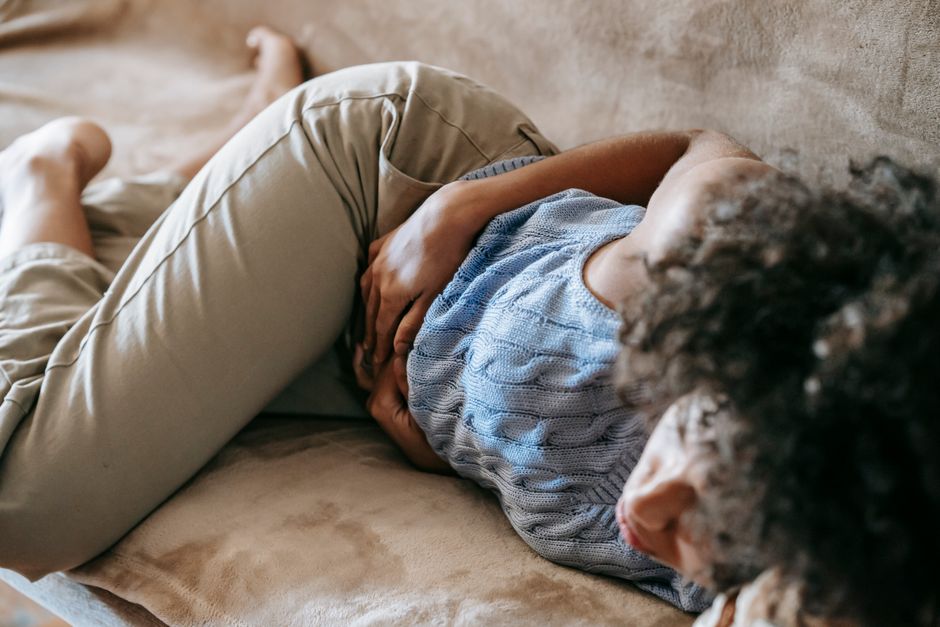
Menstrual cramps are caused by prostaglandins, hormone-like compounds that make the uterus contract during your period. The most reliable ways to ease them include heat, nonsteroidal anti-inflammatory drugs (NSAIDs) like ibuprofen taken at the first sign of cramps, and regular aerobic exercise. These approaches have the strongest evidence behind them. Other options, from dietary changes to supplements, range from reasonably supported to unproven.
What Are Menstrual Cramps and Why Do They Happen?
Menstrual cramps are the physical result of the uterus contracting. During your period, the lining of the uterus releases prostaglandins. These compounds trigger the muscular wall of the uterus to contract and then relax. When contractions are strong, they can press against nearby blood vessels and briefly cut off blood flow to the muscle. That reduced blood flow is what produces the cramping pain.
This is the same basic process behind muscle cramps anywhere in the body — sustained contraction, reduced blood supply, pain. The difference is the trigger. In menstrual cramps, prostaglandin levels are the driver.
For some people, prostaglandin levels are higher than average. That tends to produce stronger, longer-lasting cramps. Conditions like endometriosis and uterine fibroids can also cause severe menstrual pain, though the mechanism is different and often involves inflammation and structural changes.
There is a meaningful distinction between primary and secondary dysmenorrhea. Primary dysmenorrhea is cramps caused by the normal prostaglandin process, with no underlying condition. Secondary dysmenorrhea is pain caused by a separate condition such as endometriosis, fibroids, or pelvic inflammatory disease. If cramps are severe enough to disrupt your life every month, or if they started later in life after years of mild periods, that is worth discussing with a clinician.
What Can Help With Menstrual Cramps: Top Remedies
Heat Therapy
Heat is one of the most consistently supported remedies for menstrual cramps. Applying a heating pad or heat wrap to the lower abdomen relaxes the uterine muscle and improves blood flow to the area. Multiple studies have found that continuous low-level heat — around 104°F (40°C) — reduces cramp pain comparably to ibuprofen in some trials. That is a meaningful finding because it means heat is not just a comfort measure; it has measurable pain-relieving effects.
Heat is safe for most people. Do not apply heat to bare skin for extended periods without a barrier, and avoid high heat if you have reduced skin sensation.
NSAIDs (Ibuprofen, Naproxen)
NSAIDs are the most evidence-supported medication for menstrual cramps. They work by blocking prostaglandin production directly. This is different from acetaminophen (Tylenol), which relieves pain but does not reduce prostaglandins.
The key detail most people miss: timing. NSAIDs work best when taken at the first sign of cramps or even just before they start. Once prostaglandin levels have risen and inflammation is established, the medication has less to work against. Taking ibuprofen after cramps are already severe is not useless, but it is less effective than early dosing.
Follow the dosing on the package or your clinician’s instructions. NSAIDs are not appropriate for everyone — people with stomach ulcers, kidney disease, or certain cardiovascular conditions should talk to a doctor first. Do not combine multiple NSAIDs.
Aerobic Exercise
Regular aerobic exercise reduces menstrual cramp intensity over time. This is not about exercising during your period specifically — it is about consistent physical activity across the month. Some research suggests exercise lowers prostaglandin levels and improves blood flow to pelvic tissues. The effect is modest but real, and it compounds with other remedies.
Light activity during your period is generally fine and may help. If cramps are severe, rest is also reasonable.
Transcutaneous Electrical Nerve Stimulation (TENS)
TENS units deliver mild electrical impulses through the skin. For menstrual cramps, they are typically placed on the lower abdomen or lower back. The evidence here is moderate — some trials show meaningful pain reduction, others show less. TENS appears to work by interfering with pain signal transmission rather than by addressing the underlying prostaglandin process. It is generally considered safe for healthy adults, though people with pacemakers or certain heart conditions should not use TENS without medical clearance.
What About Diet and Supplements?
Dietary approaches to menstrual cramps have less consistent evidence than heat, NSAIDs, or exercise. Some studies suggest certain nutrients may help, but results vary and no dietary change has been shown to reliably replace medication for severe cramps.
Omega-3 fatty acids have been studied for menstrual pain. Some research indicates that higher intake — through fish or supplements — is associated with reduced cramp intensity. The mechanism is plausible: omega-3s shift prostaglandin production toward less inflammatory types. But the studies are relatively small and results are not uniform. It is reasonable to include omega-3-rich foods in your diet; it is not reasonable to expect them to eliminate severe cramps.
Magnesium is often mentioned for menstrual cramps. Some small trials have found that magnesium supplementation reduces pain, while others have not. The evidence is mixed. Magnesium is involved in muscle relaxation, which makes the mechanism plausible, but plausibility is not proof of benefit.
Vitamin B1 (thiamine) has been studied in a few small trials with some positive results. The evidence is limited.
Vitamin E has been studied in small trials with mixed results. The evidence does not currently support it as a primary remedy.
No clinical guidelines currently recommend specific doses of these supplements for menstrual cramps in the general adult population. If you are pregnant, breastfeeding, or taking medications, talk to a clinician before starting any supplement.




What Does Not Have Strong Evidence?
Several popular remedies lack solid evidence.
Herbal teas marketed for menstrual relief — including chamomile, ginger, and fennel — have some small studies behind them, but the evidence is not strong enough to call them proven. Ginger in particular has a few small trials suggesting possible benefit, but the studies are limited in size and quality. These teas are generally safe for most people, but they should not be relied on as a primary treatment for significant pain.
Essential oils applied topically have very limited evidence for menstrual cramps. Some small studies suggest lavender or clary sage may help, but the research is preliminary. Do not apply undiluted essential oils to skin.
Acupuncture has been studied for menstrual pain with mixed results. Some trials show benefit, others do not. The evidence is not strong enough to call it established. Some clinicians recommend it; the evidence base does not clearly support it as a first-line treatment.
Chiropractic adjustment has very limited evidence for menstrual cramps. It is not a standard recommendation.
When Should You See a Doctor About Menstrual Cramps?
Menstrual cramps that interfere with daily life every month are not something you have to accept. If over-the-counter NSAIDs, heat, and exercise are not enough, that is worth a conversation with a clinician.
See a doctor if:
- Cramps are severe enough that you miss school, work, or normal activities every month
- Pain is getting worse over time
- Cramps started later in life after years of mild periods
- You have pain outside of your period, or pain during sex
- You have heavy bleeding, clotting, or bleeding between periods
- NSAIDs are not helping or you cannot take them
These signs can point to secondary dysmenorrhea — pain caused by an underlying condition like endometriosis, fibroids, or adenomyosis. Those conditions are treatable, but they need to be identified first. The process often starts with a pelvic exam and imaging.
There is no blood test that diagnoses endometriosis. Diagnosis typically requires imaging or, in some cases, laparoscopic surgery. This is one reason menstrual pain is often under-treated — the diagnostic path is not simple.
Can You Prevent Menstrual Cramps Before They Start?
You cannot prevent the prostaglandin process itself. But you can reduce how much it affects you.
Regular aerobic exercise throughout the month is one of the few things with evidence for reducing cramp severity over time. Taking an NSAID at the first sign of cramps — or, in some cases, one to two days before your period is expected if your cycle is predictable — can blunt the prostaglandin surge before it peaks. This approach is sometimes recommended by clinicians for people with predictable, severe cramps, though it is not universally appropriate and should be discussed with a doctor.
Managing stress may also help indirectly. Stress does not cause cramps, but it can lower pain tolerance and make existing pain feel worse. Sleep quality matters for the same reason.
Dietary changes — reducing inflammatory foods, increasing omega-3s — have some supporting evidence but are not reliable enough to prevent cramps on their own.
Frequently Asked Questions
What is the fastest way to relieve menstrual cramps?
Heat applied to the lower abdomen and an NSAID like ibuprofen taken early are the fastest evidence-supported options. Heat works within minutes; NSAIDs take longer but address the underlying prostaglandin cause.
Is ibuprofen or acetaminophen better for menstrual cramps?
Ibuprofen is generally more effective because it blocks prostaglandin production, which is the direct cause of cramping. Acetaminophen relieves pain but does not reduce prostaglandins.
Do heating pads actually work for period pain?
Yes — studies have found that continuous low-level heat reduces menstrual cramp pain, in some trials comparably to ibuprofen. It works by relaxing the uterine muscle and improving blood flow.
When should I see a doctor for severe menstrual cramps?
See a doctor if cramps consistently interfere with daily life, are getting worse over time, or are not relieved by NSAIDs and heat. These can be signs of an underlying condition like endometriosis or fibroids.
