
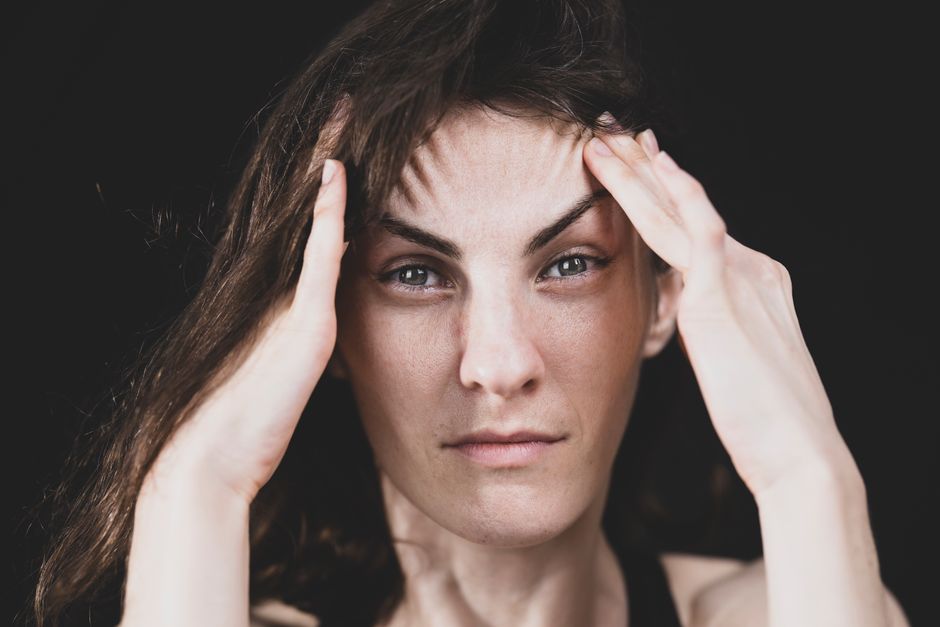
Anxiety shows up on your face in ways you can see and feel. It can trigger flushing, sweating, trembling, and muscle tension, and over time it can contribute to skin problems like breakouts or hives. Most of these effects come from the body’s stress response — not from anything wrong with your skin itself.
You have probably noticed it yourself. A stressful phone call, a near-miss in traffic, a difficult conversation — and suddenly your face feels hot, or your lip twitches, or you catch yourself clenching your jaw. That is not imagination. It is physiology.
Why Does Anxiety Show Up on Your Face?
Your face has more nerve endings and blood vessels per square inch than almost anywhere else on your body. It is also the part of you that other people read. So when your nervous system shifts into a stress response, the face is one of the first places that change becomes visible.
When you feel anxious, your body releases stress hormones, including adrenaline and cortisol. Adrenaline acts fast. It speeds up your heart, raises your blood pressure, and redirects blood flow toward your muscles and away from parts of your body your brain considers less urgent in a crisis. Cortisol acts more slowly and stays elevated longer. Together they produce the visible and physical effects people describe as “anxiety face.”
This is a normal system doing its job. The problem is when it fires too often, or stays switched on.
What Does Anxiety Do to Your Face in the Short Term?
Short-term effects are usually temporary and fade as the stress passes. They happen because your body is preparing for action — even when there is nothing to physically run from.
Common short-term facial effects include:
- Flushing and warmth. Blood vessels in the face widen, which can make your cheeks, ears, or neck feel hot and look red.
- Sweating. Anxiety can trigger sweating on the forehead, upper lip, and hairline, sometimes in cool conditions.
- Trembling or twitching. A fluttering eyelid or a quivering lip is common. Muscle tension and adrenaline are the usual drivers.
- Muscle tightness. Your jaw, brow, and around your eyes can clench without you noticing.
- Dilated pupils. Adrenaline can widen your pupils briefly.
- A “frozen” or tense expression. Some people describe feeling like their face does not move naturally when they are anxious.
None of these mean something is wrong with you. They are signs of a nervous system doing what it evolved to do.
Can Anxiety Cause Long-Term Skin Problems?
Yes, but usually indirectly. Anxiety does not create a skin disease from nothing. What it can do is worsen conditions you are already prone to, and it can change behaviors that affect your skin.
Some research suggests that psychological stress is linked to flare-ups of inflammatory skin conditions. The evidence is strongest for conditions like psoriasis and eczema, where stress is a well-recognized trigger in clinical practice. For acne, the connection is more mixed. Some studies suggest stress can worsen breakouts, but the evidence is not as consistent.
The indirect routes matter too:
- Skin picking. Anxiety can drive compulsive picking, scratching, or rubbing — which damages skin and can lead to scarring or infection.
- Reduced self-care. When anxiety is high, sleep, diet, and skincare routines often slip.
- Hives. Stress is a known trigger for some people with chronic hives, though the mechanism is not fully understood.
- Cold sores. Some people find that stress precedes a cold sore outbreak, though this varies from person to person.
The honest position: anxiety can influence skin through several pathways, but it is rarely the sole cause of a skin condition. If you have persistent skin symptoms, a dermatologist should evaluate them.
What Is “Anxiety Face” and Is It Real?
“Anxiety face” is not a medical diagnosis. It is a descriptive term people use for a cluster of visible signs — tension in the brow and jaw, a flat or worried expression, dark circles from poor sleep, and dull or irritated skin.
There is no clinical definition of anxiety face, and no research establishes it as a distinct condition. What is real is that chronic stress affects sleep, circulation, and skin health, and those effects can show on your face over time. Calling it “anxiety face” is a shorthand, not a diagnosis.
One useful clarification: the face you make when anxious is not permanent. Muscle tension from anxiety can feel like it has “set in,” but the muscles themselves are not permanently changed by ordinary stress. What can persist is the habit of holding tension — and habits can be changed.
Can Anxiety Change How Your Face Looks Over Time?
Chronic anxiety can contribute to changes in appearance, mostly through sleep and stress pathways rather than direct damage to your skin.
Poor sleep is common with anxiety, and sleep deprivation is associated with dull skin, more noticeable dark circles, and slower skin recovery. Chronic stress may also affect skin barrier function — some research suggests stress can slow the skin’s ability to repair itself. The evidence for a direct link between anxiety and visible aging is limited, though, and this is an area where claims often outrun the data.
What is well established is that anxiety affects sleep, and sleep affects appearance. That chain is real. Beyond that, be cautious about anyone who tells you anxiety is “aging your face” in a specific, measurable way. The research does not support precise claims.
What Can You Do About Anxiety-Related Facial Symptoms?
Most short-term facial effects ease when the stress response settles. The more useful question is how to reduce how often your system fires in the first place.
Approaches with reasonable evidence include:
- Slow breathing. Deliberately slowing your breath can help calm the acute stress response. It will not cure an anxiety disorder, but it can take the edge off a spike.
- Regular physical activity. Exercise has consistent evidence for reducing anxiety symptoms over time.
- Sleep. Protecting sleep is one of the most practical steps for both anxiety and skin.
- Talking to a professional. Cognitive behavioral therapy has strong evidence for anxiety disorders. Medication may also be appropriate for some people, and that decision belongs with a clinician.
For skin-specific concerns, a dermatologist can help distinguish anxiety-related flares from other causes. Do not assume every skin change is “just stress” — some conditions need their own treatment.
If facial symptoms are frequent, intense, or affecting your daily life, that is worth raising with a doctor or mental health professional. Anxiety is treatable, and the facial effects usually improve when the anxiety does.
Frequently Asked Questions
Can anxiety make your face look different?
Yes. Anxiety can cause flushing, sweating, muscle tension, and a tense expression, and chronic stress can affect sleep and skin. These changes are usually temporary and improve when anxiety is managed.
Why does my face get hot when I am anxious?
Anxiety triggers adrenaline, which widens blood vessels in the face and increases blood flow. That produces the warmth and redness many people notice during stress.
Can anxiety cause acne or breakouts?
Some studies suggest stress may worsen acne, but the evidence is mixed. Anxiety more reliably affects acne indirectly through skin picking and disrupted sleep.
Does anxiety cause wrinkles?
No strong evidence shows anxiety directly causes wrinkles. Chronic stress can affect sleep and skin recovery, which may influence appearance over time, but precise claims about anxiety and aging are not well supported.
