
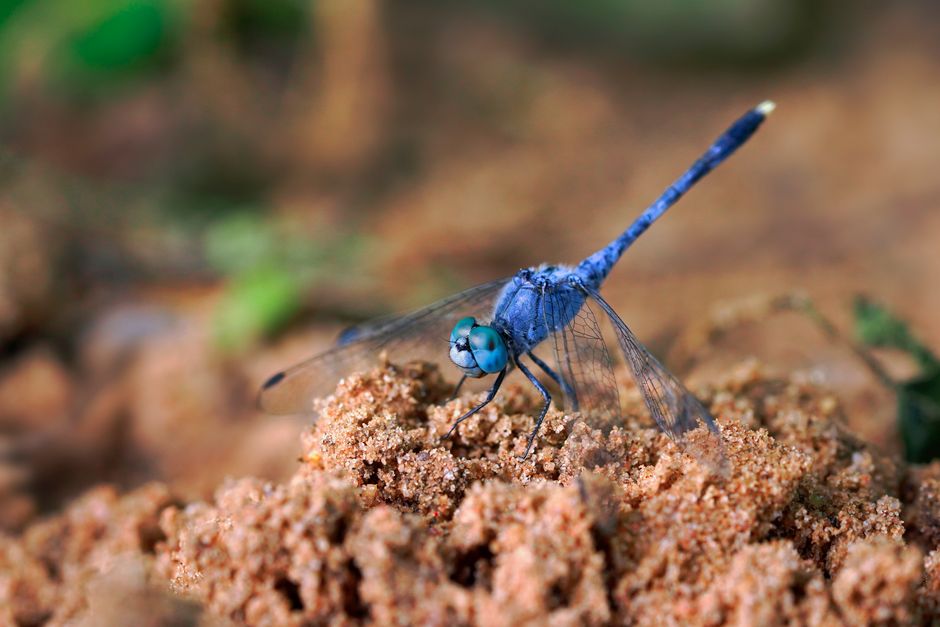
Dragonflies are among the most effective insect predators on Earth, and their diet is almost entirely made up of other insects. They eat mosquitoes, midges, flies, moths, butterflies, bees, wasps, and other dragonflies. Both the adults and the aquatic young — called nymphs — are active hunters, but they hunt in completely different worlds. Adults catch prey in the air. Nymphs ambush it underwater.
That double life is one reason dragonflies matter to anyone curious about backyard pests. A single adult can eat a large number of small flying insects in a day, though the exact amount depends on the species, its size, and how much prey is around.
What Bugs Do Dragonflies Eat?
Adult dragonflies eat flying insects, and they are not picky about which ones. Their diet includes mosquitoes, midges, black flies, deer flies, horse flies, mayflies, caddisflies, small moths, butterflies, and other dragonflies. They also take bees, wasps, and ants when those insects cross their path in the air.
Mosquitoes show up often in dragonfly stomach contents, which is where much of the “dragonflies eat mosquitoes” reputation comes from. That reputation is real but easy to overstate. Dragonflies are generalist predators. They eat whatever flying insect they can catch and handle, and mosquitoes are one option among many.
Size matters. A large dragonfly like a darner can tackle a butterfly or a smaller dragonfly. A small species sticks to midges and other tiny flies. The prey has to fit the predator.
How Do Dragonflies Catch Their Prey?
Dragonflies are ambush predators that intercept prey in midair. They do not chase insects down over long distances. Instead they patrol a territory, spot a target, and fly an interception path that meets the prey where it is going to be, not where it is now.
Several features make this work. Their eyes are huge and give them nearly all-around vision. Their four wings move independently, which lets them hover, reverse, and change direction faster than most insects can react. Their legs fold into a basket shape under the body, and they scoop prey into that basket at the moment of contact.
This is one of the fastest and most accurate hunting systems in the insect world. The dragonfly’s nervous system responds to visual targets in a fraction of a second, which is part of why interception succeeds so often.
What Do Dragonfly Nymphs Eat Underwater?
Dragonfly nymphs are aquatic and eat almost any small animal they can catch in the water. That includes mosquito larvae, midge larvae, mayfly nymphs, caddisfly larvae, small crustaceans like water fleas and scuds, tadpoles, and small fish. Larger nymphs will take larger prey, including other dragonfly nymphs.
The nymph’s hunting tool is unusual. It has a hinged lower jaw called the labium that folds under its head like a mask. When prey comes close, the jaw shoots forward and grabs it. This happens faster than the eye can follow.
Nymphs usually sit still and wait. They are ambush hunters, not chasers. Some species burrow into mud or hide in leaf litter, while others cling to plants or debris and wait for something to move past. Nymphs can spend months to several years underwater before emerging as adults, depending on the species and climate.




Do Dragonflies Eat Mosquitoes Enough to Control Them?
Dragonflies do eat mosquitoes, but they are not a reliable mosquito control method on their own. This is one of the most common misunderstandings about them.
Here is the problem. Dragonflies eat a wide range of flying insects, so mosquitoes are only part of their diet. They also need habitat that supports their nymphs for months or years, and they do not reproduce fast enough to track a mosquito population that can explode in days after rain. Research on whether dragonflies meaningfully reduce mosquito numbers has produced mixed results, and the effect varies by species and location.
What dragonflies do provide is part of a broader natural predator community. Fish, birds, bats, frogs, and other insects also eat mosquitoes. No single predator controls them. Removing standing water, using screens, and using repellent remain the approaches with the strongest evidence behind them.
That said, a pond with healthy dragonfly populations tends to have a healthy insect food web overall. Dragonflies are a sign of a functioning ecosystem, not a standalone pest control tool.
Do Dragonflies Eat Bees and Butterflies?
Yes, dragonflies will eat bees and butterflies when they can catch them. Bees and butterflies are strong fliers, so they are harder targets than mosquitoes or midges, but large dragonflies are capable of taking them.
This surprises people who think of dragonflies as purely beneficial. From an ecological standpoint, dragonflies are not on anyone’s side. They are predators, and pollinators are on the menu along with pests. A dragonfly does not distinguish between a honeybee and a horse fly.
The impact on pollinator populations is generally small. Dragonflies take individual bees and butterflies, not colonies or populations. The bigger threats to pollinators are habitat loss, pesticides, disease, and parasites.
What Else Do Dragonflies Eat?
Beyond flying insects, adult dragonflies occasionally take prey that is not airborne. They may grab insects resting on plants or snatch prey from the surface of water. Some species have been observed eating small spiders or other insects caught in webs.
Nymphs are more varied in their diet than adults because the underwater environment offers different options. Along with insect larvae, nymphs eat worms, leeches, small snails, and tiny fish. Very large nymphs have been reported eating small frogs and tadpoles.
What dragonflies do not eat is plant material. They are carnivores at every life stage. They do not feed on nectar, pollen, or fruit. Any insect that relies on plants for food is either prey or irrelevant to a dragonfly.
A Quick Comparison: Adult vs. Nymph Diet
| Feature | Adult Dragonfly | Dragonfly Nymph |
|---|---|---|
| Habitat | Air, near water and vegetation | Underwater in ponds, streams, marshes |
| Main prey | Mosquitoes, flies, midges, moths, bees, other dragonflies | Mosquito larvae, mayfly nymphs, tadpoles, small fish, crustaceans |
| Hunting style | Active aerial interception | Ambush from cover |
| Capture method | Leg basket scoops prey in flight | Hinged lower jaw shoots forward |
| Plant material in diet | None | None |
Why Dragonflies Are Useful to Have Around
Dragonflies eat a lot of insects that people find annoying, and they do it without any effort from us. A yard with a pond, a stream, or even a rain garden may attract them. Native plants around the water help because they give nymphs places to hide and adults places to perch.
Pesticides work against this. Insecticides that kill mosquitoes also kill dragonfly nymphs and the insects dragonflies feed on. A yard sprayed heavily for mosquitoes is often a yard with fewer dragonflies the following season.
The clearest benefit of dragonflies is ecological rather than practical. They are a visible sign that a water body supports a complex food web. That is worth noticing, even if it does not replace a repellent.
Frequently Asked Questions
Do dragonflies eat mosquitoes?
Yes, mosquitoes are part of the adult dragonfly diet, along with many other flying insects. They do not eat enough mosquitoes to control a mosquito population on their own.
Do dragonflies bite or sting humans?
Dragonflies do not sting, and they do not bite humans in any meaningful way. They have no stinger, and their mouthparts are built for chewing insects, not for piercing skin.
What do dragonfly nymphs eat?
Nymphs eat mosquito larvae, mayfly nymphs, small crustaceans, tadpoles, and small fish. They ambush prey underwater using a hinged jaw that shoots forward to grab it.
Are dragonflies good for gardens?
Dragonflies eat many flying insects, including some garden pests, so they can be helpful to have around. They also eat bees and butterflies, so they are not selective allies for a garden.
