
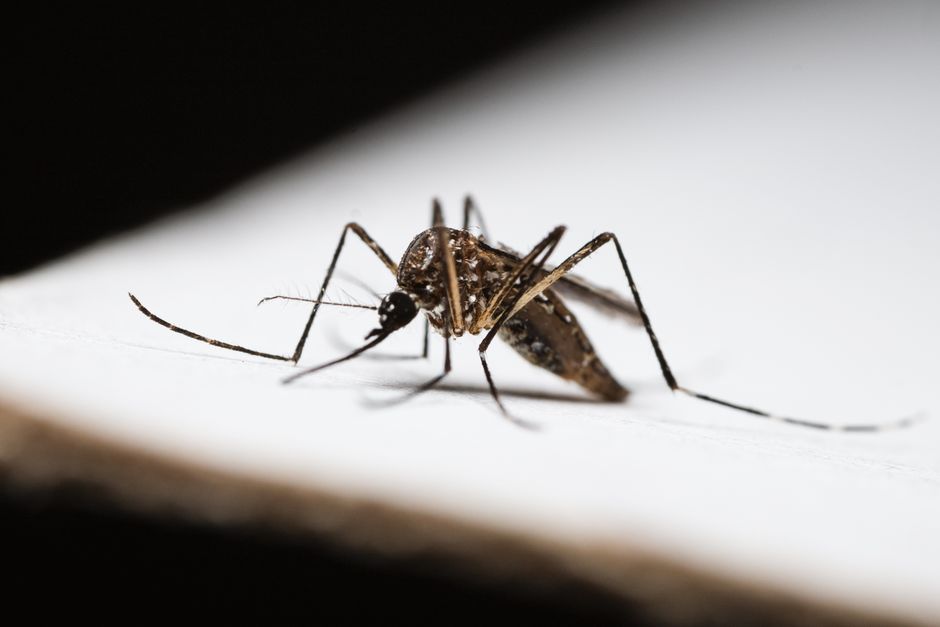
Most beach bites in the United States come from mosquitoes, sand flies, biting midges (often called no-see-ums), horse flies, and fleas. Coastal salt marshes and wet sand are the main breeding grounds, and bites are most common around dawn and dusk. Knowing which insect is biting you matters, because the prevention and treatment for each one is different.
What Bugs Bite At The Beach?
The list is shorter than most people expect, and the culprits vary by region and time of day.
- Mosquitoes — common near salt marshes, tidal pools, and any standing fresh water behind the dunes. They bite most at dawn and dusk.
- Sand flies — tiny, hairy, moth-like insects found on warm beaches worldwide. They bite mostly at dusk and into the night.
- Biting midges — also called no-see-ums. They are roughly the size of a pencil tip, and their bites often go unnoticed until an intense itch develops.
- Horse flies and deer flies — large, fast, painful biters. They are most active during the day and are drawn to movement and dark colors.
- Fleas — usually associated with dry sand above the high tide line and with animals on the beach, including stray dogs and seabirds.
- Bed bugs and ticks — not beach-specific, but they can travel home in bags, towels, and clothing.
One detail that gets lost: the insects biting you on the beach almost never breed in the ocean itself. Salt water kills most mosquito larvae. The real sources are the marshes, tidal pools, and freshwater puddles just inland from the sand.
Why Do Beach Bugs Bite Some People More Than Others?
Some people really do get bitten more. This is not imagination.
Mosquitoes and other biting insects use a mix of cues to find a host. Carbon dioxide from your breath is the primary long-range signal. Body heat, skin odor, and lactic acid also play a role. Research has consistently found that people who exhale more carbon dioxide — larger adults and pregnant women, for example — attract more mosquitoes.
Blood type may matter. Some studies suggest people with type O blood are bitten somewhat more often than people with type A, though the effect is modest and results have varied across studies. Skin bacteria also influence attractiveness. People with a higher diversity of certain bacteria on their skin tend to draw more bites.
Alcohol is another factor. Some research indicates that drinking beer increases mosquito landings on the drinker, though the reason is not fully understood. Dark clothing is a well-documented attractant for several biting fly species.
What does not seem to matter much: eating bananas, taking vitamin B supplements, or wearing garlic. These are popular claims with little supporting evidence.
What Do Beach Bug Bites Look Like?
Most bites look similar at first — a small red bump that itches. The differences show up over the next day or two.
Mosquito bites typically appear as pale, puffy welts within minutes. They itch intensely for a day or two and then fade. Scratching can cause them to swell more and last longer.
Sand fly and midge bites often appear in clusters on exposed skin — ankles, wrists, neck, and hairline. They tend to itch more than mosquito bites and can last a week or longer. Some people develop small fluid-filled bumps.
Horse fly and deer fly bites hurt immediately rather than itching first. They often bleed a little and can leave a red, raised mark that takes days to settle.
Flea bites usually cluster around the ankles and lower legs. They are small, red, and extremely itchy.
If a bite spreads rapidly, feels hot, or is accompanied by fever, see a doctor. Those are signs of possible infection, not a normal bite reaction.



Which Beach Bugs Carry Disease?
This is where the honest answer matters more than the reassuring one.
In the United States, mosquito-borne disease at the beach is uncommon but not zero. West Nile virus is the most widespread mosquito-borne illness in the continental US, and it is transmitted by Culex mosquitoes, which breed in standing water — including the freshwater pools and containers found near coastal areas. Most people infected with West Nile have no symptoms. A minority develop fever and body aches, and a small fraction develop severe neurological illness. There is no vaccine and no specific antiviral treatment for West Nile.
Eastern equine encephalitis is rare but serious, and it has been reported in coastal areas of the northeastern US and Gulf Coast. Cases are uncommon, but the disease can be severe when it occurs.
Sand flies in the US are not known to transmit leishmaniasis, which is a concern in parts of the Mediterranean, Middle East, and South America. Travelers to those regions should be aware of the risk. In the US, sand fly bites are primarily a nuisance.
Horse flies and deer flies can transmit tularemia and certain other infections in rare cases, but this is unusual.
The most common real-world consequence of a beach bug bite is not disease. It is a secondary skin infection from scratching. That is worth taking seriously, especially in children.
How Do You Prevent Beach Bug Bites?
The most effective prevention is repellent, applied correctly.
The CDC recommends EPA-registered repellents. The two most studied active ingredients are DEET and picaridin. Both have been shown in multiple studies to reduce bites from mosquitoes, sand flies, and biting midges. Oil of lemon eucalyptus is another EPA-registered option, though it is not recommended for children under 3 years old. IR3535 is also registered and effective.
Apply repellent to exposed skin, not under clothing. Do not apply to the face directly — spray onto your hands first, then apply. Do not use repellent on infants under 2 months old; use a carrier or netting instead.
Other measures that help:
- Wear long sleeves and long pants, especially at dawn and dusk.
- Choose light-colored clothing — dark colors attract horse flies and some mosquitoes.
- Avoid sitting directly on wet sand near the waterline at dusk, where sand flies are most active.
- Use a fan on a porch or balcony — biting midges are weak fliers and struggle in moving air.
- Treat clothing and gear with permethrin for added protection against ticks and some biting flies.
What does not work well: citronella candles, wristbands, ultrasound devices, and vitamin B1. Studies have not shown these to reliably reduce bites.
How Do You Treat Beach Bug Bites?
Most bites resolve on their own within a few days. The goal of treatment is to reduce itching and prevent scratching.
Wash the bite with soap and water. Apply a cold pack or cool cloth to reduce swelling. Over-the-counter hydrocortisone cream or calamine lotion can help with itching. Oral antihistamines, such as diphenhydramine or cetirizine, can reduce itching and swelling, especially if you have many bites. Follow package directions.
Do not scratch. Scratching breaks the skin and introduces bacteria. If a bite becomes increasingly red, warm, or painful, or if you develop a fever, see a doctor. Those signs suggest a bacterial infection that may need antibiotics.
Some people develop large local reactions — swelling the size of a golf ball or larger. These are not dangerous but can be uncomfortable. A doctor may recommend stronger anti-inflammatory medication in those cases.
For children, use repellents labeled for their age group and apply carefully around the eyes and mouth. No clinical guidelines currently exist for repellent use in infants under 2 months old — use physical barriers instead.
Frequently Asked Questions
What bugs bite at the beach the most?
Mosquitoes, sand flies, and biting midges (no-see-ums) cause most beach bites in the US. Mosquitoes are worst near marshes at dawn and dusk, while sand flies and midges are most active on wet sand after sunset.
Are beach bug bites dangerous?
Most are not, but some mosquitoes can carry West Nile virus or eastern equine encephalitis, and scratching a bite can lead to a skin infection. See a doctor if a bite spreads, feels hot, or comes with a fever.
How do I stop sand flies from biting me?
Use an EPA-registered repellent containing DEET or picaridin on exposed skin, cover up at dusk, and avoid sitting on wet sand near the waterline. A fan also helps because sand flies are weak fliers.
Does vitamin B1 keep mosquitoes away?
No. Studies have not shown that vitamin B1 or garlic prevents mosquito bites. EPA-registered repellents are the only products with consistent evidence behind them.
