
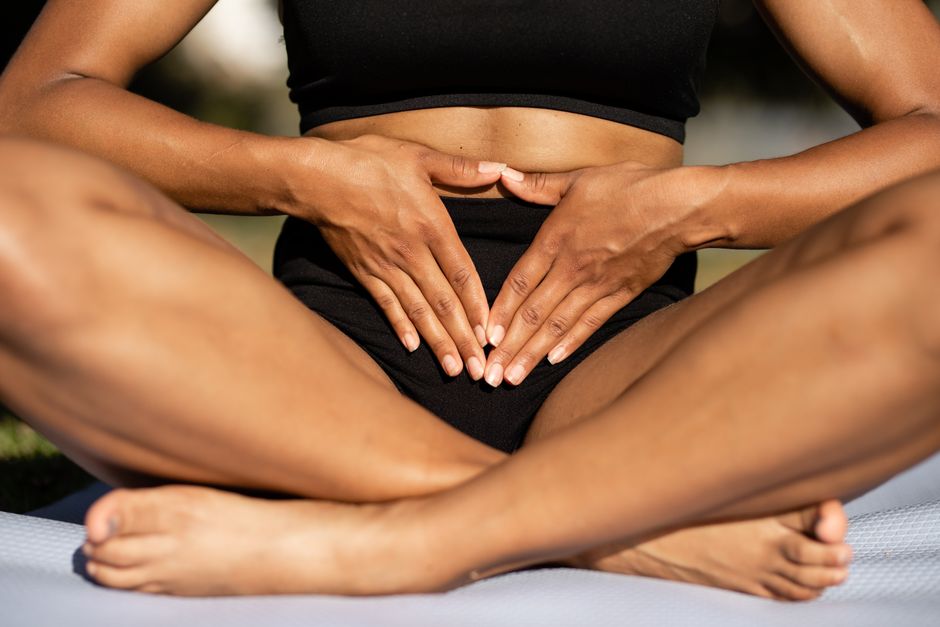
Visible abs are not about how many crunches you do. They are about how much body fat sits between your skin and your abdominal muscles. For most men, visible abs appear around 10 to 12 percent body fat. For most women, the number is higher — around 16 to 20 percent. These are not arbitrary fitness magazine numbers. They are based on how human bodies store fat and where they lose it last. If you can see your abs, you are likely in the leanest 10 to 15 percent of the general population. That is not a judgment. It is simply a fact about where most people’s bodies naturally settle.
What Body Fat Percentage Actually Lets You See Your Abs?
The exact number depends on your sex, your muscle mass, and how your body stores fat. For men, the range is 10 to 14 percent. For women, it is 16 to 22 percent. These are not strict cutoffs. Some men show visible abs at 14 percent if they carry more muscle. Some women show them at 22 percent if they store less fat on their torso.
Research published in the American Journal of Clinical Nutrition found that most men lose abdominal fat patterns in the 10 to 12 percent range. Women typically need to go lower than their natural “essential fat” range of 10 to 13 percent to get the same look. That matters because essential fat is the minimum your body needs to function properly. Going below it carries real health risks.
Body fat percentage is not the same as body mass index. BMI does not tell you where your fat sits. Two people with the same BMI can look completely different. One may have visible abs. The other may not. Body fat percentage is a more honest measure for this goal.
How Do You Measure Body Fat Accurately?
This is where most people get misled. Bathroom scales that claim to measure body fat are not accurate. Neither are most handheld devices. They can be off by 4 to 8 percent in either direction. That is enough to make you think you are at 12 percent when you are actually at 18.
The most accurate methods are DEXA scans and hydrostatic weighing. DEXA uses low-dose X-rays to measure bone density, lean mass, and fat mass. It is the gold standard used in research. Hydrostatic weighing measures your body density by weighing you underwater. Both are expensive and not widely available.
For most people, calipers from a trained professional are good enough. A seven-site skinfold measurement done by someone who knows what they are doing has an error margin of about 3 percent. The key is consistency. Use the same method, same time of day, and same person if possible. Do not compare a caliper reading to a DEXA reading. They measure different things.
| Measurement Method | Typical Error Margin | Best For |
|---|---|---|
| DEXA scan | 1-2% | Research-grade accuracy |
| Hydrostatic weighing | 1-2% | Accurate baseline |
| Calipers (7-site) | 3-4% | Tracking changes over time |
| Bioelectrical impedance (home scale) | 4-8% | Trends only, not absolute numbers |
| Visual estimation | Very high error | Not recommended |
What Does Research on Visible Abs and Body Fat Show?
Studies have found that visible abs are not a sign of health. They are a sign of low body fat. A 2016 study in PLOS ONE looked at over 12,000 adults and found that people with visible abs did not have better cardiovascular health than people with a normal body fat percentage who did not show abs. The leanest group actually had higher levels of cortisol, a stress hormone.
Another study in the Journal of Applied Physiology tracked athletes who got down to single-digit body fat for competitions. Many of them experienced drops in testosterone, disrupted sleep, and lower immune function. The look came at a cost. The body sees very low body fat as a threat. It responds by slowing down non-essential systems.
Some evidence indicates that genetics play a larger role than most people want to admit. Where you store fat is partly inherited. Some people can be at 15 percent body fat and show a four-pack. Others can be at 12 percent and still have a soft lower belly. That is not about willpower. It is about how your fat cells are distributed.
What Are the Risks of Going Too Low for Abs?
For men, body fat below 8 percent is considered dangerously low by most medical standards. For women, below 14 percent is risky. At these levels, the body stops producing enough hormones to maintain normal function. Menstrual cycles stop in women. Testosterone drops in men. Bone density can decrease.
The American Council on Exercise classifies body fat below 10 percent for men and below 18 percent for women as “essential athlete” range. They note that staying in this range long-term is not sustainable for most people. The body fights to regain fat. Hunger hormones like ghrelin increase. Metabolism slows. Most people cannot maintain abs year-round without significant effort and some health trade-offs.
There is also the risk of disordered eating. Obsessing over body fat percentage to see abs is a common entry point into unhealthy relationships with food. If getting visible abs means skipping meals, avoiding social eating, or feeling anxious about every bite, the cost is too high.
What Actually Works to Lower Body Fat for Abs?
Diet matters more than exercise for body fat reduction. That is not an opinion. It is what the research consistently shows. A calorie deficit — eating fewer calories than you burn — is the only way to lose body fat. Exercise helps preserve muscle and improves health, but you cannot out-train a poor diet.
Protein intake is important. A 2020 review in Nutrients found that higher protein diets help preserve lean mass during weight loss. That matters because losing muscle makes your abs less visible even at the same body fat percentage. Aim for 0.7 to 1 gram of protein per pound of body weight if you are actively trying to lose fat.
Resistance training is more effective than cardio for preserving muscle during a cut. Compound lifts like squats, deadlifts, and presses build overall muscle mass. That increases your resting metabolic rate and helps you burn more calories at rest. Direct ab work like planks and leg raises builds the muscle underneath. It does not burn belly fat directly, but it makes the muscle more visible when the fat comes off.
- Eat in a modest calorie deficit — 300 to 500 calories below maintenance per day. Aggressive deficits cause muscle loss and metabolic slowdown.
- Prioritize protein at every meal — this preserves muscle and keeps you full longer than carbs or fat.
- Lift weights 3 to 4 times per week — focus on progressive overload, not just ab exercises.
- Get 7 to 9 hours of sleep per night — poor sleep raises cortisol and makes fat loss harder.
- Be patient — losing 1 to 2 pounds per week is sustainable. Faster loss usually means losing muscle too.
Do You Actually Need Visible Abs?
This is the question most articles avoid. Visible abs are a cosmetic goal. They are not a health requirement. The World Health Organization defines healthy body fat ranges as 10 to 20 percent for men and 18 to 28 percent for women. You can be perfectly healthy without ever seeing your abs.
Some people report feeling better at a slightly higher body fat percentage. They have more energy, better sleep, and more stable moods. That is not a failure. It is a sign that their body is comfortable at that level. The pursuit of visible abs can become a treadmill where no amount of leanness is enough. That is not a healthy mindset.
If your goal is health, focus on waist circumference instead. The National Institutes of Health says a waist circumference above 40 inches for men and 35 inches for women is linked to higher risk of heart disease and diabetes. That is a better health marker than whether you can see your rectus abdominis.
Frequently Asked Questions
Can you have abs without a low body fat percentage?
No. Visible abs require low enough body fat that the skin and fat layer over the abdominal muscles is thin enough to reveal muscle definition.
What body fat percentage do women need for abs?
Most women show visible abs between 16 and 20 percent body fat, though individual genetics and muscle mass affect the exact number.
Is it unhealthy to maintain visible abs year-round?
For many people, yes. Staying below 10 percent for men or below 16 percent for women long-term can disrupt hormones, sleep, and immune function.
How long does it take to get visible abs?
It depends on starting body fat. Most people need 3 to 6 months of consistent diet and training to drop from a normal body fat percentage to the range where abs show.
