
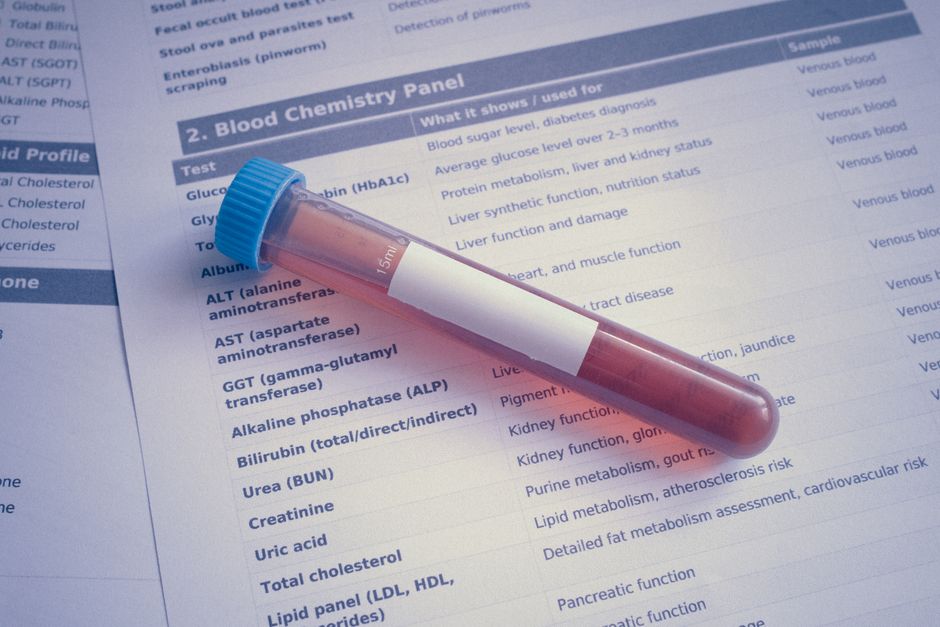
Gallbladder problems rarely announce themselves clearly. The pain can feel like indigestion, and the symptoms can look like a dozen other conditions. That is why blood tests matter so much. They do not image the gallbladder directly, but they reveal how the liver, bile ducts, and pancreas are responding to a problem nearby.
Here is the short answer. There is no single blood test that diagnoses gallbladder disease. Instead, doctors look at a panel of markers. These include liver enzymes (ALT, AST, ALP), bilirubin, and sometimes pancreatic enzymes and a complete blood count. Together, these tests help show whether a blocked bile duct, inflammation, or infection is present. They guide the next step, usually an ultrasound.
What Blood Tests Show Gallbladder Problems?
Blood tests do not see the gallbladder itself. They show the effects a gallbladder problem has on the organs and ducts around it. The gallbladder sits just under the liver and stores bile. When a stone or inflammation blocks the flow of bile, that backup shows up in the bloodstream.
The most useful markers fall into a few groups. Each one tells a slightly different part of the story.
- Alkaline phosphatase (ALP) — rises when bile flow is blocked in the liver or bile ducts.
- Bilirubin — a waste product from red blood cells. It builds up when bile cannot drain, causing jaundice.
- ALT and AST — liver enzymes that rise when liver cells are injured or inflamed.
- GGT — another enzyme tied to bile ducts. It often rises alongside ALP.
- Lipase and amylase — pancreatic enzymes. They rise if a gallstone blocks the duct shared with the pancreas.
- Complete blood count (CBC) — a high white blood cell count can point to infection or inflammation.
No single one of these confirms gallbladder disease. The pattern across several markers is what guides the doctor. A mild rise in one enzyme means something different than a sharp rise across several.
Why Does the Gallbladder Not Have Its Own Blood Test?
The gallbladder is a small storage sac, not a major producer of enzymes or proteins. It concentrates bile that the liver makes. Because of that, it does not release its own unique marker into the blood the way the liver or pancreas does.
This is the non-obvious part. When we say “gallbladder blood tests,” we really mean tests that detect the downstream effects of a gallbladder problem. The gallbladder itself can be inflamed or full of stones while blood tests stay completely normal. That gap is why imaging matters.
A normal blood panel does not rule out gallstones. Many people have gallstones and normal labs. The tests are most useful when a duct is blocked or an infection is present, because those events change the chemistry of the blood.
What Does a Blocked Bile Duct Look Like on Blood Tests?
A blocked bile duct produces a fairly recognizable pattern. The classic sign is a rise in alkaline phosphatase and bilirubin, often with a rise in GGT. This pattern is called cholestasis, meaning reduced bile flow.
When a gallstone escapes the gallbladder and lodges in the common bile duct, bile backs up into the liver and then into the blood. Bilirubin climbs, and the skin and eyes can turn yellow. This is jaundice, and it is one of the clearest signals that something is blocking the duct.
ALT and AST may rise too, but usually less dramatically than ALP and bilirubin in a pure blockage. If ALT and AST are very high, that can suggest the liver cells themselves are injured, which points toward a different or additional problem.
The pattern is not perfectly specific. Other conditions, including some liver diseases and certain medications, can raise the same markers. That is why doctors combine the blood results with symptoms, an exam, and imaging rather than relying on labs alone.



How Do Blood Tests Help Tell Gallstones From Other Problems?
Blood tests help narrow the field, but they rarely give a final answer on their own. Their main job is to flag whether the problem is simple or complicated.
Consider the common situations:
- Gallstones without blockage — labs are often normal. The diagnosis comes from symptoms and ultrasound.
- Inflamed gallbladder (cholecystitis) — white blood cell count may be high, and liver enzymes may be mildly abnormal.
- Blocked common bile duct — ALP and bilirubin rise, sometimes with jaundice.
- Gallstone pancreatitis — lipase and amylase rise sharply, signaling the pancreas is involved.
Each pattern points the doctor in a different direction. A high lipase, for example, changes the urgency and the treatment plan. A normal panel with classic pain sends the doctor toward imaging instead.
When Are Blood Tests Most Useful for Gallbladder Problems?
Blood tests are most valuable when a gallbladder problem is complicated, not when it is simple. They shine when a duct is blocked, when infection is suspected, or when the pancreas may be involved.
They are less useful for uncomplicated gallstones. In that case, a person can have severe pain and a completely normal blood panel. The pain comes from the gallbladder contracting against a stone, which does not necessarily change blood chemistry.
This is why a normal result should never be treated as proof that nothing is wrong. If symptoms continue, imaging such as ultrasound is usually the next step. Ultrasound is the standard first test for suspected gallstones because it is safe, widely available, and good at spotting stones and gallbladder wall changes.
What Other Tests Confirm Gallbladder Problems?
Blood tests are one piece of a larger picture. When a gallbladder problem is suspected, doctors usually combine several tools.
- Abdominal ultrasound — the first-line imaging test for gallstones and gallbladder inflammation.
- CT scan — used when complications or other causes are suspected.
- HIDA scan — measures how well the gallbladder empties. It can help when the gallbladder looks normal on ultrasound but symptoms persist.
- MRCP or ERCP — specialized imaging of the bile ducts. ERCP can also remove a stone that is stuck in a duct.
Each test answers a different question. Ultrasound finds stones. Blood tests reveal consequences like blockage or infection. The HIDA scan looks at function, not structure. Understanding which tool does what helps explain why doctors order several rather than just one.
What Do the Numbers Actually Mean?
Reference ranges vary slightly between labs, so a result is always read against the range printed on that report. Still, the general direction of each marker is consistent.
| Marker | What a rise can suggest |
|---|---|
| ALP | Blocked bile flow in liver or ducts |
| Bilirubin | Bile backup, jaundice |
| ALT / AST | Liver cell injury or inflammation |
| GGT | Bile duct irritation, often with ALP |
| Lipase / amylase | Pancreas involvement |
| White blood cells | Infection or inflammation |
A mild rise in a single marker is often not alarming. A sharp rise, or a rise across several markers at once, is more likely to signal a real problem that needs prompt attention. The trend over time can matter as much as a single reading.
What Symptoms Should Prompt Testing?
Certain symptoms make gallbladder testing more likely. The most common is pain in the upper right abdomen, especially after fatty meals. The pain may radiate to the right shoulder or back.
Other signs that often trigger testing include:
- Nausea or vomiting, particularly after eating
- Yellowing of the skin or eyes
- Dark urine or pale, clay-colored stools
- Fever or chills with abdominal pain
- Pain that lasts hours rather than passing quickly
Fever with right-sided abdominal pain deserves prompt medical attention. It can signal an infected or inflamed gallbladder, which is a more serious situation than simple gallstones. This is general information, not a substitute for a medical evaluation.
Key Takeaways
Blood tests do not diagnose gallbladder problems directly. They reveal the effects a problem has on the liver, bile ducts, and pancreas. A rise in ALP and bilirubin points toward a blocked duct. A high white blood cell count can suggest infection. High lipase or amylase points toward pancreas involvement.
Normal results do not rule out gallstones. Many people with gallstones have perfectly normal labs. If symptoms persist, imaging is usually the next step. Blood tests and imaging work together, and neither one tells the whole story on its own.
Frequently Asked Questions
Can blood tests detect gallstones?
No, blood tests cannot detect gallstones directly. They can show complications like a blocked bile duct or infection, but stones themselves are found with imaging such as ultrasound.
What blood test shows gallbladder inflammation?
A complete blood count showing a high white blood cell count can point to gallbladder inflammation or infection. Liver enzymes may also be mildly abnormal, but imaging is usually needed to confirm it.
Can gallbladder problems show normal blood tests?
Yes, blood tests are often completely normal in uncomplicated gallstones. A normal panel does not rule out a gallbladder problem, so persistent symptoms still warrant imaging.
What does high bilirubin mean with gallbladder problems?
High bilirubin often means bile is not draining properly, usually because a stone is blocking a bile duct. This can cause jaundice, with yellowing of the skin and eyes.
