
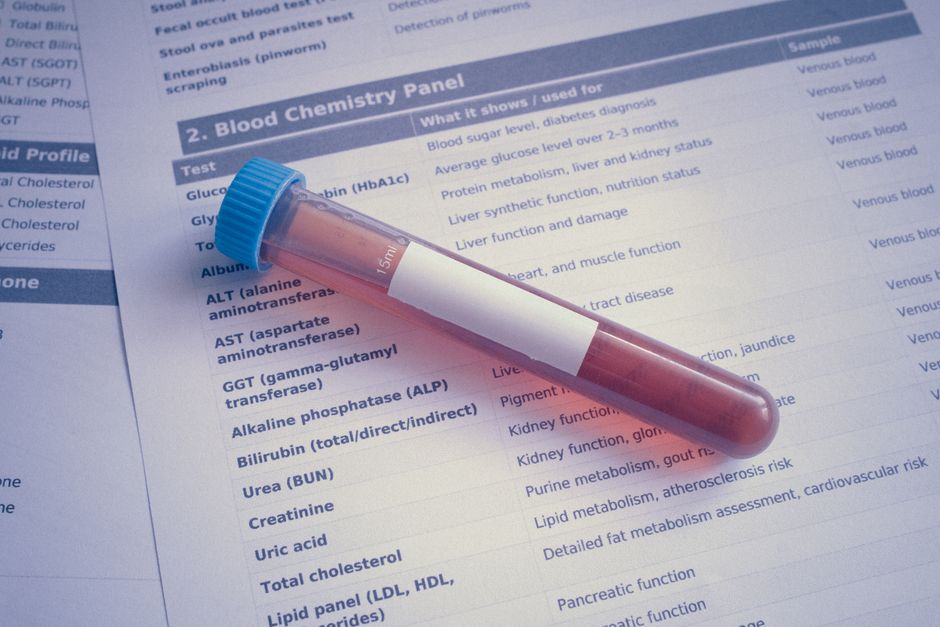
Myasthenia gravis is a rare autoimmune disease that disrupts communication between nerves and muscles. Blood tests used to diagnose myasthenia gravis focus on finding antibodies that attack the body’s own nerve-muscle connection. The main tests are the acetylcholine receptor (AChR) antibody test, the muscle-specific kinase (MuSK) antibody test, and the lipoprotein-related protein 4 (LRP4) antibody test. Doctors also order general blood work to rule out other conditions and to check for issues linked to some treatments.
What Blood Tests Are Used To Diagnose Myasthenia Gravis?
The core blood tests look for specific antibodies. An antibody is a protein your immune system makes to target something it sees as foreign. In myasthenia gravis, these antibodies mistakenly target proteins at the neuromuscular junction — the point where a nerve signal tells a muscle to move.
The main antibody tests are:
- AChR antibody test. This is the first test doctors usually order. Antibodies against the acetylcholine receptor are found in most people with generalized myasthenia gravis, though less often in people whose weakness stays limited to the eye muscles.
- MuSK antibody test. This is checked when the AChR test is negative but the person still has symptoms suggesting myasthenia gravis. MuSK antibodies account for a meaningful share of cases that test negative for AChR antibodies.
- LRP4 antibody test. This is a newer test, usually ordered when both AChR and MuSK antibodies are absent and clinical suspicion remains.
There is a detail many people find surprising. A negative antibody test does not rule out myasthenia gravis. A portion of people with confirmed disease — sometimes called seronegative myasthenia gravis — have no detectable antibodies on standard testing. In those cases, diagnosis rests on symptoms, physical exam, and other tests such as nerve and muscle studies.
What Does the Acetylcholine Receptor Antibody Test Measure?
The AChR antibody test measures antibodies that bind to the acetylcholine receptor on the muscle side of the neuromuscular junction. Acetylcholine is the chemical messenger the nerve releases to trigger muscle contraction. When antibodies block, damage, or reduce these receptors, the signal weakens and muscles tire easily.
This test is considered the most useful single blood test for myasthenia gravis. It is positive in a large majority of people with generalized disease. In people whose weakness is confined to the eyes — called ocular myasthenia gravis — the test is positive less often, roughly half the time or less depending on the source.
There are two main ways labs measure these antibodies: a binding test and a blocking test. The binding test is the standard screening method. The blocking test is sometimes added but is less sensitive. Some labs also measure modulating antibodies. Your doctor can explain which version your lab uses, because the results are not always interchangeable.
Why Do Doctors Test for MuSK and LRP4 Antibodies?
MuSK and LRP4 antibodies exist in people who test negative for AChR antibodies. Testing for them closes part of that gap. MuSK stands for muscle-specific kinase, a protein that helps organize the acetylcholine receptors at the junction. LRP4 is a protein that interacts with MuSK in that same assembly process.
MuSK myasthenia gravis tends to differ from AChR-positive disease in some ways. It more often affects the muscles of the face, throat, and neck, and it can be associated with more severe bulbar symptoms — trouble swallowing and speaking. Identifying it matters because the treatment approach can differ, and some standard therapies work less well in MuSK disease.
LRP4 antibodies are the most recently described of the three. They are found in a small share of people who are negative for both AChR and MuSK antibodies. Testing for LRP4 is not available at every lab, so it is often ordered through specialized centers.




What Other Blood Tests Are Ordered Alongside Antibody Testing?
Antibody tests answer the central question, but doctors order other blood work for different reasons. These tests do not diagnose myasthenia gravis directly. They help rule out other causes of weakness and check for conditions that can be linked to myasthenia gravis or its treatment.
- Thyroid function tests. Thyroid disease can cause fatigue and weakness, and it is more common in people with autoimmune conditions.
- Complete blood count and metabolic panel. These give a general picture of health and catch other causes of tiredness or muscle problems.
- Tests for other autoimmune conditions. Myasthenia gravis can occur alongside other autoimmune diseases, so doctors sometimes check for them.
- Vitamin B12 and other nutritional markers. Deficiencies can mimic some symptoms of weakness and fatigue.
- Creatine kinase. This enzyme can rise in muscle diseases that cause weakness, so a normal level helps point away from those conditions.
Some people with myasthenia gravis have a thymoma — a tumor of the thymus gland. Blood work alone cannot detect a thymoma. Imaging of the chest, usually a CT scan, is the test used for that. Your doctor decides whether imaging is needed based on your symptoms and antibody results.
What If the Antibody Tests Are Negative?
A negative result does not close the case. Seronegative myasthenia gravis is a recognized form of the disease, and some people with clear symptoms and a supportive exam still test negative on all available antibody tests. In that situation, doctors rely on other evidence.
Two tests are commonly used. One is repetitive nerve stimulation, a nerve conduction study that checks whether the muscle signal weakens with repeated stimulation. The other is single-fiber electromyography, a more sensitive test that measures the timing of electrical signals in muscle fibers. Both are electrical studies, not blood tests, but they can support the diagnosis when antibodies are absent.
Some people with seronegative disease are later found to have antibodies that current commercial tests do not detect. Research into newer antibody targets is ongoing. For now, no single blood test captures every case, and diagnosis remains a combination of clinical judgment and test results.
How Should You Interpret Myasthenia Gravis Blood Test Results?
A positive antibody test in someone with compatible symptoms strongly supports the diagnosis. It is not a standalone verdict, though. Results are read together with the physical exam, the pattern of weakness, and other testing.
A negative test is not proof you do not have the disease. This is the single most important thing to understand about these tests. The antibody tests are highly specific when positive, meaning a positive result is meaningful. But they are not perfectly sensitive, meaning a negative result leaves real uncertainty.
Test results can also vary by lab and by the method used. If your results seem to conflict with your symptoms, ask your doctor whether a different antibody test or a specialized center might help clarify the picture. Diagnosis of myasthenia gravis is best made by a neurologist familiar with the disease.
Frequently Asked Questions
What is the most common blood test for myasthenia gravis?
The acetylcholine receptor (AChR) antibody test is the first and most common blood test ordered. It is positive in most people with generalized myasthenia gravis.
Can myasthenia gravis be diagnosed with a blood test alone?
No. Blood tests support the diagnosis, but doctors also use the physical exam, symptom pattern, and sometimes nerve or muscle studies. A negative blood test does not rule out the disease.
What does it mean if my antibody test is negative?
A negative result means no antibodies were detected by that test, but seronegative myasthenia gravis is a recognized form of the disease. Your doctor may order additional antibody tests or electrical studies.
Do I need to fast before a myasthenia gravis blood test?
Fasting is usually not required for antibody tests. Follow the specific instructions from your lab, since some accompanying tests may have their own requirements.
