
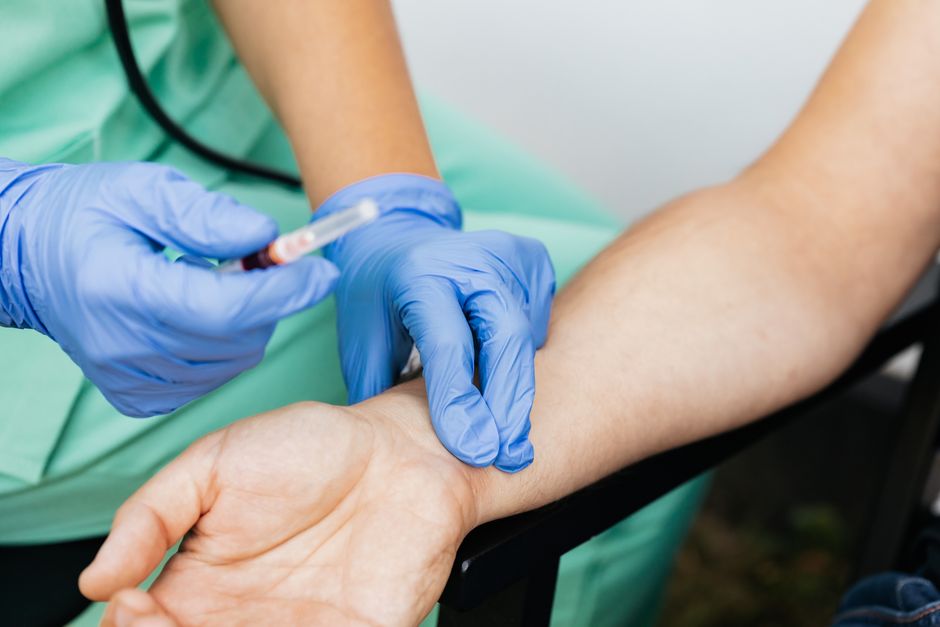
A standard lipid panel (also called a lipid profile) is the blood test that checks your cholesterol. It measures total cholesterol, LDL (“bad”) cholesterol, HDL (“good”) cholesterol, and triglycerides. This is the test doctors use to assess your risk for heart disease and stroke. It requires a simple blood draw, usually after fasting for 9 to 12 hours, though non-fasting options are increasingly common.
What Exactly Does a Lipid Panel Measure?
A lipid panel provides four main numbers. Each one tells you something different about your cardiovascular health.
Total cholesterol is the sum of all the cholesterol in your blood. It includes both LDL and HDL, plus a small amount of other fats. This number alone is not enough to judge your risk, but it is a starting point.
LDL cholesterol is often called the “bad” cholesterol. It carries cholesterol to your arteries. When LDL levels are high, cholesterol can build up on artery walls, forming plaque. This plaque narrows arteries and raises the risk of heart attack and stroke.
HDL cholesterol is the “good” cholesterol. It helps remove cholesterol from your arteries and carries it back to the liver for disposal. Higher HDL levels are generally associated with lower heart disease risk.
Triglycerides are a type of fat in your blood. Your body uses them for energy. High triglyceride levels, especially combined with high LDL or low HDL, increase cardiovascular risk. Triglycerides rise after eating, which is why fasting was traditionally required before the test.
What Blood Test Checks Cholesterol The Lipid Panel — and When Should You Get One?
The lipid panel is the standard test. Your doctor may order it as part of a routine physical, or if you have risk factors like high blood pressure, diabetes, or a family history of heart disease.
For healthy adults, current guidelines generally recommend cholesterol screening every 4 to 6 years starting at age 20. More frequent testing is recommended if you have existing heart disease, are taking cholesterol-lowering medication, or have conditions that increase your risk.
Your doctor may also order a more detailed test called an apolipoprotein B (apoB) test or a lipoprotein(a) test. These measure specific particles involved in cholesterol transport. They can provide additional risk information, especially for people with a strong family history of heart disease, but the lipid panel remains the first-line test.
Understanding Your Lipid Panel Results
Results are reported in milligrams per deciliter (mg/dL). The numbers are interpreted in context — your age, sex, blood pressure, smoking status, and diabetes status all matter.
Here are the general reference ranges for adults, based on established clinical guidelines:
| Measurement | Desirable Level |
|---|---|
| Total cholesterol | Less than 200 mg/dL |
| LDL cholesterol | Less than 100 mg/dL |
| HDL cholesterol | 60 mg/dL or higher |
| Triglycerides | Less than 150 mg/dL |
These are general targets. Your doctor may set different goals. For example, if you already have heart disease or diabetes, your LDL target may be below 70 mg/dL. Some high-risk patients are now treated to LDL levels below 55 mg/dL, per recent clinical guidance.
Do not interpret your results in isolation. A single high LDL reading does not automatically mean you need medication. Your doctor calculates your overall risk using a tool like the pooled cohort equations, which factor in age, sex, race, blood pressure, cholesterol levels, and smoking status.



Fasting vs. Non-Fasting Lipid Panels
Traditional lipid panels required a 9 to 12 hour fast. This was because food, especially fat, temporarily raises triglyceride levels. Fasting produced a more accurate baseline.
Modern practice is changing. Many studies show that non-fasting lipid panels are acceptable for most people. LDL and total cholesterol do not change significantly after eating. Triglycerides do rise, but the increase is predictable and can be interpreted.
Current guidelines from major cardiology organizations now allow non-fasting testing for routine screening. Fasting is still recommended if your triglycerides are very high or if your doctor needs a precise baseline for a specific clinical decision. Some laboratories still prefer fasting samples for consistency.
If you are unsure whether to fast, ask your doctor before the test. The most important thing is to be consistent — if you fast for one test, fast for the next so results are comparable.
What Can Skew Your Results?
Several factors can affect your lipid panel results. Some are within your control; others are not.
Recent food intake raises triglycerides. This is why fasting was traditionally required. Even a non-fasting test should be done at least 8 hours after a heavy meal.
Alcohol can raise triglyceride levels, especially in the days after heavy drinking. Avoiding alcohol for 24 hours before the test is prudent.
Illness or injury can temporarily lower cholesterol levels. Surgery, infections, and even a bad cold can affect results. If you are acutely ill, your doctor may postpone testing.
Pregnancy raises cholesterol levels naturally. Lipid panels during pregnancy are not reliable for assessing baseline risk. Doctors typically wait until at least 6 weeks after delivery to recheck.
Medications can influence results. Certain diuretics, beta-blockers, and corticosteroids can raise cholesterol. Birth control pills and hormone therapy can also affect levels. Always tell your doctor about every medication and supplement you take.
Stress and minor day-to-day variation can also cause small fluctuations. A single abnormal result is not a diagnosis. Your doctor will usually repeat the test to confirm before starting treatment.
How to Lower Your Cholesterol
If your lipid panel shows elevated levels, lifestyle changes are the first step for most people. These changes are not quick fixes — they take weeks to months to show measurable improvement.
Dietary changes have the most direct impact. Reducing saturated fat (found in red meat, butter, and full-fat dairy) lowers LDL cholesterol. Increasing soluble fiber (oats, beans, apples, carrots) helps remove cholesterol from your body. Plant sterols and stanols, found in some margarines and supplements, can also modestly lower LDL.
Regular physical activity raises HDL and lowers triglycerides. The American Heart Association recommends at least 150 minutes of moderate-intensity aerobic activity per week. This does not need to be intense — brisk walking counts.
Weight loss of even 5 to 10 percent of body weight can improve cholesterol levels. Excess weight, especially around the abdomen, is linked to higher LDL and triglycerides and lower HDL.
Smoking cessation improves HDL levels within weeks. Smoking lowers HDL and damages blood vessels, making cholesterol more dangerous.
If lifestyle changes are not enough, your doctor may recommend medication. Statins are the most common and best-studied cholesterol-lowering drugs. They reduce LDL by blocking an enzyme the liver needs to make cholesterol. Other options include ezetimibe, PCSK9 inhibitors, and bile acid sequestrants. The choice depends on your risk level and how much you need to lower your numbers.
Do not stop taking cholesterol medication without talking to your doctor. Some people stop because they feel fine, but high cholesterol has no symptoms — the damage is silent until a heart attack or stroke occurs.
What the Lipid Panel Does Not Tell You
The standard lipid panel is a useful screening tool, but it has limits. It measures the amount of cholesterol in your blood, not the size or number of the particles carrying it.
Some research suggests that particle size matters. Small, dense LDL particles may be more dangerous than large, fluffy ones because they more easily penetrate artery walls. The standard lipid panel does not measure particle size.
An apoB test measures the number of atherogenic particles — those that cause plaque buildup. Some experts argue apoB is a better predictor of heart disease risk than LDL alone. However, apoB testing is not yet standard for everyone, and the lipid panel remains the recommended first-line test.
Lipoprotein(a), or Lp(a), is a genetic variant of LDL that independently raises heart disease risk. High Lp(a) levels are inherited and do not respond well to lifestyle changes or statins. If you have a strong family history of early heart disease, ask your doctor about Lp(a) testing. It is measured once because levels remain stable throughout life.
These additional tests are not replacements for the lipid panel. They provide extra information for people at higher risk. For most people, the standard lipid panel is sufficient for guiding treatment decisions.
How Often Should You Repeat the Test?
If your results are normal, repeat testing every 4 to 6 years is reasonable. If your results are borderline or you have risk factors, your doctor may recommend annual testing.
If you start cholesterol-lowering medication, your doctor will typically recheck your lipid panel within 3 months to see if the dose is effective. Once your levels are stable, testing once or twice a year is common.
Follow your doctor’s recommendation. Testing more frequently than needed does not improve outcomes and adds unnecessary cost. Testing less frequently than recommended can miss silent progression of risk.
Frequently Asked Questions
Do I need to fast before a cholesterol blood test?
Not always. Many doctors now accept non-fasting lipid panels for routine screening. Ask your doctor whether fasting is required for your specific test.
What is the difference between LDL and HDL cholesterol?
LDL carries cholesterol to your arteries and can cause plaque buildup, so it is called “bad.” HDL carries cholesterol away from arteries to the liver, so it is called “good.”
Can I lower my cholesterol without medication?
Yes, many people can lower cholesterol with diet, exercise, weight loss, and quitting smoking. But if your risk is high, medication may still be necessary even with lifestyle changes.
What is a normal cholesterol level?
Total cholesterol below 200 mg/dL is generally desirable, with LDL below 100 mg/dL, HDL at 60 mg/dL or higher, and triglycerides below 150 mg/dL. Your doctor may set different targets based on your personal risk.
