
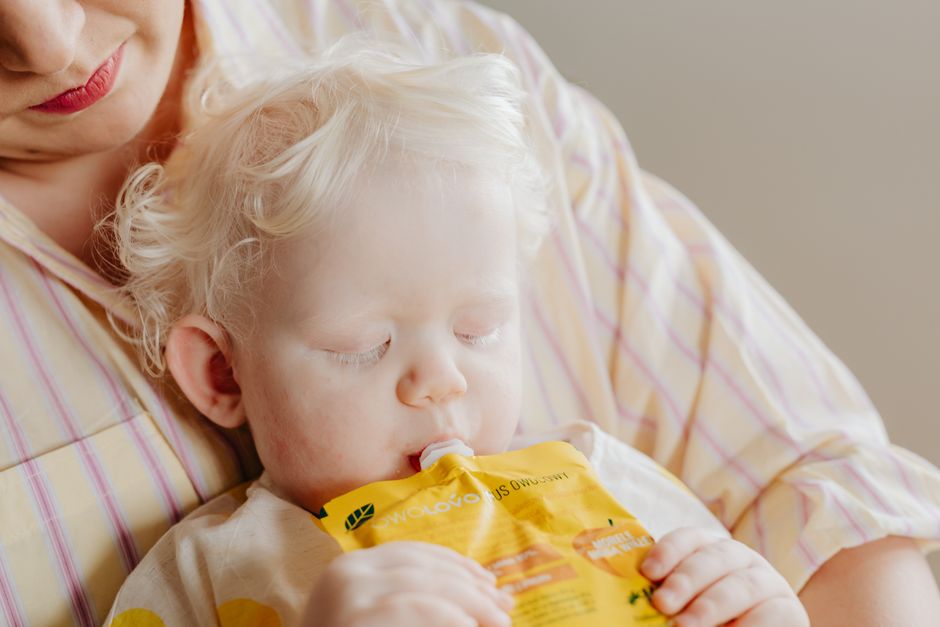
Parents today face a confusing shelf. Jars and pouches carry words like “organic,” “clean,” and “gentle.” At the same time, headlines warn about heavy metals in baby food and rising rates of food allergies. It is a lot to hold at once. The honest summary: no baby food is guaranteed free of trace metals, because those elements come from soil and water, not from a factory. What you can control is variety, timing of allergen introduction, and how you prepare food at home. The sections below break down what is actually known.
Why Are Heavy Metals Found in Baby Food?
Heavy metals like lead, arsenic, cadmium, and mercury occur naturally in soil, water, and air. Plants take them up as they grow. That means rice, sweet potatoes, carrots, and apples can all carry small amounts, whether they are grown on a large farm or in a backyard garden.
This is not primarily a contamination problem created by manufacturers. It is a geology and environment problem that ends up in the food supply. Industrial pollution and some historical use of lead-based products have added to background levels, but the baseline presence in soil predates any of that.
Babies are more vulnerable than adults for two reasons. Their bodies are smaller, so a given amount of a metal is a larger dose relative to body weight. Their brains and nervous systems are still developing, and lead in particular is a known neurodevelopmental toxicant with no identified safe blood level in children.
That said, the presence of a detectable metal is not the same as harm. Detection technology today can find parts per billion. What matters for risk is the amount, the frequency of exposure, and the total diet over time. This is why regulators and pediatric bodies focus on reducing exposure rather than claiming any product is metal-free.
What Baby Food Is Safe? Metals, Allergens, and More
No category of commercial baby food has been shown to be completely free of trace heavy metals, and no brand can honestly claim that. What varies is the level, and levels vary by ingredient more than by brand.
Rice is the ingredient most consistently associated with higher inorganic arsenic levels, because rice plants take up arsenic from water and soil more readily than most crops. This is why public health guidance in the US and Europe has specifically advised against relying on rice cereal as a daily staple for infants. Rice can still be part of a varied diet, but it should not be the foundation.
Root vegetables, including sweet potato and carrots, tend to accumulate more cadmium and lead than many other produce types. Again, the answer is rotation, not elimination. Serving the same single ingredient every day concentrates whatever that ingredient contains.
On the allergen side, the picture is different and clearer. Current pediatric guidance from major allergy and pediatric organizations supports introducing common allergenic foods — peanut, egg, milk, wheat, soy, fish, shellfish, tree nuts, and sesame — starting around 6 months of age, alongside continued breastfeeding, rather than delaying them. Delaying introduction has not been shown to prevent allergy and may increase risk.
For infants at high risk of peanut allergy — meaning severe eczema, egg allergy, or both — guidelines recommend evaluation and discussion with a clinician before or around introduction, because early introduction in this group has been shown in controlled trials to reduce peanut allergy development.
What the evidence actually supports
- Variety across grains, vegetables, and fruits reduces concentrated exposure to any single contaminant.
- Rice-based products should not dominate an infant’s diet.
- Allergenic foods should be introduced early and kept in the diet regularly once tolerated.
- Home-prepared food is not automatically lower in metals than commercial food, since the metals come from the ingredients.
- Organic labeling does not mean lower heavy metal content. Organic standards address pesticide and farming practices, not soil metal uptake.
Does Organic Baby Food Have Fewer Heavy Metals?
No consistent evidence shows that organic baby food contains less lead, arsenic, cadmium, or mercury than conventional baby food. Organic certification governs how crops are grown — restrictions on synthetic pesticides and fertilizers — not the metal content of the soil they grow in.
This surprises many parents, and it is worth stating plainly because the marketing around organic baby food often implies otherwise. A crop grown organically in soil with naturally elevated arsenic will still take up arsenic.
Organic food does have documented differences in pesticide residue levels, which is a separate question from heavy metals. If a family chooses organic for that reason, that is a reasonable personal decision. It just should not be framed as a heavy metal solution.
How Can Parents Lower Heavy Metal Exposure?
You cannot eliminate exposure, but you can reduce it meaningfully with a few consistent habits.
- Rotate grains. Use oats, barley, quinoa, and wheat alongside rice rather than relying on rice cereal.
- Rotate vegetables and fruits. Avoid serving the same type every day.
- Cook rice with extra water and drain excess, which has been shown to reduce arsenic content in the cooked grain.
- Limit rice-based snacks, puffs, and drinks, which can concentrate arsenic in a small serving.
- Check your water. If you use well water, testing for lead and arsenic is worthwhile, since water can be a meaningful exposure route.
- Offer a wide diet once solids begin. A varied diet dilutes any single source.
These steps come from general public health guidance on reducing dietary exposure. They are not a guarantee of zero risk. They are practical reductions.
When and How Should You Introduce Allergens?
Introduce common allergenic foods around 6 months, when the infant is developmentally ready for solids and is already tolerating a few basic foods. This timing reflects current guidance from pediatric and allergy organizations and is supported by clinical trial evidence for peanut in particular.
Start with one allergen at a time, in a small amount, and wait a few minutes to observe. Offer it in an age-appropriate form — thinned peanut butter or peanut powder mixed into food, never whole nuts, which are a choking hazard. Whole peanuts and chunks of nut butter are not safe for infants.
Once a food is tolerated, keep it in the regular diet, roughly a few times a week. There is evidence that stopping after introduction may reduce the protective effect seen in trials. Consistency matters.
Signs of a reaction include hives, vomiting, swelling, difficulty breathing, or a change in behavior or alertness. Severe reactions require emergency care. If you are unsure whether a reaction occurred, that is a reason to talk to a clinician, not to guess.
For infants with severe eczema or a known egg allergy, the peanut introduction decision is one to make with a clinician rather than at home alone. This group has the strongest evidence for benefit from early introduction, and also the highest baseline risk.
What About Homemade Baby Food?
Making baby food at home gives you control over ingredients and preparation, but it does not remove heavy metals. The metals are in the produce itself, so a homemade sweet potato puree can contain similar amounts to a jarred one.
Where homemade food does help is variety and dilution. You can blend grains, rotate vegetables, and avoid the single-ingredient repetition that commercial pouches sometimes encourage. You can also control added sugar and salt, which is a genuine advantage for infant nutrition.
Two practical points. First, rinse and peel root vegetables when reasonable, since some metals concentrate near the surface. Second, do not assume that because you made it, it is lower in metals — that claim is not supported.
What Should You Do If You Are Worried?
Worry is common here, and much of it is reasonable. The most useful response is not to search for a “safe” brand, because that brand does not exist in the way marketing suggests. The useful response is to build a varied diet, rotate ingredients, limit rice-heavy products, and follow current allergen introduction guidance.
If your child has a known exposure concern, symptoms, or a high-risk allergy profile, that is a conversation for your pediatrician or an allergist. They can assess your specific situation rather than rely on general rules.
One clarification worth holding onto: the goal is not zero metals, which is not achievable. The goal is reducing cumulative exposure over time while making sure a child gets the nutrition and allergen exposure that support healthy development.
Frequently Asked Questions
Is there any baby food that is completely free of heavy metals?
No. Trace lead, arsenic, cadmium, and mercury occur naturally in soil and water and are taken up by crops, so no commercial or homemade baby food can be guaranteed metal-free. What varies is the amount, and amounts depend more on the ingredient than the brand.
Does organic baby food have fewer heavy metals?
No consistent evidence shows organic baby food contains less lead, arsenic, cadmium, or mercury than conventional baby food. Organic standards address farming and pesticide practices, not the metal content of soil.
When should I introduce allergenic foods like peanut and egg?
Current pediatric and allergy guidance supports introducing common allergenic foods around 6 months, once an infant is developmentally ready for solids. For infants with severe eczema or egg allergy, talk to a clinician first, since this group has the strongest evidence for benefit from early peanut introduction.
Should I avoid rice cereal for my baby?
Rice cereal should not be a daily staple because rice takes up more inorganic arsenic from soil and water than most crops. Rice can still be part of a varied diet, but rotating grains like oats, barley, and quinoa is a reasonable way to reduce concentrated exposure.
