
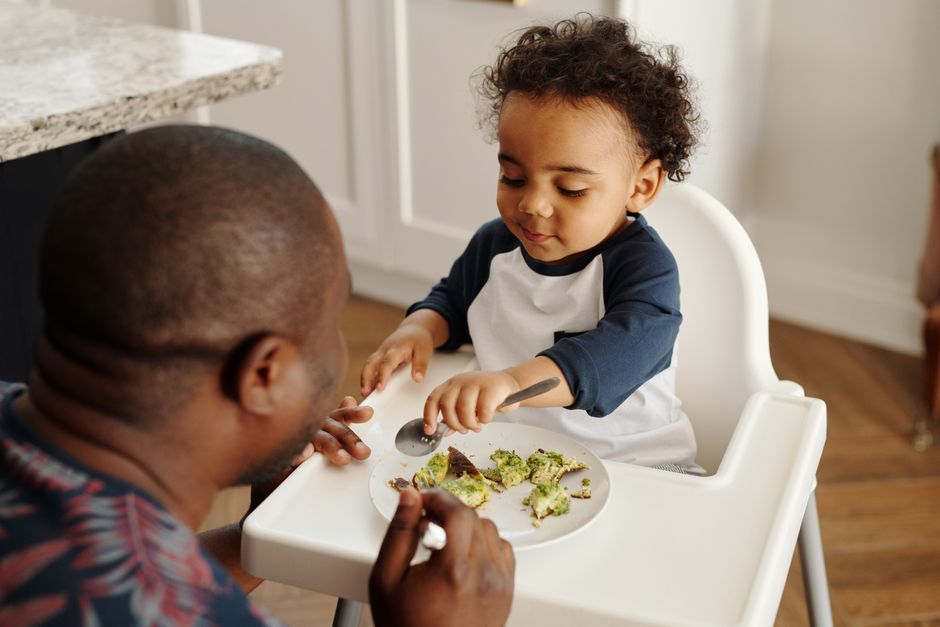
If your baby is straining and passing hard, dry stools, the foods you offer can genuinely help. Pureed prunes, pears, and peaches are the most reliable choices because they are high in fiber and naturally contain sorbitol, a sugar alcohol that draws water into the bowel and softens stool. Apple or pear juice diluted with water can also help. Foods that commonly make constipation worse include rice cereal, bananas, and cooked applesauce.
Constipation in babies is common, especially when solid foods start. The fix is usually about what goes in, not medicine. This guide covers which foods help, which to limit, and when constipation is a sign to call your baby’s doctor.
What Baby Food Helps With Constipation?
Prunes are the most reliable single food for baby constipation. They contain fiber and sorbitol, which pulls water into the intestines and softens stool. Pears and peaches work in a similar way and are often easier to find as baby food purees.
High-fiber purees are the core strategy. Good options include:
- Prunes — often the most effective; start with a small spoonful
- Pears — high in fiber and sorbitol
- Peaches — similar effect, mild flavor
- Plums — the fresh version of prunes
- Apricots — good fiber content
- Peas and green beans — fiber-rich vegetable purees
- Broccoli and spinach — once your baby is eating these
- Oatmeal — a whole-grain cereal with more fiber than rice
Offer these alongside your baby’s usual diet rather than all at once. A few spoonfuls of prune puree once or twice a day is a reasonable starting point for most babies already eating solids. Watch how your baby responds over a day or two before adding more.
One clarification worth making: fruit juice is not the same as fruit puree. Juice lacks the fiber of whole fruit, and pediatric guidance generally discourages juice for infants under 12 months except in specific situations a doctor recommends. Pureed fruit gives you both the fiber and the natural sugars without the concentrated liquid.
Why Do Bananas and Rice Cereal Cause Constipation?
Bananas and rice cereal are two of the most common culprits in baby constipation. Both are low in fiber relative to their starch content, and both can slow the bowel.
Rice cereal is often a baby’s first solid food. It is easy to digest and rarely causes allergies, which is why it is popular. But it is also very low in fiber. For some babies, especially those prone to constipation, it firms up stool noticeably. Oatmeal or barley cereal are higher-fiber alternatives worth discussing with your pediatrician.
Bananas contain pectin, a type of soluble fiber. In small amounts it is fine, but unripe bananas are higher in starch that can be harder to digest and may contribute to constipation in some babies. Ripe bananas are gentler. This is not a reason to avoid bananas entirely — just to notice the pattern if your baby is struggling.
Cooked applesauce is another food that surprises parents. Apples contain pectin, and cooked applesauce is lower in the fiber that helps move things along than a raw apple would be. Some babies do fine with it; others get firmer stools. It is worth watching.
How Much Fiber Does a Baby Need?
There is no official daily fiber recommendation for infants under 12 months. That is an honest gap in the guidelines, not an oversight you should try to fill with a number.
The general approach for babies eating solids is to include fiber-rich foods regularly rather than counting grams. A diet built around a variety of pureed fruits, vegetables, and whole grains naturally provides fiber without the need for measurement.
For context, the widely cited fiber guideline for children over age 2 is roughly their age in years plus 5 grams per day. That formula is not intended for infants and should not be applied to them. If you are worried your baby’s diet is low in fiber, that is a conversation for your pediatrician, not a calculation to do at home.
Too much fiber is also a real thing. Loading a baby up on high-fiber foods too quickly can cause gas, bloating, and discomfort. Add fiber gradually and offer water alongside solid foods once your baby is eating them, since fiber needs fluid to work well.
What About Water and Juice for Constipation?
Water helps fiber do its job. Once your baby is eating solid foods, small amounts of water with meals are reasonable. The amount depends on age and diet, so ask your pediatrician for guidance specific to your baby rather than following a general number.
Fruit juice is a more complicated topic. Prune, pear, and apple juice have a mild laxative effect in some babies because of their sorbitol and fiber content. Some clinicians recommend a small amount of diluted juice for occasional constipation in babies over a few months old. But this is common practice rather than a strongly established recommendation, and juice is not appropriate as a routine drink for infants.
Do not give juice to a baby under 12 months without checking with your pediatrician first. For babies under 6 months, do not give water or juice at all unless a doctor directs it — breast milk or formula provides all the fluid they need.
When Is Baby Constipation a Sign of Something More?
Most baby constipation is dietary and resolves with food changes. Some cases are not, and those need a doctor.
Call your pediatrician if your baby:
- Has not passed a stool in several days and seems uncomfortable
- Has blood in the stool
- Is vomiting along with constipation
- Has a swollen or hard belly
- Is refusing to eat or losing weight
- Seems to be in significant pain
- Is under 6 months old and constipated
Also worth knowing: straining alone is not constipation. Many babies grunt, turn red, and strain while passing soft stools — this is normal, especially in the first few months. True constipation means hard, dry stools that are difficult or painful to pass, not just effort. If the stool is soft, the straining is usually not a problem.
In rare cases, ongoing constipation in infants can be linked to medical conditions such as Hirschsprung disease or thyroid problems. These are uncommon, but they are why persistent constipation that does not respond to diet changes deserves a medical evaluation rather than more prune puree.
What Else Helps Beyond Food?
Movement helps the bowel move. Gentle leg exercises — bicycling your baby’s legs or gently massaging the belly in a clockwise direction — can support digestion and are commonly suggested by clinicians. The evidence for these techniques is mostly practical experience rather than large trials, but they are low-risk and widely used.
A warm bath can help relax the abdominal muscles. Some parents find it eases discomfort.
Do not use suppositories, enemas, or laxatives for a baby without a doctor’s guidance. These are not appropriate for routine home use in infants, and the risks are real if used incorrectly.
If you are formula feeding, check that you are mixing formula according to the package directions. Formula that is mixed too thick can contribute to constipation. Never water down formula to treat constipation — this can be dangerous.
The Bottom Line
Prunes, pears, and peaches are the most reliable baby foods for constipation, followed by other high-fiber purees and whole-grain cereals like oatmeal. Limit rice cereal, bananas, and cooked applesauce if you notice they firm up your baby’s stool. Add fiber gradually, offer water with solids once your baby is eating them, and keep an eye on whether stools are actually hard or just passed with effort.
Most cases improve with diet changes within a few days. If they do not, or if your baby is under 6 months old, or if there is blood, vomiting, or a swollen belly, call your pediatrician. Constipation is common and usually manageable — but it is not something to treat with guesswork in a very young baby.
Frequently Asked Questions
What baby food helps with constipation fast?
Prune puree tends to work fastest because it is high in fiber and sorbitol, which draws water into the bowel. Pears and peaches are close behind and are often easier to find as baby food.
Can I give my baby prune juice for constipation?
Some clinicians suggest a small amount of diluted prune juice for babies over a few months old, but check with your pediatrician first. Juice is not recommended as a routine drink for infants under 12 months.
Is rice cereal bad for baby constipation?
Rice cereal is very low in fiber and can firm up stool in some babies. Oatmeal or barley cereal are higher-fiber alternatives worth asking your pediatrician about.
How long does it take for baby constipation to go away?
Most dietary constipation improves within a few days of adding fiber-rich foods and fluids. If it does not improve, or your baby is under 6 months old, call your pediatrician.
