
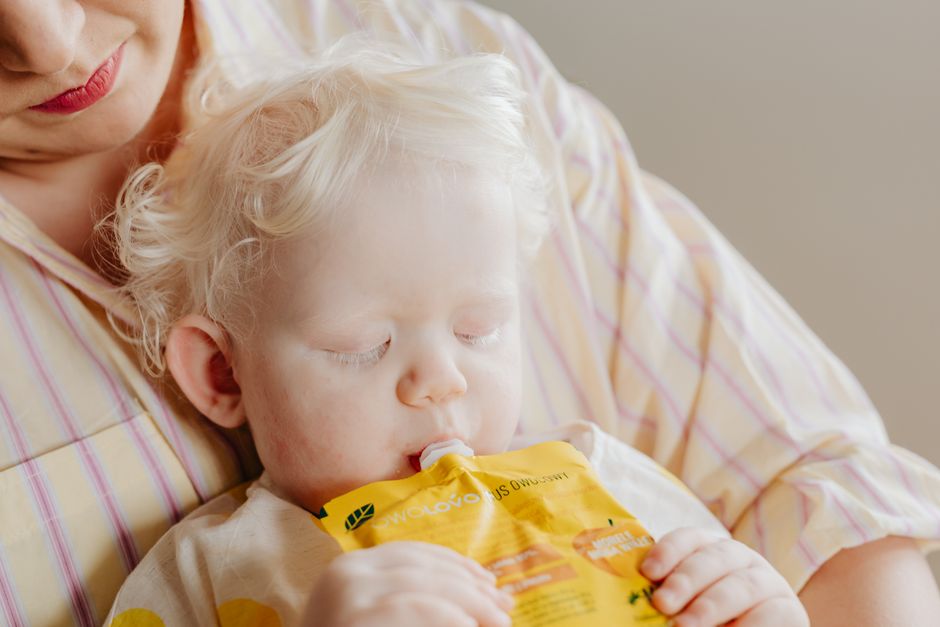
No baby food is guaranteed to be free of heavy metals. Testing by Consumer Reports and Healthy Babies Bright Futures has found measurable amounts of lead, arsenic, cadmium, and mercury in many types of baby food, including some organic brands. The foods most likely to test lowest are those made from fruits and vegetables that don’t accumulate metals from soil as readily — but “lower” is not the same as “none.”
That distinction matters. Heavy metals occur naturally in soil and water, so they end up in crops no matter how the food is grown or processed. No manufacturer can honestly promise zero. What parents can do is understand which ingredients tend to carry more, which carry less, and how feeding variety reduces total exposure.
Why Is There Heavy Metal in Baby Food at All?
Heavy metals are in the environment. They come from natural soil geology, from decades of industrial emissions, and from past use of lead-based fuel and paint. Plants absorb them through their roots as they take up water and nutrients.
This is not contamination from a careless factory. It is a feature of how crops grow. Rice, for example, is particularly efficient at taking up inorganic arsenic from soil and water because of how it grows in flooded fields. Root vegetables and leafy greens can accumulate cadmium and lead. The levels vary widely by region, by field, and by year.
Because the raw ingredients carry trace metals, the finished baby food does too. Organic farming rules restrict synthetic pesticides but do not control heavy metal content in soil. That is why organic baby food has tested positive for heavy metals in multiple investigations.
What Baby Food Doesnt Have Heavy Metals? What Testing Actually Shows
No category of baby food has tested completely free. The honest answer is that some ingredients and some products consistently test lower than others, and the gap can be meaningful.
In 2019, Healthy Babies Bright Futures tested 168 baby foods and found that 95 percent contained lead, and roughly a quarter contained all four metals tested. A smaller share of the products accounted for most of the risk. The pattern across testing has been fairly consistent:
- Rice-based products — infant rice cereal, rice puffs, and rice snacks — have repeatedly tested highest for inorganic arsenic. This is why pediatric guidance has shifted toward offering other grains.
- Root vegetables — sweet potatoes and carrots — have tended to show higher lead and cadmium than many other vegetables.
- Fruit juices, especially apple and grape, have tested higher for arsenic and lead than whole fruit.
- Certain fruits and vegetables — apples, bananas, avocados, peas, green beans, and squash — have generally tested lower across investigations.
Notice that “lower” is doing real work in that list. A banana puree is not metal-free. It simply tends to carry less than a sweet potato puree. The practical takeaway is not to hunt for a perfect jar but to spread exposure across many different foods.
Is Rice Cereal Still Recommended for Babies?
Rice cereal is no longer the default first food, and the reason is arsenic. Inorganic arsenic is a known human carcinogen, and infants are more vulnerable because they are small and their brains and bodies are developing quickly.
Federal regulators have taken steps to limit inorganic arsenic in infant rice cereal, and the levels allowed are lower than they once were. Even so, public health agencies have advised parents to vary grains rather than rely on rice. Oatmeal, barley, and multi-grain cereals are reasonable alternatives.
If you do use rice, the evidence supports not making it a daily staple. Some clinicians also suggest cooking rice with extra water and draining it, which can reduce arsenic content — though how much this helps varies and it is not a substitute for variety. The larger point is that no single grain should dominate a baby’s diet.
Does Organic Baby Food Have Fewer Heavy Metals?
No. Organic certification says nothing about heavy metal content. It governs how crops are grown — restricting synthetic pesticides and fertilizers — not what is in the soil they grow in.
This is one of the most persistent misunderstandings in the baby food aisle. Parents reasonably assume “organic” means “cleaner,” and for pesticide residues that is often true. For lead, arsenic, cadmium, and mercury, the organic label is not a meaningful signal. Testing has found heavy metals in organic products at rates similar to conventional ones.
What does make a difference is the ingredient itself and where it was grown, not the certification on the package. A conventional banana puree will typically carry less arsenic than an organic rice cereal.
How Can Parents Lower a Baby’s Exposure?
You cannot eliminate exposure, but you can reduce it, and the steps are straightforward. The goal is variety and avoiding the foods that concentrate the most metals.
- Vary the grains. Rotate oatmeal, barley, and multi-grain cereals instead of relying on rice.
- Limit rice-based snacks. Rice puffs, teething crackers, and rice drinks can add up quickly in a small body.
- Skip juice. Whole fruit carries less arsenic and lead than juice, and juice offers little nutritional benefit for infants anyway.
- Rinse and vary produce. Washing does not remove metals absorbed into the plant, but rotating which vegetables you offer spreads exposure across different sources.
- Offer a wide range of foods. A diet built on many different fruits, vegetables, and grains dilutes any single source.
One clarification worth knowing: peeling does not reliably remove heavy metals, because they are taken up into the plant tissue, not just deposited on the surface. Washing and peeling reduce dirt and pesticide residue, not absorbed metals.
How Much Heavy Metal Is Safe for a Baby?
There is no established “safe” level of lead in a child’s blood. Public health agencies state that no amount of lead exposure is known to be without risk to a developing brain. For arsenic, cadmium, and mercury, regulators set limits on what is allowed in food and water, but those limits are about reducing exposure, not eliminating it.
This is why the advice centers on lowering total exposure rather than finding a zero-metal product. A baby eating a varied diet of lower-metal foods will generally take in less than one eating mostly rice cereal and sweet potato puree, even if both diets contain some metals.
It is also worth keeping perspective. The amounts found in most baby foods are small, and the health risk comes from cumulative exposure over time, not from a single jar. The concern is real and worth acting on, but it is a long-term, low-dose issue rather than an emergency.
What Should You Do With This Information?
Feed variety, go easy on rice and juice, and don’t pay a premium expecting organic to solve the problem. Those three steps cover most of what the evidence supports.
If you are worried about your child’s exposure — for example, if they eat a lot of rice products or you live in an older home with possible lead paint — talk with your pediatrician. Blood lead testing is available and is the only way to know a child’s actual level. No baby food label can tell you that.
The bigger picture is that heavy metals in food are a system-wide issue, not a brand-by-brand one. Regulators, manufacturers, and farmers all have roles in reducing levels over time. For parents in the grocery aisle today, the realistic goal is a varied diet that keeps any single source small.
Frequently Asked Questions
Is there any baby food with zero heavy metals?
No. Heavy metals occur naturally in soil and water, so trace amounts end up in crops regardless of brand or farming method. Some foods test lower than others, but none are confirmed to be completely free.
Which baby food has the least heavy metals?
Foods made from fruits and vegetables that accumulate fewer metals — such as bananas, apples, avocados, peas, and green beans — have generally tested lower than rice products, root vegetables, and juices. Variety across many foods matters more than picking one “safest” option.
Is organic baby food safer from heavy metals?
No. Organic certification restricts pesticides and fertilizers but does not control heavy metal content in soil, and testing has found metals in organic products at similar rates to conventional ones.
Should I stop giving my baby rice cereal?
You don’t need to avoid it entirely, but it should not be a daily staple. Rotating oatmeal, barley, and multi-grain cereals lowers arsenic exposure while keeping grains in the diet.
