

Weight loss peptides are short chains of amino acids that act like natural signaling molecules in your body. They tell your metabolism, appetite, or fat storage systems to work differently. Some slow digestion so you feel full longer. Others help your body use stored fat for energy. They are not magic shots. They are tools that work best when your diet and movement habits are already solid.
How Do Weight Loss Peptides Work in the Body?
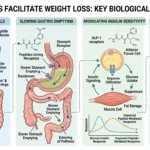
Peptides are messengers. They bind to receptors on cells and trigger specific responses. For weight loss, the most well-studied peptides affect hormones like GLP-1 (glucagon-like peptide-1) and ghrelin. GLP-1 is a hormone your gut releases after eating. It tells your brain you are full. It also slows how fast food leaves your stomach. Semaglutide, sold as Wegovy or Ozempic, mimics GLP-1. Tirzepatide, sold as Mounjaro or Zepbound, mimics two hormones at once — GLP-1 and GIP.
Other peptides target different pathways. Some, like tesamorelin, stimulate growth hormone release. This can shift body composition toward less belly fat and more lean muscle. Research published in the Journal of Clinical Endocrinology & Metabolism found that tesamorelin reduced visceral fat by about 15% in people with HIV-related fat gain. That is a specific population. Results for others may differ.
Not all weight loss peptides work the same way. Some suppress appetite. Some change how your body handles sugar. Some increase how many calories you burn at rest. The peptide you take matters. So does the dose and your starting health.
What Does Research on Weight Loss Peptides Show?
The strongest evidence supports GLP-1 receptor agonists. The New England Journal of Medicine published a large trial in 2021 on semaglutide. Over 68 weeks, people taking it lost an average of 14.9% of their body weight. The placebo group lost 2.4%. That is a real difference. But the study also reported that about 75% of participants had nausea and 44% had diarrhea. Side effects are common.
Tirzepatide has shown even larger weight loss in some studies. A 2022 trial in the New England Journal of Medicine found that people on the highest dose lost an average of 22.5% of their body weight over 72 weeks. That is close to what some bariatric surgery patients achieve. But again, gastrointestinal side effects were frequent.
Research on other peptides is less certain. AOD9604, a fragment of human growth hormone, has been studied for fat loss. Some animal studies show it can break down fat. Human studies are small and mixed. The evidence is not strong enough to recommend it widely. Melanotan II and related peptides can reduce appetite but carry risks including increased blood pressure and skin darkening. Some people report nausea and strange flushing sensations.
The FDA has approved semaglutide and tirzepatide for weight management. No other peptide has that approval for weight loss in the United States. If you hear about a peptide that is not FDA-approved for weight loss, the research backing it is likely thin. Be careful.
What Are the Side Effects of Weight Loss Peptides?
Common side effects for GLP-1 drugs include nausea, vomiting, diarrhea, constipation, and stomach pain. These are dose-dependent. Starting at a low dose and increasing slowly helps. Most people find symptoms improve after a few weeks. Some do not tolerate them at all.
More serious risks exist. Pancreatitis is rare but reported. Gallbladder problems including gallstones have occurred. A class warning exists for thyroid C-cell tumors in rats. It is unclear if this risk applies to humans. The FDA requires a black box warning for this reason.
Peptides not approved by the FDA carry unknown risks. They are often sold as research chemicals. There is no guarantee of purity, correct dosing, or sterility. Injecting something bought online introduces risk of infection, contamination, or incorrect dose. Some people have ended up in emergency rooms from improperly compounded peptides.
Long-term safety data for most peptides is limited. Semaglutide and tirzepatide have been studied for several years. Others have only short-term data. We do not know what happens after ten years of use for most of these compounds.




Do You Need a Prescription for Weight Loss Peptides?
Yes, for FDA-approved weight loss peptides. Semaglutide and tirzepatide require a prescription. Doctors prescribe them for people with a BMI of 30 or higher, or a BMI of 27 or higher with at least one weight-related condition like high blood pressure or type 2 diabetes. These are the FDA guidelines. Some doctors prescribe off-label for other situations.
Peptides sold without a prescription are a red flag. If you can buy them online without a doctor visit, there is a good chance they are not FDA-approved. They may be mislabeled, contaminated, or counterfeit. The FDA has issued warnings about compounded semaglutide that contains salt forms instead of the active drug. These salt forms have not been tested for safety or effectiveness in humans.
Some legitimate compounding pharmacies make peptides with a prescription. But even then, quality varies. The FDA does not approve compounded drugs. They are made on a case-by-case basis. If you go this route, use a pharmacy that is accredited by the Pharmacy Compounding Accreditation Board (PCAB). Ask your doctor if they trust the source.
How Do Weight Loss Peptides Compare to Other Methods?
The table below compares peptides to common weight loss approaches. This is not medical advice. It is a summary of what research and clinical experience show.
| Method | Average Weight Loss | Main Side Effects | Requires Prescription |
|---|---|---|---|
| GLP-1 peptides (semaglutide, tirzepatide) | 15-22% of body weight | Nausea, vomiting, diarrhea, constipation | Yes |
| Lifestyle changes (diet + exercise) | 5-10% of body weight | Minimal if done safely | No |
| Bariatric surgery | 25-30% of body weight | Surgical risks, nutrient deficiencies | Yes |
| Other peptides (AOD9604, tesamorelin) | Variable, often 5-10% | Unknown for many; injection site reactions | Often sold without prescription |
Peptides are not a replacement for lifestyle changes. Studies show that people who combine GLP-1 drugs with diet and exercise lose more weight than those who use the drug alone. The drug helps with appetite and metabolism. You still need to eat well and move your body. When people stop taking the drug, weight regain is common. One study found that a year after stopping semaglutide, participants regained two-thirds of the weight they lost.
What Should You Know Before Trying Weight Loss Peptides?
Start with a doctor who specializes in obesity medicine or weight management. Not all primary care doctors are familiar with these drugs. A specialist can help you decide if a peptide is right for you. They can also monitor your progress and adjust doses.
Peptides are not a quick fix. Most people need to take them for months or years to maintain weight loss. They are expensive. Without insurance, semaglutide can cost over $1,000 per month. Some insurance plans cover it for obesity. Many do not. Check your coverage before starting.
Understand that weight loss peptides are tools, not solutions. They change biology in ways that make weight loss easier. But they do not teach you how to eat or how to move. If you stop taking them and have not built sustainable habits, the weight will likely return. This is not a failure of willpower. It is biology. Your body fights to regain lost weight. Peptides help counter that fight. But they are a long-term commitment.
Be skeptical of peptides sold as “research chemicals” or “not for human use.” These are common labels that sellers use to avoid FDA regulation. Do not inject anything you cannot verify. If a peptide does not come from a licensed pharmacy with a prescription, do not use it. The risk is not worth it.
Some people report success with peptides like CJC-1295 or Ipamorelin for fat loss. These are growth hormone secretagogues. They stimulate your body to release more growth hormone. Some small studies show they can reduce body fat and increase lean mass. But the evidence is not strong enough to recommend them broadly. Side effects include joint pain, carpal tunnel symptoms, and fluid retention. Long-term safety data is lacking.
If you decide to try peptides, work with a doctor who understands them. Keep realistic expectations. Aim for 5-10% weight loss over three to six months. Anything beyond that is a bonus. And remember that the most effective peptide is the one you can tolerate, afford, and stick with long enough to see results.
Frequently Asked Questions
How long does it take for weight loss peptides to work?
Most people notice appetite changes within the first week. Meaningful weight loss usually takes 4 to 8 weeks at a therapeutic dose.
Can you take weight loss peptides without changing your diet?
You can, but results will be smaller. Studies show that combining peptides with diet and exercise produces significantly more weight loss than peptides alone.
Are weight loss peptides safe for long-term use?
FDA-approved peptides like semaglutide have safety data for up to two years. Long-term data beyond that is still being collected. Non-approved peptides have unknown long-term safety profiles.
Do weight loss peptides cause hair loss?
Some people report temporary hair thinning during rapid weight loss from any method. This is usually telogen effluvium, a stress response that resolves once weight stabilizes.
