
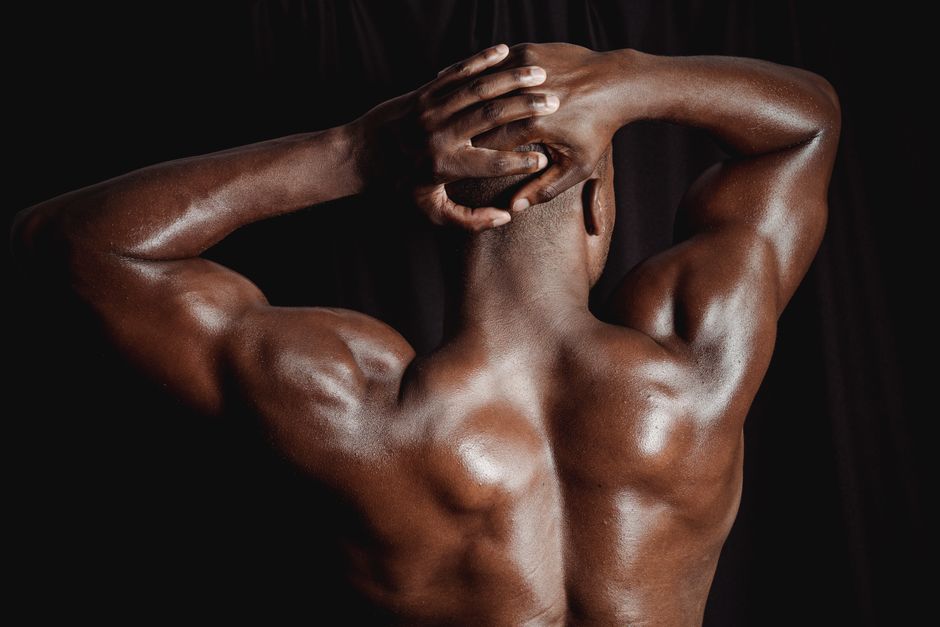
The trapezius is a large, flat, diamond-shaped muscle that runs down the back of your neck and across your upper back. It is one of the most important muscles in the body for moving and steadying your shoulders, head, and neck. Most people know it as the “traps” — the muscle you feel working when you shrug your shoulders.
The name comes from its shape. “Trapezius” is derived from the Greek word for a four-sided geometric figure, because the paired muscles on each side of the spine form a diamond or trapezoid across the upper back. It is not one small muscle but a broad sheet of tissue with several distinct parts that do different jobs.
What Are Traps Muscles?
The trapezius is a paired muscle — one on the left, one on the right — that connects your skull, neck bones, and upper spine to your shoulder blades and collarbones. Together the two sides form the diamond shape across your upper back.
Each side has three functional sections, usually called the upper, middle, and lower fibers. They run in different directions and pull on the shoulder blade in different ways. This is why the trapezius can raise your shoulders, pull them back, and help rotate the shoulder blade all at once.
It is a superficial muscle, meaning it sits just under the skin and fat layer. That is why you can see and feel it easily at the base of your neck and across the top of your shoulders.
Where Is the Trapezius Muscle Located?
The trapezius starts at the base of the skull and runs down the back of the neck and spine. It attaches along the neck vertebrae and the upper and middle bones of the spine in your upper back, then fans outward to connect to the shoulder blade and the outer end of the collarbone.
Because it spans so much territory, the trapezius has a wide reach. The upper fibers sit at the back of your neck and top of your shoulders. The middle fibers cross between your shoulder blades. The lower fibers angle down toward the middle of your back.
This broad attachment is why the trapezius can influence the position of your head, your neck, and your shoulder blade all at the same time.
What Does the Trapezius Muscle Do?
The trapezius moves and stabilizes the shoulder blade, and it helps control the position of the head and neck. It is a workhorse muscle that stays active during many everyday movements.
The three sections do different things:
- Upper fibers lift the shoulder blade upward — the shrug motion — and help extend and rotate the neck.
- Middle fibers pull the shoulder blade toward the spine, which is the motion of squeezing your shoulder blades together.
- Lower fibers pull the shoulder blade downward and help rotate it so you can raise your arm overhead.
The upper and lower fibers work as a team. When you lift your arm, the upper fibers help raise the shoulder blade while the lower fibers rotate it. If these sections work out of balance, shoulder movement can feel strained.
The trapezius also plays a steadying role. It helps hold the shoulder blade in place so the arm can move with control, and it works with the neck muscles to keep the head balanced on top of the spine.
Why Do the Traps Get Tight or Sore?
The upper trapezius is one of the most common places people feel tightness, tenderness, and tension-type discomfort. The upper fibers are in near-constant use holding the weight of the head and shoulders, and they tighten when you hold a position for a long time.
Common triggers include:
- Long hours at a desk or looking down at a phone
- Holding the shoulders in a raised or forward position
- Stress, which often shows up as raised, tense shoulders
- Carrying heavy bags on one shoulder
- Sleeping in an awkward position
One point worth clarifying: the idea that tight upper traps are always caused by “weak” traps and must be stretched or strengthened in a specific way is oversimplified. The evidence for any single fix is limited. What is well established is that the upper fibers are prone to overuse, and that changing sustained postures and building strength across the whole shoulder area are reasonable general approaches. No exercise protocol has been shown to be clearly superior to others in large trials.
Discomfort in this area is usually muscular. But pain that radiates down the arm, comes with numbness or weakness, or follows an injury should be checked by a clinician rather than assumed to be simple muscle tension.
How Do You Keep the Traps Healthy?
General physical activity that uses the upper back and shoulders supports the trapezius, along with the rest of the shoulder girdle. There is no single exercise that is required, and no strong evidence that one specific routine is best.
Reasonable general habits include:
- Breaking up long periods of sitting with movement
- Varying your posture rather than holding one position for hours
- Strengthening the upper back and shoulder area through general resistance training
- Keeping the neck and shoulders mobile with gentle movement
Strengthening the middle and lower fibers is often recommended by clinicians and trainers because these sections help pull the shoulder blades into a stable position. This is common practice rather than a proven prescription — the reasoning is sound, but large trials comparing specific programs are limited.
If you have shoulder pain, neck pain, or an injury, a physical therapist or doctor can assess your specific situation. General advice cannot account for individual differences in anatomy and health history.
What Is the Difference Between Traps and Other Back Muscles?
The trapezius is often confused with nearby muscles because they all sit in the upper back and neck. Each has a distinct job.
| Muscle | Main location | Primary role |
|---|---|---|
| Trapezius | Back of neck and upper back, diamond shape | Moves and steadies the shoulder blade; helps control head and neck |
| Rhomboids | Between the shoulder blades, under the trapezius | Pull the shoulder blades toward the spine |
| Latissimus dorsi | Mid and lower back, wide and flat | Pulls the arm down and back; a major pulling muscle |
| Levator scapulae | Side of the neck to the top of the shoulder blade | Lifts the shoulder blade; helps turn the neck |
The rhomboids sit underneath the trapezius and do similar work pulling the shoulder blades together. The levator scapulae is a common source of neck and shoulder tightness and is often mistaken for the upper traps. The latissimus dorsi is a much larger back muscle involved in pulling and rowing motions.
Do You Need to Train Your Traps Directly?
Most people do not need to train the trapezius in isolation. The upper fibers are already active in many daily tasks and in common exercises like rows, shrugs, and carrying loads.
For people who want to build upper-back strength, exercises that involve pulling and shrugging will work the trapezius along with the surrounding muscles. The middle and lower fibers respond to rowing-type movements that squeeze the shoulder blades together.
There is no evidence that a specific amount of trap training is necessary for general health. If your goal is athletic performance or a specific look, a qualified trainer can help you plan around your needs. For most people, general strength training that covers the whole body is enough to keep the trapezius doing its job.
Frequently Asked Questions
What are traps muscles?
The traps are the trapezius muscles, a pair of large diamond-shaped muscles running from the base of the skull down the neck and across the upper back to the shoulder blades. They move and steady the shoulders, head, and neck.
Why do my traps get tight?
The upper trapezius tightens from holding the head and shoulders in one position for long periods, such as desk work, phone use, or stress. Changing posture and staying active are reasonable general approaches, though no single fix is proven best.
Are traps the same as shoulder muscles?
The trapezius is part of the shoulder girdle and helps move the shoulder blade, but it is a distinct muscle from the deltoid that forms the rounded shoulder. It works alongside the deltoid and other muscles to control arm movement.
Should I stretch or strengthen my traps?
Both can be reasonable depending on your situation, and the evidence does not clearly favor one over the other for general tightness. If you have ongoing pain or an injury, a clinician can assess what fits your case.
