
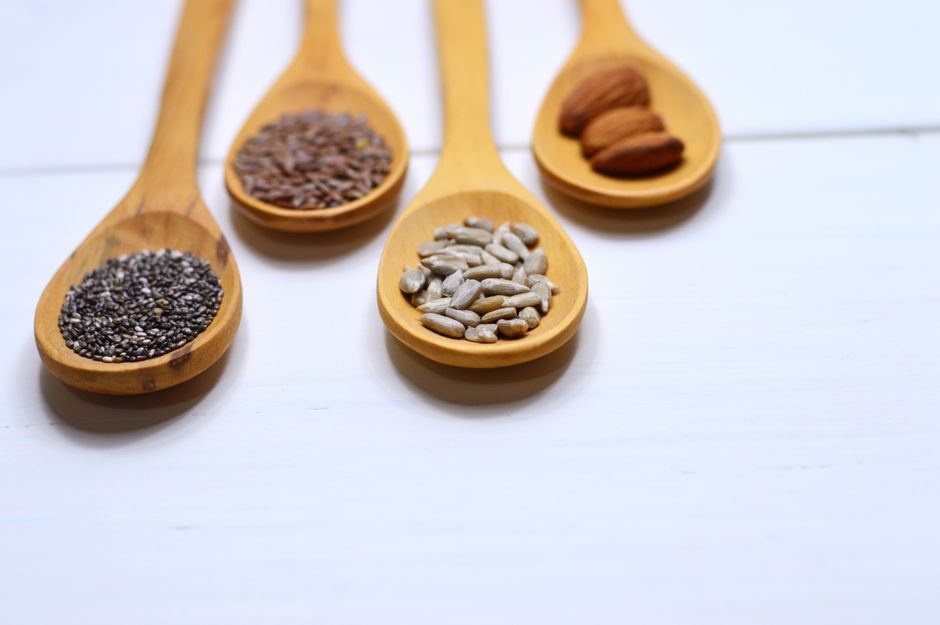
Dietary fat has been the most misunderstood nutrient on the plate for decades. High-fat foods are simply foods that deliver a large share of their calories from fat. That includes whole avocados, nuts, seeds, olive oil, butter, fatty fish, cheese, and eggs. Fat provides 9 calories per gram, compared with 4 calories per gram for both carbohydrate and protein, so even a small portion of a high-fat food adds up quickly.
Fat is not a single substance. It is a family of molecules, and the type matters far more than the total. This guide breaks down which foods are high in fat, what kinds of fat they contain, and what the research actually shows about how they affect health.
What Are The High Fat Foods?
High-fat foods are those where fat supplies most of the calories. Nutrition labels call a food “high fat” when fat provides more than 30% of its total calories, though everyday eating rarely involves doing that math at the table.
The main categories are easy to remember:
- Oils and added fats: olive oil, canola oil, butter, ghee, lard, coconut oil
- Nuts and seeds: almonds, walnuts, peanuts, cashews, sunflower seeds, chia seeds, flaxseed
- Fatty fish: salmon, mackerel, sardines, herring, trout
- Dairy: cheese, whole milk, cream, full-fat yogurt
- Meat and poultry: fatty cuts of beef and pork, poultry skin, bacon, sausage
- Plant foods: avocados, olives, coconut, soybeans, tofu
- Eggs: especially the yolk
A useful clarification: “high fat” does not mean “unhealthy.” Some of the most nutrient-dense foods on that list are also among the most studied for health benefits. The distinction that matters is the type of fat, not the fat content alone.
What Is the Difference Between Saturated, Unsaturated, and Trans Fats?
All fats are built from fatty acids, and the chemical structure of those acids determines how the body responds to them. There are three main types, and the evidence on each is not equal.
Saturated fat
Saturated fat is solid at room temperature. It is found mainly in animal products like butter, cheese, fatty meat, and poultry skin, and in tropical oils like coconut oil and palm oil. The relationship between saturated fat and heart disease has been debated for years, but the general clinical direction has been consistent: replacing saturated fat with unsaturated fat is linked to lower cardiovascular risk. Replacing it with refined carbohydrate is not.
Unsaturated fat
Unsaturated fats are liquid at room temperature and come in two forms. Monounsaturated fat is abundant in olive oil, avocados, and most nuts. Polyunsaturated fat includes omega-6 and omega-3 fatty acids, found in vegetable oils, walnuts, flaxseed, and fatty fish. This is the category with the strongest evidence for heart health. Research published in the New England Journal of Medicine found that a Mediterranean-style diet rich in olive oil or nuts reduced major cardiovascular events in people at high risk.
Trans fat
Trans fat is the one type with near-universal agreement. Industrially produced trans fat, made by partially hydrogenating vegetable oil, raises LDL cholesterol and lowers HDL cholesterol. The FDA determined that partially hydrogenated oils are no longer generally recognized as safe for use in food, and food manufacturers have largely removed them from the US supply. Small amounts occur naturally in some animal products, but at levels not considered a health concern.
Which High-Fat Foods Are the Healthiest Choices?
The strongest evidence supports high-fat foods that are whole or minimally processed and rich in unsaturated fat. These are the ones most consistently linked to better health outcomes in large population studies.
- Extra virgin olive oil: high in monounsaturated fat and polyphenols; a cornerstone of the Mediterranean diet
- Nuts: almonds, walnuts, pistachios, and others; associated with lower rates of heart disease in large cohort studies
- Fatty fish: salmon, sardines, and mackerel are the main dietary sources of the long-chain omega-3 fats EPA and DHA
- Avocados: rich in monounsaturated fat and fiber
- Seeds: chia, flax, and hemp provide polyunsaturated fat plus fiber
- Eggs: a concentrated source of protein, choline, and fat; dietary cholesterol from eggs has a smaller effect on blood cholesterol for most people than once believed
That last point is worth sitting with. For decades, eggs were restricted because of their cholesterol content. Current evidence indicates that for most people, saturated and trans fat intake affects blood cholesterol more than dietary cholesterol does. People with certain conditions, such as familial hypercholesterolemia or diabetes, may still be advised to limit dietary cholesterol, so individual guidance from a clinician matters.
How Much Fat Should You Eat Per Day?
US dietary guidelines recommend that fat make up between 20% and 35% of total daily calories for adults. On a 2,000-calorie diet, that works out to roughly 44 to 78 grams of fat per day.
Those guidelines also emphasize the type of fat over the total. Saturated fat should stay below 10% of daily calories, and trans fat should be kept as low as possible. The rest should come primarily from unsaturated sources.
These are general population targets, not personal prescriptions. Individual needs vary with age, activity level, health conditions, and medications. Anyone with a diagnosed lipid disorder, gallbladder disease, or pancreatitis should follow guidance from their own clinician rather than population averages.
Is Eating High-Fat Food Bad for You?
Eating high-fat food is not inherently harmful. The health effect depends on which fats dominate the diet and what those fats replace.
Diets high in saturated fat and low in unsaturated fat are associated with higher LDL cholesterol and greater cardiovascular risk. Diets built around olive oil, nuts, fish, and vegetables are associated with lower risk in the same body of research.
Context matters in a way that often gets lost. A high-fat diet that replaces refined carbohydrates can improve blood sugar control and increase satiety for some people. A high-fat diet built on processed meat and fried food does not carry the same benefits. The food matrix, not just the fat gram count, shapes the outcome.
One clarification that surprises many people: dietary fat does not automatically become body fat. Excess calories from any source contribute to weight gain. Fat is calorie-dense, so portions are easy to overshoot, but fat itself is not uniquely fattening.
How Do You Read Fat Content on a Nutrition Label?
Nutrition labels make the fat picture visible, but they require a little decoding. The total fat line includes all types, and the breakdown below it lists saturated fat and trans fat. Unsaturated fat is not always listed separately, but you can estimate it by subtracting saturated and trans fat from total fat.
A few practical habits help:
- Check the serving size first; fat numbers are meaningless without it
- Look for foods where most of the fat is unsaturated
- Treat “low fat” claims with skepticism; these products often add sugar or starch to replace fat
- Remember that “no trans fat” on a label can mean less than 0.5 grams per serving, not zero
The ingredient list often tells you more than the front of the package. If partially hydrogenated oil appears, the product contains some industrial trans fat.
Should You Avoid High-Fat Foods If You Have Heart Disease?
People with existing heart disease are generally advised to emphasize unsaturated fats and limit saturated fat, not to avoid fat altogether. This is a well-established clinical direction, though specific targets vary by cardiologist and guideline.
Fatty fish, olive oil, nuts, and seeds remain part of most heart-healthy eating patterns recommended after a cardiac event. The advice is to shift the balance of fats, not to eliminate them.
What has less certainty is the precise saturated fat limit for every individual. Some clinicians recommend stricter targets for people with elevated LDL cholesterol, while others focus more on overall dietary pattern. That conversation belongs with a treating physician who knows the full clinical picture.
Frequently Asked Questions
What are the highest fat foods?
Oils and butter are nearly 100% fat, making them the most concentrated sources. Nuts, seeds, avocados, fatty fish, and cheese are also high in fat but deliver it alongside protein, fiber, or micronutrients.
Is it healthy to eat high-fat foods every day?
Yes, when the fats come mainly from unsaturated sources like olive oil, nuts, seeds, avocados, and fish. Diets high in saturated fat from processed meat and fried foods are linked to worse cardiovascular outcomes.
Do high-fat foods make you gain weight?
Not by themselves. Weight gain comes from eating more calories than you burn, and fat is calorie-dense at 9 calories per gram, so portions matter. Fat can also increase fullness, which may help some people eat less overall.
Are eggs a high-fat food?
Yes, one large egg contains about 5 grams of fat, mostly in the yolk, along with protein and choline. For most people, dietary cholesterol from eggs has less effect on blood cholesterol than saturated fat intake does.
