
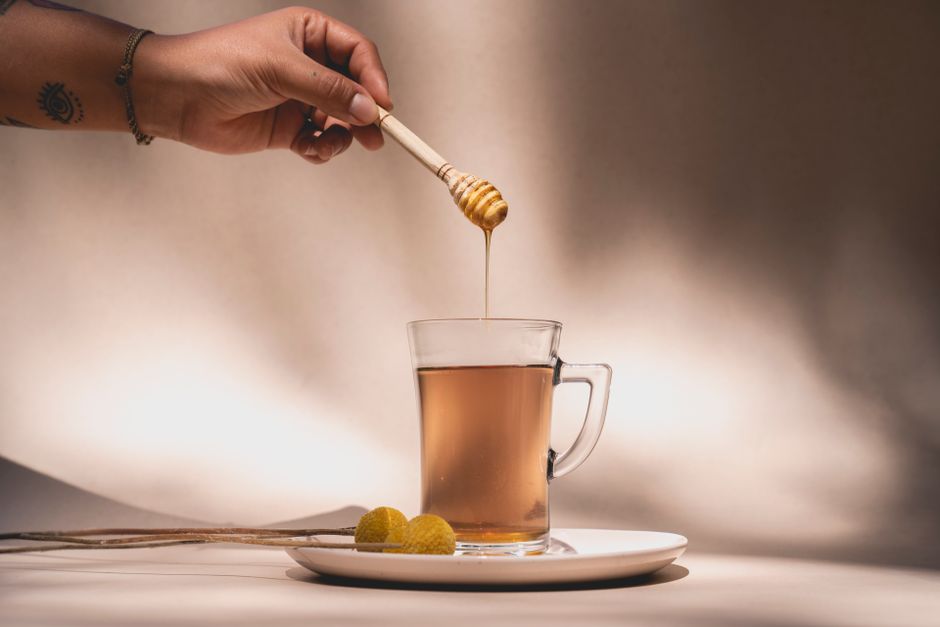
Honey has been used as food and medicine for thousands of years, and modern research has confirmed some of its traditional uses while disproving others. The strongest evidence supports honey for cough relief in adults and children over one year old, for wound healing when used in medical-grade dressings, and as a source of quick energy. Honey is not a treatment for allergies, infections, or chronic disease, and it is unsafe for infants under 12 months due to the risk of infant botulism.
What Are The Health Benefits Of Honey?
Honey is roughly 80 percent sugar and 18 percent water, with trace amounts of pollen, enzymes, amino acids, and antioxidants. Its main documented health benefits come from three properties: it soothes irritated throats, it has mild antibacterial activity when applied to wounds, and it provides fast-digesting carbohydrate for energy.
The antibacterial effect is real but limited. Honey produces small amounts of hydrogen peroxide through an enzyme called glucose oxidase, and its low water content and high sugar concentration make it hard for bacteria to survive. That is why certain medical-grade honey products are cleared for use on wounds and burns. It is not why honey works for coughs. The cough benefit appears to come from the physical coating action on the throat and possibly from the sweet taste triggering nerve signals that calm the cough reflex.
What honey does not do
Honey does not cure infections when eaten. It does not boost the immune system in any way that has been demonstrated in human trials. It does not prevent or treat cancer, diabetes, or heart disease. It does not replace antibiotics, vaccines, or prescribed medication. Claims that honey is a natural antibiotic are misleading — the antibacterial activity is meaningful mainly when honey sits directly on a wound, not when it travels through the digestive system.
Does Honey Actually Help With Coughs?
For adults and children over one year old, honey is one of the few remedies with consistent evidence for reducing nighttime cough. Multiple studies have compared honey to over-the-counter cough syrups and to no treatment, and honey has performed as well or better in several of them. Research published in the journal Pediatrics found that honey reduced nighttime cough frequency and improved sleep quality in children compared with a placebo.
The mechanism is not fully understood. Honey coats the throat, which may reduce irritation. Its sweetness may also trigger saliva production and soothe nerve endings in the throat that trigger the cough reflex. This is similar to how cough drops work.
Honey is not a cure for the underlying illness. A cough from a cold will still run its course. What honey can do is make that time more comfortable. For children over one year old, a small amount before bedtime is a reasonable option that many pediatricians mention. For adults, the same applies. If a cough lasts more than a few weeks, produces blood, or comes with fever or shortness of breath, it needs medical evaluation regardless of whether honey helps.
How Does Honey Help Wounds Heal?
Medical-grade honey — not the kind in a grocery store jar — is used in wound care and has been cleared by regulators for certain applications. It works through several mechanisms that are well documented.
- It draws fluid out of the wound through osmosis, which deprives bacteria of the moisture they need.
- It produces low levels of hydrogen peroxide, which is toxic to some bacteria.
- Its acidity — honey has a pH around 3.9 — creates an environment where many bacteria cannot grow.
- It keeps the wound surface moist, which supports tissue repair.
Clinical use of honey on wounds is not the same as putting grocery store honey on a cut at home. Medical honey products are sterilized and standardized, because ordinary honey can contain bacterial spores and other contaminants. Using regular honey on an open wound is not recommended.
Evidence for honey dressings is strongest for burns and certain chronic wounds. Results for other wound types are mixed. This is an area where clinical practice varies and where dressing choice should be made by a healthcare professional.





Is Honey Better Than Sugar?
Nutritionally, honey and table sugar are close. Both are mostly sugar, both raise blood glucose, and both should be limited in the same way. Honey has slightly more calories per teaspoon and a somewhat different mix of sugars — more fructose, less glucose — but the difference is small.
The trace nutrients in honey — antioxidants, minerals, and enzymes — are present in amounts too small to matter for health. You would need to eat far more honey than is advisable to get a meaningful dose of these compounds. Honey is not a health food in the way vegetables, fruit, or whole grains are. It is a sweetener with a few specific medical uses.
One genuine difference: honey is sweeter than sugar, so some people use less of it. That is a practical point, not a nutritional one.
Can Honey Help With Allergies?
No convincing evidence supports local honey as a treatment for seasonal allergies. The idea is that eating honey made from local pollen exposes you to small amounts of the allergen, gradually building tolerance. The problem is that the pollen bees collect and deposit in honey is mostly from flowers, not from the wind-pollinated plants like ragweed, grasses, and trees that cause most seasonal allergies. Even if it were the right pollen, the amounts are tiny and inconsistent, and any pollen proteins are largely broken down in the digestive tract.
Some small studies have looked at this question, and results have not shown a reliable benefit. Allergy treatment that works — antihistamines, nasal steroids, and immunotherapy — targets the immune response in ways that eating honey does not.
Who Should Not Eat Honey?
Infants under 12 months old should never be given honey, in any amount, in any form. This is not a caution — it is a firm rule. Honey can contain spores of Clostridium botulinum, the bacteria that cause botulism. Adult digestive systems can handle these spores. Infant digestive systems cannot, and the spores can germinate in the gut and produce toxin. Infant botulism is rare but serious, and honey is a known source.
After the first birthday, the risk from these spores drops sharply. Most pediatric guidance considers honey safe for children over one year old.
Other groups who should be cautious:
- People with diabetes should treat honey the same as sugar and account for it in their carbohydrate intake.
- People with pollen allergies occasionally react to raw honey, though this is uncommon.
- Anyone with a compromised immune system should avoid raw honey because of the small risk of bacterial or fungal contamination.
What About Manuka Honey?
Manuka honey comes from bees that feed on the flowers of the manuka bush in New Zealand and Australia. It has antibacterial properties beyond those of ordinary honey, linked to a compound called methylglyoxal. This makes it of interest in wound care, and some medical-grade manuka products are used clinically.
For eating, manuka honey has no proven advantage over regular honey. The antibacterial compounds are not absorbed in a way that would treat internal infections, and no human trials support eating manuka honey for any health condition. It is also expensive. If you enjoy the taste, that is a valid reason to buy it. Health claims on the label are not.
How Much Honey Is Reasonable?
There is no official recommended intake of honey. What exists is guidance on added sugars overall. The Dietary Guidelines for Americans recommend keeping added sugars below 10 percent of daily calories. For a 2,000-calorie diet, that is about 50 grams of added sugar per day — roughly 12 teaspoons. Honey counts as an added sugar.
One tablespoon of honey contains about 17 grams of sugar and roughly 64 calories. A teaspoon contains about 6 grams of sugar and 21 calories. If you use honey, it belongs in the same budget as any other sweetener.
For cough relief in children over one year old, some studies have used amounts in the range of half a teaspoon to two teaspoons, depending on age. No clinical guidelines set a standard dose for this use, and parents should follow their pediatrician’s advice.
Frequently Asked Questions
Is honey good for you?
Honey has real but narrow benefits — mainly for cough relief and, in medical-grade form, for wound care. It is still a sugar and should be limited like any other sweetener.
Can babies have honey?
No. Infants under 12 months old should never be given honey because of the risk of infant botulism. After the first birthday, the risk drops sharply and honey is generally considered safe.
Does honey help with allergies?
No convincing evidence supports local honey as a treatment for seasonal allergies. The pollen in honey is mostly from flowers, not the wind-pollinated plants that cause most allergy symptoms.
Is raw honey better than regular honey?
Raw honey has no proven health advantage over regular honey for eating. It also carries a slightly higher risk of contamination, which matters for infants, pregnant women, and people with weakened immune systems.
