
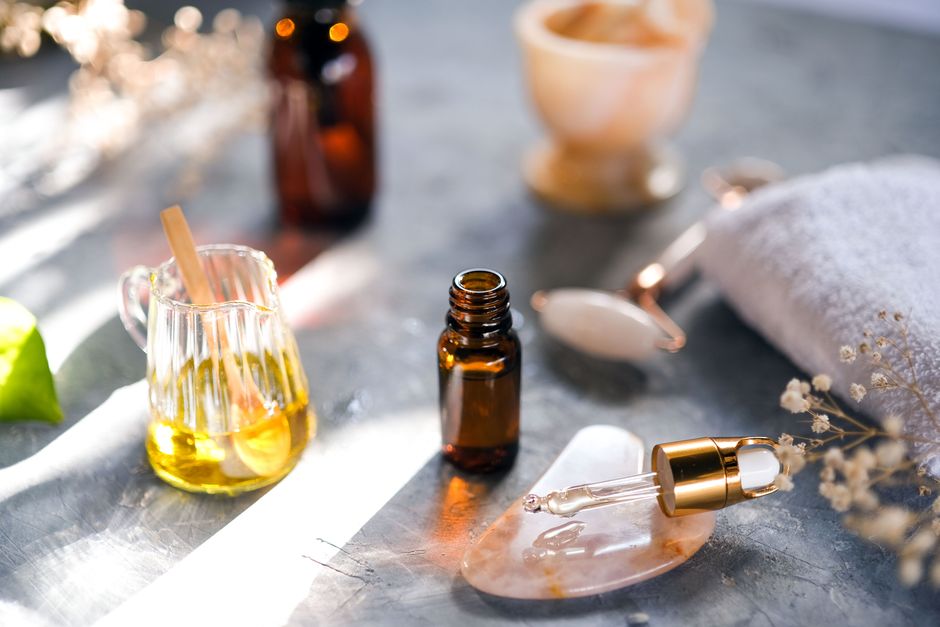
Essential oils are concentrated plant extracts that capture the natural scent and flavor of their source. The seven most commonly discussed essential oils are lavender, tea tree, peppermint, eucalyptus, lemon, frankincense, and chamomile. You use them by diluting them in a carrier oil for the skin, or by dispersing them into the air with a diffuser. These seven oils are popular because they have been studied more than most, though their benefits vary widely in strength and clinical evidence.
What Are The 7 Essential Oils And How To Use Them
The seven essential oils people most often ask about are lavender, tea tree, peppermint, eucalyptus, lemon, frankincense, and chamomile. Each one has a distinct chemical profile and a different set of uses that research has examined to varying degrees. None of them are medicines in the conventional sense, but some have enough evidence behind them to be useful additions to a health routine.
You can use these oils in two main ways. The first is aromatically — inhaling them through a diffuser or directly from the bottle. The second is topically — applying them to the skin after mixing with a carrier oil like coconut, jojoba, or sweet almond oil. You should never swallow essential oils, and you should never apply them undiluted to the skin.
Lavender Oil: The Most Studied Essential Oil
Lavender oil is the most researched essential oil for sleep and relaxation. Studies have consistently shown that inhaling lavender can reduce anxiety and improve sleep quality in adults. The mechanism is thought to involve the oil’s interaction with the limbic system, the part of the brain that regulates emotion and memory.
For sleep, add three to five drops to a diffuser about 30 minutes before bed. For skin application, mix two to three drops with a teaspoon of carrier oil and apply to your temples or the back of your neck. Lavender is one of the few essential oils that is generally well-tolerated on the skin, but you should still do a patch test first.
Some research also suggests lavender oil may help with minor burns and insect bites. The evidence here is less robust than the sleep research, but the oil’s anti-inflammatory properties are well documented in laboratory studies.
Tea Tree Oil: For Skin Issues
Tea tree oil is best known for its antibacterial and antifungal properties. The main active compound, terpinen-4-ol, has been shown to kill a range of bacteria and fungi in laboratory settings. This makes tea tree oil a common ingredient in acne treatments and antifungal products.
For acne, some clinical trials have found that a 5% tea tree oil gel works about as well as benzoyl peroxide, but with fewer side effects like dryness and peeling. You can make a similar dilution at home by adding one drop of tea tree oil to a teaspoon of carrier oil and applying it to blemishes only. Never apply tea tree oil to broken skin or open wounds.
For athlete’s foot, research shows tea tree oil can reduce symptoms, though it may take longer than prescription antifungal creams. The evidence is moderate — some studies show clear benefit, while others show only modest improvement. Tea tree oil is toxic if swallowed, so keep it away from children and pets.
Peppermint Oil: Headaches and Digestion
Peppermint oil contains menthol, which creates a cooling sensation on the skin and can affect pain receptors. The most well-supported use of peppermint oil is for tension headaches. Several clinical trials have shown that applying diluted peppermint oil to the forehead and temples can reduce headache pain as effectively as acetaminophen.
For headaches, mix one drop of peppermint oil with a half-teaspoon of carrier oil and massage it into your temples and forehead. Avoid getting it near your eyes — the menthol will cause significant stinging.
Peppermint oil is also one of the few essential oils with solid evidence for internal use, specifically for irritable bowel syndrome. Enteric-coated peppermint oil capsules have been shown in multiple trials to reduce abdominal pain and bloating in people with IBS. This is a specific product, not something you make at home. If you want to try this, buy a commercial enteric-coated product and follow the label directions.
Eucalyptus Oil: Respiratory Relief
Eucalyptus oil is commonly used for respiratory issues like congestion and coughs. The primary compound, eucalyptol, has been shown to reduce inflammation in the airways and act as a mild expectorant. This is why eucalyptus appears in many commercial chest rubs and steam inhalations.
For congestion, add three to five drops to a bowl of hot water, place a towel over your head, and inhale the steam for five to ten minutes. Do not use boiling water — let it cool slightly first. You can also add eucalyptus to a diffuser, though the effect on nasal congestion is more modest than direct steam inhalation.
Eucalyptus oil is one of the more toxic essential oils if swallowed. Even small amounts can cause seizures in children. Store it well out of reach and never use it on or near the face of a child under two years old.
Lemon Oil: Cleaning and Mood
Lemon oil is primarily valued for its fresh scent and its natural cleaning properties. The oil has demonstrated antibacterial activity in laboratory studies, which is why it appears in many natural cleaning products. As a household cleaner, lemon oil can be effective against some common bacteria on hard surfaces.
For cleaning, add ten to fifteen drops of lemon oil to a spray bottle filled with water and use it on countertops. Lemon oil is phototoxic — it can cause skin burns or darkening if you go into the sun after applying it to your skin. For this reason, lemon oil is not recommended for topical use in most cases.
Some research suggests lemon oil inhalation may improve mood and reduce stress. The evidence is preliminary but consistent with what we know about citrus scents and the brain’s response to them. A few drops in a diffuser is a reasonable way to test whether the scent helps you feel more alert or positive.
Frankincense Oil: Anti-Inflammatory Claims
Frankincense oil has become popular in recent years, largely due to marketing rather than strong clinical evidence. The oil comes from the resin of the Boswellia tree, and boswellic acids — which are present in the resin — do have documented anti-inflammatory properties. However, the oil itself contains very low levels of these compounds compared to resin extracts.
Some small studies suggest frankincense oil may help with stress and anxiety when inhaled. The evidence is limited but not unreasonable — the oil has a calming scent that many people find grounding. For this use, add two to three drops to a diffuser.
Claims that frankincense oil can treat or prevent cancer are not supported by clinical evidence. No human trials have shown any anticancer effect from using frankincense oil aromatically or topically. Approach any product making these claims with strong skepticism.
Chamomile Oil: Calming and Skin
Chamomile oil comes in two main types — Roman chamomile and German chamomile. Both contain compounds with anti-inflammatory properties, though German chamomile has higher levels of bisabolol, the compound most associated with skin-soothing effects. Roman chamomile is more commonly used for relaxation and sleep.
Chamomile oil is gentler than most essential oils, making it one of the better options for sensitive skin. For skin irritation or mild rashes, mix one drop of German chamomile oil with a teaspoon of carrier oil and apply to the affected area. For sleep, Roman chamomile in a diffuser is a common choice, though the evidence for chamomile oil specifically is weaker than the evidence for lavender.
People with allergies to plants in the daisy family — which includes ragweed, marigolds, and chrysanthemums — should avoid chamomile oil entirely, as it can trigger allergic reactions.
How to Use Essential Oils Safely
Essential oils are potent chemicals, not gentle home remedies. They can cause burns, allergic reactions, and toxicity if used incorrectly. Three rules apply to all seven oils discussed here.
First, always dilute. Essential oils should be mixed with a carrier oil before touching your skin. A typical dilution is three to five drops of essential oil per tablespoon of carrier oil for adults. For children, the dilution should be weaker — one to two drops per tablespoon — and some oils should be avoided entirely for young children.
Second, never ingest essential oils. The FDA does not regulate essential oils as food products, and swallowing them can cause serious harm. Even oils that are safe in controlled capsule form, like peppermint, are dangerous when taken directly from the bottle.
Third, do a patch test. Apply a small amount of the diluted oil to the inside of your forearm and wait 24 hours. If you see redness, itching, or swelling, do not use that oil on your skin. Some people develop sensitivities over time, so re-test if you have not used an oil in a while.
Which Essential Oils Have Real Evidence
The evidence for essential oils is uneven. Lavender for sleep, peppermint for headaches and IBS, and tea tree for acne have the strongest clinical support. Eucalyptus for congestion has moderate support. Lemon for cleaning has laboratory evidence but little clinical research. Frankincense and chamomile have the weakest evidence for their most common uses.
This does not mean the less-studied oils are useless. It means you should have realistic expectations. If you use frankincense for relaxation and it helps you, that is a valid outcome — but it is not the same as clinical proof that the oil changes your physiology in a specific way.
Essential oils can be a useful addition to your routine, but they are not substitutes for medical care. If you have a condition that requires treatment, see a clinician. If you are pregnant, nursing, or taking prescription medications, talk to your doctor before using essential oils. Some oils can interact with medications or affect hormone levels in ways that are not fully understood.
Frequently Asked Questions
Can I put essential oils directly on my skin?
No, you should always dilute essential oils with a carrier oil first because undiluted oils can cause skin burns and irritation. A typical safe dilution is three to five drops of essential oil per tablespoon of carrier oil for adults.
Are essential oils safe to ingest?
No, swallowing essential oils is dangerous and can cause serious toxicity, even in small amounts. Some oils are available as food-grade capsules for specific uses like IBS, but these are commercial products, not something you make at home.
Which essential oil is best for sleep?
Lavender oil has the strongest clinical evidence for improving sleep quality and reducing anxiety. Add a few drops to a diffuser about 30 minutes before bed for the best effect.
Can essential oils be used around children and pets?
Some oils are safe for older children in very low dilutions, but many are toxic to pets and harmful to infants. Tea tree and eucalyptus oils should never be used on children under two years old, and most essential oils should be kept away from cats and dogs.
