
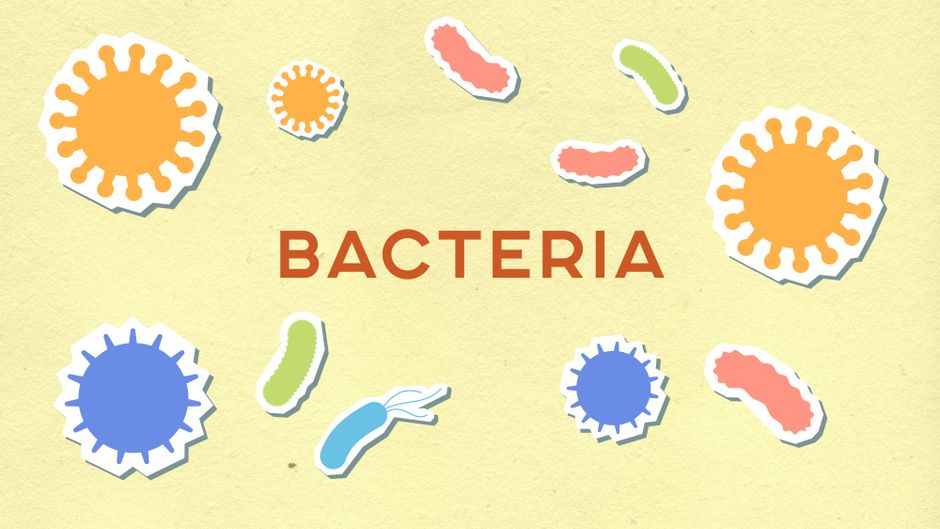
The cell theory is one of the most important ideas in all of biology. It is the foundation for understanding how every living thing works. The three tenets of the cell theory are: all living organisms are composed of one or more cells, the cell is the basic unit of structure and organization in organisms, and all cells arise from pre-existing cells. These three principles may sound simple, but they took centuries of scientific discovery to establish and they continue to guide medical research today.
What Are the 3 Tenets of the Cell Theory?
The three tenets are the core of modern biology. They define what a cell is and how life continues. Here is the precise breakdown of each principle:
- All living things are made of cells. This includes single-celled bacteria and complex humans made of trillions of cells. If something is alive, it is made of at least one cell.
- The cell is the basic unit of life. Cells are the smallest structure that can perform all the functions of life. They can take in nutrients, convert energy, and remove waste. There is no smaller functional unit that is considered alive.
- All cells come from other cells. Life does not spontaneously appear. Every cell in your body today was produced by the division of a parent cell. This process is continuous and unbroken back to the very first cells on Earth.
These three points are not just historical facts. They are the working assumptions behind cancer research, vaccine development, and reproductive medicine. If cells did not come from other cells, the entire concept of inherited genetic diseases would collapse.
Who Developed the Cell Theory?
The cell theory was not created by one person in a single moment. It was built by several scientists looking through early microscopes in the 1800s.
In 1839, the German botanist Matthias Schleiden stated that all plants are made of cells. In the same year, the German physiologist Theodor Schwann made the same claim for animals. Together, they proposed that cells are the basic building blocks of all life.
The third tenet came later. In 1855, the German physician Rudolf Virchow published the famous phrase Omnis cellula e cellula, which means every cell originates from another cell. This was a direct challenge to the old idea of spontaneous generation, which claimed that life could appear from non-living matter like mud or rotting meat.
This historical timeline matters because it shows how careful observation replaced superstition. The microscope revealed a hidden world, and these men built a logical framework to explain it. Their conclusions have survived nearly two centuries of testing, which is rare in science.
Why Do All Cells Come From Pre-Existing Cells?
The third tenet has a deep implication. It means there is an unbroken chain of cell division stretching back billions of years. Your cells are not newly created from scratch. They are copies of copies, passed down through generations of cell division.
This happens through a process called the cell cycle. A parent cell duplicates its DNA and then splits into two daughter cells. This is how a fertilized egg becomes a baby with trillions of cells. It is also how your body replaces dead skin cells and heals a cut.
This tenet also explains why spontaneous generation is impossible. A modern experiment by Louis Pasteur in the 1860s demonstrated this clearly. He used swan-necked flasks to show that broth would not grow microbes unless it was exposed to air containing dust particles. The microbes came from other microbes in the air, not from the broth itself.
The practical consequence is significant. Sterilization in hospitals works because it kills existing cells. Antibiotics work because they stop bacterial cells from dividing. If cells could appear from nothing, these medical tools would be useless.


Are Viruses an Exception to the Cell Theory?
Viruses are often presented as a challenge to cell theory, but they do not actually break the rules. A virus is not alive in the strict biological sense. It cannot reproduce on its own, it does not have cellular structure, and it does not perform metabolism.
Viruses are essentially genetic material wrapped in a protein coat. They must infect a living cell to reproduce. Once inside, they hijack the host cell’s machinery to make more viruses. This means viruses depend on cells for their existence. They do not prove that life can exist without cells. They prove the opposite, that even virus-like entities need cells to propagate.
This distinction matters for medical accuracy. Antibiotics do not kill viruses because viruses are not cells. Antiviral drugs work differently by blocking the virus from entering cells or from replicating inside them. Understanding this difference helps explain why your doctor will not prescribe antibiotics for the common cold.
What Are the Exceptions to the Cell Theory?
Science is rarely absolute. The cell theory has a few documented exceptions that are important for advanced biology students and medical professionals to understand.
The first exception is striated muscle cells. Skeletal muscle fibers are very large and contain many nuclei. A single muscle fiber can be several centimeters long. It forms when many individual cells fuse together during development. This challenges the idea that every cell has a single nucleus and a defined boundary.
The second exception involves certain fungi. Some fungal species, like the bread mold Rhizopus, form structures called coenocytic hyphae. These are long tubes that contain many nuclei without being divided into separate cells by cell walls. The cytoplasm flows freely through the entire structure.
The third example is the giant algae Acetabularia. This single-celled organism can grow to several centimeters in length, which is enormous for a single cell. It has a single nucleus but a highly complex body structure.
These exceptions do not destroy the theory. They refine it. They show that the definition of a cell is flexible in specific biological situations. For the vast majority of life, the three tenets hold perfectly true.
Modern Additions to the Cell Theory
The original three tenets have been expanded as science has advanced. Modern biology accepts several additional principles that extend the original framework.
One addition is that DNA is passed from cell to cell during division. This explains how genetic information is preserved and how mutations occur. Every cell in your body contains the same DNA because it was copied from the original fertilized egg.
Another addition states that cells have the same basic chemical composition. All cells use DNA for genetic information, RNA for translating that information, and proteins for performing work. This commonality suggests a shared evolutionary origin for all life on Earth.
A third modern addition is that energy flow occurs within cells. Cells are open systems that take in energy and materials from their environment. They use this energy to maintain order and perform work. This principle connects cell biology to thermodynamics and explains why organisms need to eat.
These additions do not replace the original tenets. They build on them. They give the cell theory greater explanatory power for modern questions in genetics and biochemistry.
Why Is the Cell Theory Still Important Today?
The cell theory is not just a historical curiosity. It remains the working foundation of medicine and biotechnology. Every time a doctor reads a biopsy report, they are relying on the principle that abnormal cells come from normal cells. Every time a researcher grows cells in a petri dish, they rely on the principle that cells will divide to create more cells.
Cancer research depends heavily on the third tenet. A tumor starts from a single cell that mutates and divides uncontrollably. If scientists did not believe cells come from other cells, they could not study how cancer spreads or develop treatments that target dividing cells.
Stem cell therapy and regenerative medicine also rest on this foundation. When scientists grow replacement tissues in a lab, they are guiding pre-existing cells to divide and specialize. They are not creating cells from nothing. They are directing a natural process that has been running since the beginning of life.
Understanding the cell theory also helps the public evaluate health claims. Any product or treatment claiming to work by creating new cells from non-living material should be viewed with extreme skepticism. No scientific evidence supports such a claim. Real medical treatments work by influencing the behavior of existing cells.
Frequently Asked Questions
What is the simplest definition of the cell theory?
The cell theory states that all living things are made of cells, cells are the basic unit of life, and all cells come from pre-existing cells. These three principles define the foundation of all biological science.
Who proposed the cell theory?
Matthias Schleiden and Theodor Schwann proposed the first two tenets in 1839. Rudolf Virchow added the third tenet in 1855, completing the modern version of the theory.
Are viruses considered cells?
No, viruses are not cells. They lack cellular structure and cannot reproduce without infecting a living cell, which means they do not violate the cell theory.
Does the cell theory apply to all living organisms?
Yes, the cell theory applies to all recognized forms of life, including bacteria, plants, animals, and fungi. A few biological structures like skeletal muscle fibers have unusual cellular arrangements, but they still originate from cells.
