
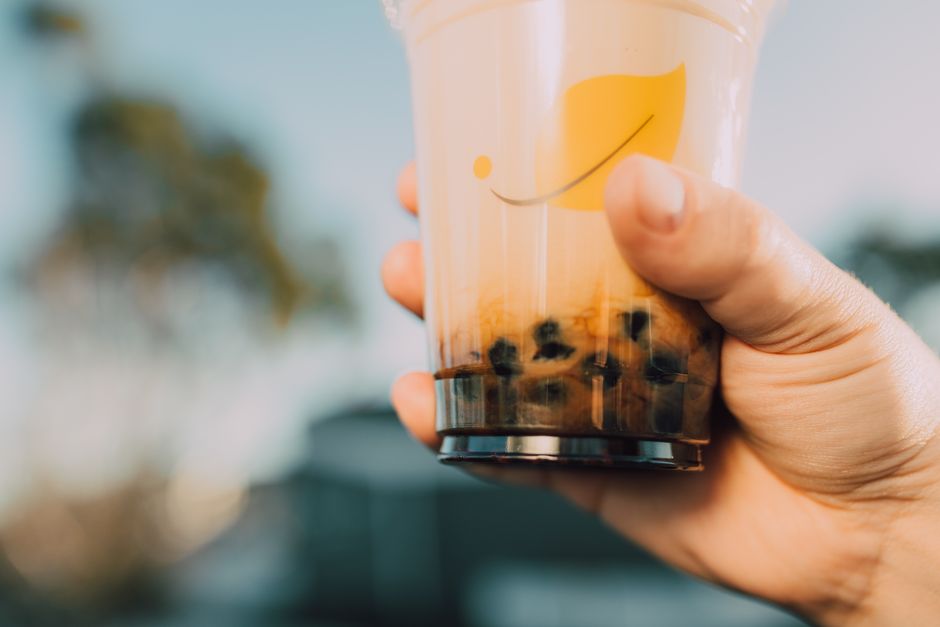
Tapioca pearls are small, chewy balls made from cassava root starch. You most often find them in bubble tea, where they sit at the bottom of the drink and are sucked up through a wide straw. They are almost pure starch with added sugar, which gives them their signature soft and bouncy texture.
What Are Tapioca Pearls Made Of?
Tapioca pearls start as cassava root. The root is processed to extract its starch, which is then mixed with water and formed into small spheres. The basic ingredient list is simple: cassava starch and water.
The brown or black color of the pearls you see in bubble tea comes from added caramel color or brown sugar. Without coloring, tapioca pearls are white. The sugar is what gives them their sweet taste and helps create that chewy texture when cooked.
There are no artificial flavors in standard tapioca pearls. Some specialty shops add fruit syrups or other flavorings, but the traditional pearl is unflavored. The sweetness comes entirely from the sugar or syrup they are cooked in.
How Are Tapioca Pearls Made?
The production process is straightforward. Cassava starch is mixed with boiling water to form a dough. The dough is kneaded until smooth, then rolled into long ropes and cut into small pieces. These pieces are rolled into balls by hand or by machine.
Commercial production uses machines that can form thousands of pearls per minute. The raw pearls are then dried and packaged. When you buy them at a store, they are usually dried and need to be cooked before eating.
Cooking tapioca pearls at home takes about 30 to 45 minutes. You boil them in water until they float and become translucent. Then you simmer them for another 15 to 20 minutes. After cooking, they are soaked in a sugar syrup to add sweetness and prevent them from sticking together.
Are Tapioca Pearls Healthy?
Tapioca pearls are not a health food. They are almost entirely carbohydrate with very little protein, fiber, fat, or vitamins. A typical serving of tapioca pearls in bubble tea has about 150 to 200 calories, mostly from added sugar.
The cassava starch itself has a high glycemic index. This means it raises blood sugar quickly. For people with diabetes or anyone trying to manage blood sugar, this is something to consider. The sugar syrup they are soaked in adds even more sugar on top of the starch.
On the positive side, tapioca is naturally gluten-free. People with celiac disease or gluten sensitivity can eat tapioca pearls without worry. It also contains a small amount of resistant starch, which may feed beneficial gut bacteria. But the amount is not large enough to make a meaningful difference in most diets.
There is no evidence that tapioca pearls provide any unique health benefit. They are a source of quick energy, but that is about it. If you enjoy them, they fit best as an occasional treat rather than a daily food.





Do Tapioca Pearls Contain Any Nutrients?
Tapioca starch contains very small amounts of calcium, iron, and vitamin B12, but the levels are negligible. You would need to eat an unrealistic amount to get any meaningful nutrition from them.
The main nutritional contribution is calories from carbohydrates. A 100-gram serving of cooked tapioca pearls provides roughly:
- Calories: 150-180
- Carbohydrates: 35-40 grams
- Protein: less than 1 gram
- Fat: less than 1 gram
- Fiber: less than 1 gram
These numbers are similar to white rice or pasta. The difference is that tapioca pearls have almost no protein or fiber, so they digest faster and spike blood sugar more quickly.
Are There Any Risks With Eating Tapioca Pearls?
The main risk is choking. Tapioca pearls are small, round, and slippery. They can be a choking hazard, especially for children under five years old and for older adults who have difficulty swallowing. The pearls do not break down easily in the mouth and can block the airway if not chewed properly.
Some studies suggest that cassava contains naturally occurring compounds called cyanogenic glycosides. These can release small amounts of cyanide when eaten raw. However, proper processing and cooking reduce these compounds to safe levels. Commercially available tapioca pearls are safe to eat because they are cooked before packaging and again before serving.
There is no evidence linking tapioca pearls to any long-term health risks when eaten in normal amounts. The concern is more about the sugar content and the empty calories rather than any toxic effect.
What Is the Difference Between Tapioca Pearls and Boba?
The terms are often used interchangeably, but there is a difference. Tapioca pearls are the plain starch balls. Boba refers to the pearls that have been cooked and sweetened in a sugar syrup. In practice, most people use “boba” to mean the whole drink or the pearls themselves.
Some bubble tea shops also sell “popping boba,” which are not tapioca at all. Popping boba are made from fruit juice and a gelling agent, usually sodium alginate. They burst in your mouth instead of being chewy. If you want the classic tapioca texture, look for traditional tapioca pearls, not popping boba.
How Should You Store Tapioca Pearls?
Dried tapioca pearls can be stored in a cool, dry place for up to a year. Keep them in an airtight container away from moisture and heat. Once opened, use them within a few months for best quality.
Cooked tapioca pearls are different. They should be eaten within a few hours of cooking. If you need to store them, keep them in a sealed container in the refrigerator for up to 24 hours. After that, they become hard and lose their chewy texture. You cannot reheat them to restore the original texture.
Do not freeze cooked tapioca pearls. Freezing damages the starch structure, and they become mushy when thawed.
Do Tapioca Pearls Have Any Environmental Impact?
Cassava is a hardy crop that grows well in poor soil and requires less water than many other starches like rice or wheat. This makes it a relatively sustainable option. Most cassava used for tapioca pearls comes from Southeast Asia, mainly Thailand and Vietnam.
The environmental concern is more about packaging. Tapioca pearls are often sold in plastic bags or containers. The bubble tea industry also generates a lot of single-use plastic cups, lids, and straws. If you are concerned about waste, look for brands that use recyclable or compostable packaging.
Frequently Asked Questions
Are tapioca pearls vegan?
Yes, tapioca pearls are vegan. They are made from cassava starch and water with no animal products.
Can you eat tapioca pearls raw?
No, you should not eat raw tapioca pearls. They are hard and indigestible until cooked, and raw cassava contains compounds that can be harmful.
How long do you cook tapioca pearls?
Cook dried tapioca pearls for about 30 to 45 minutes total. Boil them until they float and turn translucent, then simmer for another 15 to 20 minutes.
Do tapioca pearls expire?
Dried tapioca pearls last up to a year in a cool, dry place. Cooked pearls should be eaten within 24 hours.
