
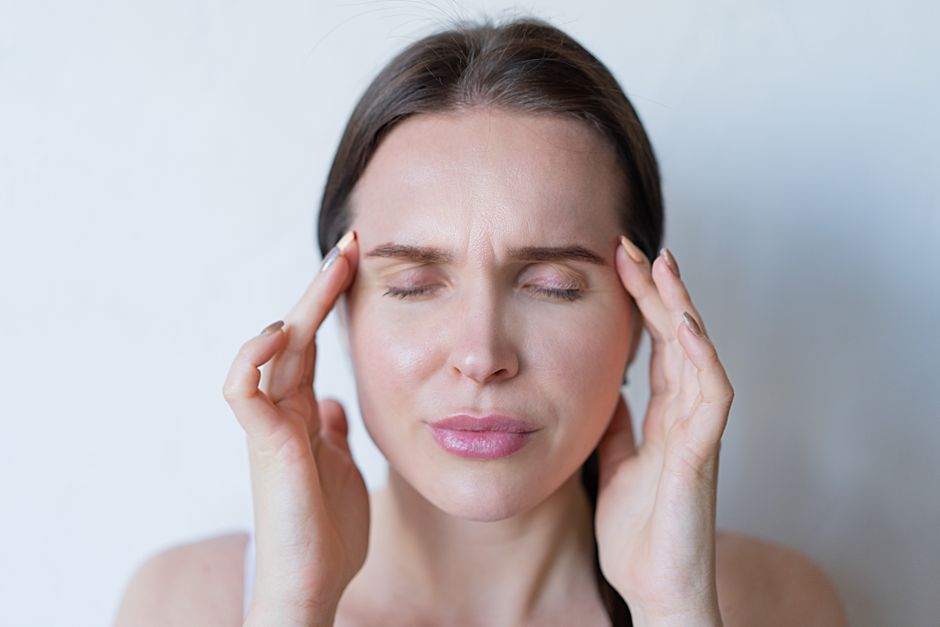
Estrogen is not a female hormone. Men produce it too, and both bodies need it in the right amount. When estrogen levels rise above what is typical for a person’s sex and age, the symptoms tend to show up in the body’s reproductive, mood, and fluid-balance systems. In women, high estrogen most often causes bloating, breast tenderness, heavier periods, and mood changes. In men, it more often causes enlarged breast tissue, lower sex drive, and erectile problems.
The tricky part is that “high estrogen” is not one condition. It can come from body fat, from medications, from liver function, from hormone therapy, or from a tumor. That means the symptoms overlap with many other problems, and a symptom alone does not confirm anything. This guide separates what is well established from what is often claimed but poorly supported.
What Are Symptoms Of High Estrogen In Men And Women?
The symptoms differ by sex because estrogen acts on different tissues in each body. The table below shows the most commonly reported signs, grouped by system.
| Symptom area | In women | In men |
|---|---|---|
| Breast | Tenderness, swelling, fibrocystic lumps | Gynecomastia (enlarged breast tissue), nipple tenderness |
| Menstrual | Heavy or prolonged bleeding, irregular cycles | Not applicable |
| Fluid and weight | Bloating, water retention, weight gain | Water retention, weight gain |
| Mood | Irritability, anxiety, low mood | Low mood, irritability |
| Sexual | Changes in libido | Lower sex drive, erectile dysfunction |
| Other | Migraines, fatigue | Reduced muscle mass, fatigue |
These are patterns, not a checklist. A woman with breast tenderness may simply be in the luteal phase of her cycle, when estrogen and progesterone both rise. A man with enlarged breasts may have excess fat tissue rather than true glandular enlargement. Context matters more than any single sign.
Why Do Estrogen Levels Rise In The First Place?
Estrogen does not usually rise on its own for no reason. Something is driving it. In women, the most common cause is a shift in the balance between estrogen and progesterone, not necessarily an absolute excess of estrogen. This is why the term “estrogen dominance” gets used loosely in wellness writing. It is not a recognized medical diagnosis, and hormone levels in many women labeled this way fall within normal range.
In men, most estrogen comes from the conversion of testosterone by an enzyme called aromatase. That conversion happens mainly in fat tissue. More body fat means more aromatase activity, which means more testosterone is converted to estrogen. This is one of the better-understood mechanisms linking obesity to lower testosterone and higher estrogen in men.
Other drivers that apply to both sexes include:
- Excess body fat, which increases aromatase activity
- Liver disease, since the liver clears estrogen from the blood
- Certain medications, including some used for prostate cancer and some hormonal treatments
- Alcohol use, which can affect how the liver processes hormones
- Exogenous estrogen from hormone therapy or exposure to environmental sources
- Rare hormone-secreting tumors of the ovaries, testes, or adrenal glands
Age matters too. In women, estrogen fluctuates widely during perimenopause before falling in menopause. In men, testosterone declines gradually with age while estrogen can stay relatively stable, so the ratio shifts.
How Does High Estrogen Affect Women Specifically?
In women of reproductive age, the most reliable sign of an estrogen-progesterone imbalance is a change in menstrual bleeding. Estrogen thickens the uterine lining. Progesterone stabilizes it. When estrogen is high relative to progesterone, the lining can build up and then shed heavily. This is why heavy or prolonged periods are a common feature of conditions like polycystic ovary syndrome and anovulatory cycles.
Breast tenderness is another frequent sign. Estrogen promotes growth of breast tissue, and cyclical tenderness that peaks before a period is normal. Tenderness that is constant, one-sided, or accompanied by a new lump is not something to attribute to hormones without evaluation.
Mood symptoms are real but harder to pin down. Estrogen influences serotonin and other neurotransmitters, and some women notice irritability or low mood at points in the cycle when estrogen is high. The evidence for a direct cause-and-effect relationship is mixed, and many other factors affect mood.
In postmenopausal women, high estrogen is unusual unless it comes from hormone therapy or an endogenous source such as an estrogen-secreting ovarian tumor. Persistent postmenopausal bleeding is a red flag that warrants prompt medical assessment, not a wait-and-see approach.
How Does High Estrogen Affect Men Specifically?
The clearest and best-documented effect of elevated estrogen in men is gynecomastia, the enlargement of glandular breast tissue. It is often tender, and it is distinct from pseudogynecomastia, which is fat without glandular tissue. A clinician can usually tell the difference on examination.
Sexual symptoms are common but not specific. Lower libido and erectile dysfunction can result from high estrogen, low testosterone, or many other causes. In practice, these often occur together, since the same aromatase activity that raises estrogen lowers testosterone.
Some men also report fatigue, reduced muscle mass, and mood changes. The evidence for these as direct effects of estrogen is less consistent than for breast and sexual symptoms. They are worth mentioning to a clinician but should not be treated as proof of high estrogen on their own.
One point that gets lost in online discussions: estrogen is essential for male health. It plays a role in bone density, brain function, and libido. The goal in clinical care is not to eliminate estrogen but to keep it in a normal range for the individual.
Can You Diagnose High Estrogen From Symptoms Alone?
No. Symptoms suggest a possibility; they do not confirm a hormone level. This is one of the most important points in this topic, and it is often skipped in popular articles.
Estrogen is measured with blood tests, and interpretation depends on age, sex, menstrual cycle timing, and whether a person is on hormone therapy. In women, a single estrogen level can be misleading because levels change across the cycle. In men, estradiol is usually measured alongside testosterone, since the ratio and both absolute values matter.
Self-diagnosis based on symptoms leads to a lot of unnecessary worry and, in some cases, unnecessary supplement use. Supplements marketed as “estrogen blockers” have limited human evidence behind them, and some can interact with medications or affect liver function.
When Should You See A Doctor?
Some symptoms of high estrogen are harmless and self-limited. Others need prompt evaluation. The distinction is not always obvious, so here are the situations where a medical visit is clearly warranted.
- New breast lump, nipple discharge, or one-sided breast changes in either sex
- Bleeding after menopause, or bleeding between periods that is new and persistent
- Very heavy periods that soak through protection quickly or cause dizziness
- Rapid or painful breast enlargement in a man
- Symptoms that began after starting a new medication or hormone product
- Signs of liver problems, such as yellowing of the skin or eyes
For symptoms that are mild and cyclical, it is reasonable to track them for a few cycles and bring the record to a clinician. Patterns are more useful than single data points.
What Does Treatment Actually Look Like?
Treatment depends entirely on the cause, which is why testing comes before treatment. There is no single “estrogen-lowering” protocol that applies to everyone.
When excess body fat is driving aromatase activity, weight loss is often the most impactful step, and it addresses the mechanism directly. When a medication is responsible, a clinician may adjust or switch it. When liver disease is involved, managing the underlying condition is the priority. When a hormone-secreting tumor is found, treatment is directed at the tumor.
For men with gynecomastia, some clinicians prescribe medications such as aromatase inhibitors or selective estrogen receptor modulators, but this is not a universal standard and evidence for routine use is limited. Surgery is sometimes considered for persistent cases. For women with estrogen-progesterone imbalance, hormonal contraception or progestin therapy is commonly used, though the choice depends on the individual and their goals.
The honest position: there is no strong evidence that over-the-counter “hormone balance” products reliably lower estrogen or resolve symptoms. Anyone marketing a supplement as a proven fix is going beyond what the data show.
Frequently Asked Questions
What are the first signs of high estrogen?
In women, early signs often include breast tenderness, bloating, and heavier periods. In men, breast tissue enlargement and lower sex drive tend to appear first.
Can high estrogen cause weight gain?
High estrogen is linked to water retention and bloating, which can look like weight gain on the scale. Sustained fat gain is more often driven by other factors, though excess fat itself raises estrogen production in both sexes.
Does high estrogen affect men’s fertility?
Yes. Elevated estrogen can suppress the hormones that drive sperm production, and it often occurs alongside low testosterone. A fertility evaluation is appropriate if conception is a concern.
Can you lower estrogen naturally?
Weight loss and reduced alcohol intake can lower estrogen production in people where body fat or liver processing is a factor. No supplement has strong evidence for reliably lowering estrogen.
