
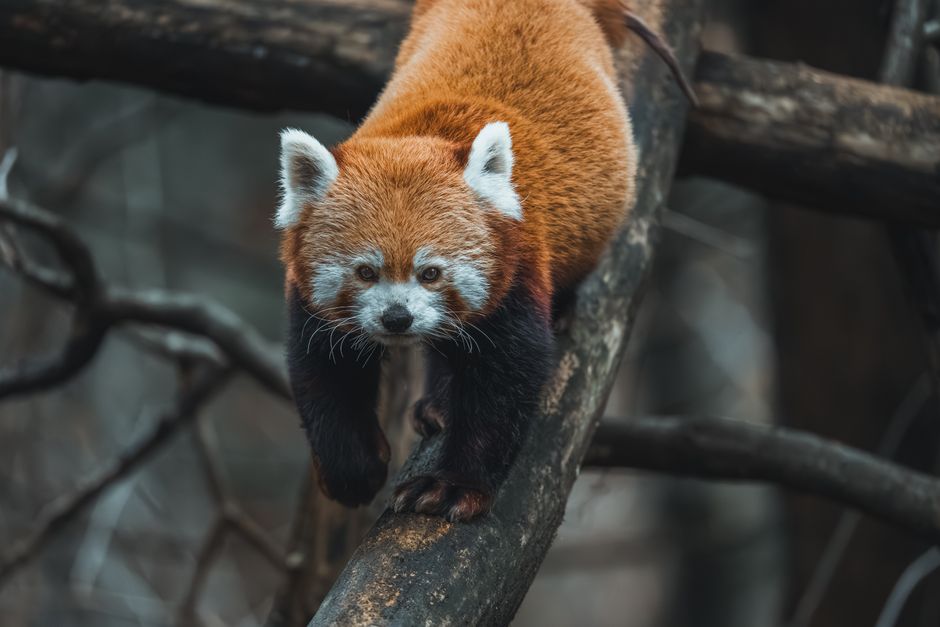
What Are Red Pandas Predators And Threats? Red pandas face threats from natural predators such as snow leopards, clouded leopards, and large birds of prey, but the greatest danger to their survival comes from humans. Habitat loss, poaching, and accidental capture in traps have pushed red pandas onto the endangered species list, with fewer than 10,000 mature individuals estimated to remain in the wild.
What Are Red Pandas Predators And Threats?
Red pandas are small, solitary mammals native to the Himalayan mountain forests of Nepal, India, Bhutan, Myanmar, and southwestern China. They weigh between 8 and 17 pounds and spend most of their lives in trees. Their size and ground-dwelling habits make them vulnerable to several predators.
Natural predators include snow leopards, clouded leopards, and martens. Large raptors such as eagles and hawks also pose a threat, particularly to young red pandas. These predators hunt red pandas for food, though red pandas are not a primary prey species for any of them.
However, natural predation is not the main reason red panda populations are declining. Human activities cause far more deaths than wild predators do. The International Union for Conservation of Nature (IUCN) lists the red panda as Endangered. The species has been on the endangered list since 2015, upgraded from Vulnerable, which reflects a worsening situation.
What Natural Predators Hunt Red Pandas?
Snow leopards are the most significant natural predator of red pandas. These large cats share much of the same mountain habitat across the Himalayas. Snow leopards are ambush hunters and will take red pandas when the opportunity arises, especially when other prey is scarce.
Clouded leopards also prey on red pandas in the eastern parts of their range. Like snow leopards, they are skilled climbers, which reduces the advantage red pandas normally gain from being in trees.
Other predators include:
- Martens — medium-sized carnivores that can climb trees and target red panda cubs
- Eagles and other large raptors — can snatch young or small red pandas from branches
- Wild dogs — occasionally hunt red pandas on the ground
Red pandas have several defenses. Their reddish-brown fur helps them blend into moss-covered trees. They are agile climbers and can retreat to high branches. When threatened, they stand on their hind legs to appear larger and can deliver sharp bites with their teeth. Their claws are also semi-retractable and useful for defense.
Despite these adaptations, red pandas are not equipped to fight off a snow leopard or a clouded leopard. Their best defense is avoidance and escape.
How Do Humans Threaten Red Pandas?
Human activity is by far the biggest threat to red pandas. The species has already disappeared from parts of its historical range, and remaining populations are fragmented.
Habitat loss is the leading cause. Red pandas depend on temperate forests with dense bamboo undergrowth. Logging, agricultural expansion, and human settlement have destroyed large areas of this habitat. Bamboo forests are also cleared for farming and livestock grazing. When forests are cut into smaller pieces, red panda populations become isolated. Small, isolated populations are more vulnerable to inbreeding and local extinction.
Poaching is another serious problem. Red pandas are hunted for their fur, which is used to make hats and clothing in some regions. Their tails are sometimes used in traditional ceremonies. In some areas, red pandas are captured for the illegal pet trade.
Accidental capture is also a major issue. Red pandas are often caught in snares and traps set for other animals, such as musk deer and wild pigs. These traps do not discriminate, and bycatch is a significant cause of red panda deaths in some regions.
Climate change adds another layer of risk. Rising temperatures may push bamboo forests to higher elevations, shrinking the available habitat. Red pandas are adapted to cool mountain climates and may struggle to survive as their environment changes.
-
 Mounjaboost Reviews & Complaints: Does Drops Work for Weight Loss?
 -
Yu Sleep Weight Loss Supplement Reviews. Critical March 2026 Update.
-
Neuro Energizer Review 2026. Legit Brain Tool or Just Hype?
-
Acupuncture for Weight Loss: Does It Really Work?
-
Citrus Burn Reviews 2026. User Complaints & Our Analysis!





Why Are Red Pandas Endangered?
The IUCN Red List classifies the red panda as Endangered. This means the species faces a very high risk of extinction in the wild. The population is estimated at fewer than 10,000 mature individuals and continues to decline.
Several factors combine to make red pandas especially vulnerable:
- Slow reproduction — females typically give birth to one or two cubs per year, and cubs stay with their mothers for about a year
- Specialized diet — red pandas eat mostly bamboo, which is low in nutrients and requires them to eat large amounts daily
- Limited range — they live only in high-altitude forests of the Himalayas and nearby mountain ranges
- Low population density — red pandas are solitary and spread out, making it hard for individuals to find mates
These biological traits mean red pandas cannot quickly recover from population losses. When habitat is destroyed or individuals are killed, the population takes a long time to rebound — if it recovers at all.
It is worth noting that the red panda is the only living member of its family, Ailuridae. It is not closely related to the giant panda, despite the shared name. This means there is no other species that could fill its ecological role if it goes extinct.
What Is Being Done to Protect Red Pandas?
Conservation efforts for red pandas are underway across their range. These efforts focus on protecting habitat, reducing poaching, and supporting local communities.
Protected areas have been established in Nepal, India, Bhutan, and China. These parks and reserves give red pandas a safe space to live and reproduce. However, enforcement varies, and many protected areas are underfunded or understaffed.
Anti-poaching patrols help remove snares and traps from red panda habitat. In some regions, community-based programs encourage local people to report poaching and to use alternative livelihoods instead of hunting.
Research and monitoring are also important. Scientists use camera traps and GPS collars to track red panda populations and understand their needs. This information helps conservationists make better decisions about where to focus resources.
Zoos around the world participate in breeding programs for red pandas. These programs help maintain a genetically diverse captive population, though they are not a solution to the wild population decline. Reintroduction of captive-bred red pandas into the wild has been attempted in some areas, but success rates are limited and the evidence base for long-term survival is still thin.
International agreements also play a role. The red panda is listed in Appendix I of CITES, which bans international trade in the species and its parts. This makes it illegal to trade red panda fur or live animals across borders.
How Can You Help Red Pandas?
Individuals can support red panda conservation in several ways. The most direct way is to donate to or volunteer with organizations that work on red panda conservation in the Himalayas. These groups focus on habitat protection, anti-poaching, and community engagement.
Reducing demand for products that drive habitat loss also helps. Palm oil, paper, and timber products linked to deforestation in tropical and subtropical regions can indirectly affect red panda habitat. Choosing sustainably sourced products makes a difference, though the connection is indirect and the impact of individual choices is difficult to measure.
Spreading accurate information about red pandas is another way to help. Many people do not know that red pandas are endangered or that they face threats beyond natural predators. Sharing reliable information from conservation organizations can raise awareness.
Visiting zoos that participate in red panda breeding programs can also support conservation efforts, as many of these facilities contribute funding to field projects. However, it is important to check that the zoo is accredited and that its programs are legitimate.
Finally, supporting policies that protect forests and wildlife can have a larger impact than individual actions. Voting for leaders who prioritize environmental protection and supporting organizations that advocate for strong conservation laws are both meaningful steps.
What Is the Future for Red Pandas?
The future of red pandas depends on whether their habitat can be protected and whether human threats can be reduced. If current trends continue, the species is likely to decline further. However, conservation efforts have shown results in some areas, and there is still time to act.
The main challenge is that red pandas live in some of the most remote and economically disadvantaged regions of the world. Conservation must balance the needs of wildlife with the needs of local communities. Programs that provide alternative livelihoods, education, and healthcare while protecting forests tend to be more successful than those that focus only on wildlife.
Climate change remains a wild card. Even if habitat is protected, shifting weather patterns could alter bamboo availability and force red pandas into smaller areas. This makes long-term planning difficult.
There is no single solution. Protecting red pandas requires a combination of habitat preservation, anti-poaching enforcement, community engagement, and international cooperation. The species has survived for millions of years, but the pressures it faces today are unlike anything in its evolutionary history.
Frequently Asked Questions
What eats red pandas?
Snow leopards, clouded leopards, martens, and large birds of prey are the main natural predators of red pandas. However, humans cause far more red panda deaths than any wild predator.
Are red pandas dangerous to humans?
Red pandas are not dangerous to humans. They are small, shy animals that avoid people and will only bite if cornered or handled.
How many red pandas are left in the wild?
Fewer than 10,000 mature red pandas are estimated to remain in the wild, according to the IUCN. The population is declining and the species is classified as Endangered.
What is the biggest threat to red pandas?
Habitat loss is the biggest threat to red pandas. Logging, farming, and human settlement destroy the bamboo forests they depend on for food and shelter.
