
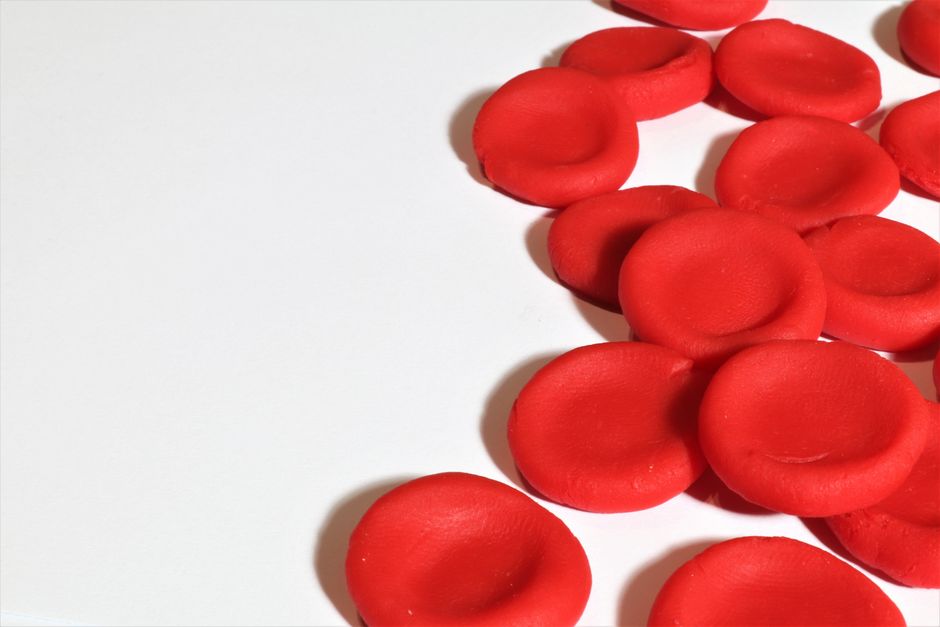
Every second, your bone marrow produces about 2 million red blood cells. That number is not trivia — it tells you how essential these cells are to staying alive. Red blood cells are responsible for carrying oxygen from your lungs to every tissue in your body and bringing carbon dioxide back to your lungs to be exhaled. Without them, your cells would run out of the oxygen they need to make energy, and organ damage would follow within minutes.
That core job is simple to state but remarkable in execution. A single red blood cell can make roughly 250,000 trips through your circulatory system in its lifetime. It squeezes through capillaries narrower than itself, bends, folds, and keeps going — all without a nucleus or the repair machinery most cells have.
What Are Red Blood Cells Responsible For?
Red blood cells do one main job better than any other cell in your body: they move oxygen. Each cell is packed with hemoglobin, an iron-containing protein that binds oxygen in the lungs and releases it in tissues where oxygen is scarce.
Hemoglobin also carries a portion of the carbon dioxide your tissues produce back to the lungs. Most carbon dioxide travels in the blood as bicarbonate dissolved in plasma, but hemoglobin handles a meaningful share of it. This dual role — oxygen out, carbon dioxide back — is the reason red blood cells sit at the center of your body’s gas exchange system.
They also help regulate blood pH. Hemoglobin buffers acids produced by normal metabolism, which keeps your blood in the narrow pH range your organs require. This buffering happens continuously and without any conscious input from you.
The shape matters too. A mature red blood cell is a biconcave disc — thinner in the middle than at the edges. That shape gives it more surface area for gas exchange and lets it deform to pass through tight spaces. It has no nucleus and no mitochondria, which leaves more room for hemoglobin and prevents the cell from consuming the oxygen it carries.
How Do Red Blood Cells Carry Oxygen?
Oxygen transport depends on a precise chemical relationship between hemoglobin and oxygen. In the lungs, where oxygen levels are high, hemoglobin binds oxygen tightly. In tissues, where oxygen levels are lower and carbon dioxide levels are higher, hemoglobin releases it.
Several factors influence how readily hemoglobin lets go of oxygen:
- Oxygen levels — the higher the oxygen concentration, the more hemoglobin binds
- Carbon dioxide — higher levels cause hemoglobin to release oxygen more easily
- Acidity — more acidic environments reduce hemoglobin’s oxygen affinity
- Temperature — warmer tissues receive more oxygen because heat reduces binding
This system is efficient because it responds automatically to what each tissue needs. A working muscle produces more carbon dioxide and heat, so it gets more oxygen. A resting tissue gets less. No signal from the brain is required.
One red blood cell contains roughly 270 million hemoglobin molecules. Each hemoglobin molecule can carry four oxygen molecules. That adds up to about one billion oxygen molecules per cell. The scale is hard to picture, but it explains why even a modest drop in red blood cell count can affect how you feel.
What Happens When Red Blood Cells Are Low?
When your red blood cell count or hemoglobin level drops below normal, the condition is called anemia. The most common symptom is fatigue, because your tissues are not getting all the oxygen they need. Shortness of breath, pale skin, dizziness, and a fast heartbeat are also common.
Anemia has many causes, and identifying the right one matters because treatments differ:
- Iron deficiency — the most common cause worldwide; without enough iron, your body cannot make enough hemoglobin
- Vitamin B12 or folate deficiency — both are needed for red blood cell production
- Chronic disease — inflammation from conditions like kidney disease or autoimmune disorders can suppress red blood cell production
- Blood loss — from heavy menstrual bleeding, gastrointestinal bleeding, or surgery
- Genetic conditions — such as sickle cell disease or thalassemia, which affect hemoglobin structure or production
Symptoms alone cannot tell you which type of anemia you have. A blood test — typically a complete blood count plus iron studies and vitamin levels — is needed to identify the cause. Some anemias are treated with supplements. Others require treating an underlying condition. Some, like sickle cell disease, need specialized care.
Self-treating with iron supplements without a confirmed deficiency is not recommended. Iron can build up to harmful levels in the body, and taking it when you do not need it will not fix anemia caused by something else.




How Long Do Red Blood Cells Live?
A red blood cell circulates for about 120 days. That lifespan is well established and consistent across healthy adults. When a cell reaches the end of its life, it is removed from circulation by the spleen and liver. The iron inside it is recycled to make new hemoglobin.
Your bone marrow replaces red blood cells continuously to keep your count stable. In a healthy person, production and removal stay balanced. When that balance shifts — because of blood loss, disease, or a problem in the bone marrow — your red blood cell count changes.
The body can increase production when needed. If you travel to a high altitude, where oxygen levels in the air are lower, your kidneys release erythropoietin, a hormone that signals your bone marrow to make more red blood cells. This adaptation takes days to weeks and is one reason athletes sometimes train at altitude.
What Does Hemoglobin Level Tell You?
Hemoglobin is the protein that does the actual oxygen carrying, so measuring it tells you how much oxygen-carrying capacity your blood has. Hemoglobin is measured in grams per deciliter (g/dL).
Normal ranges vary by sex and are set by clinical laboratories:
- Men: roughly 13.5 to 17.5 g/dL
- Women: roughly 12.0 to 15.5 g/dL
These ranges are general reference values. Your lab may use slightly different cutoffs, and your doctor interprets your result alongside your symptoms, other blood counts, and medical history. A hemoglobin level slightly below the reference range does not automatically mean something is wrong, and a level within range does not rule out a problem.
Hemoglobin is not the same as red blood cell count, though the two usually move together. Red blood cell count is the number of cells. Hemoglobin measures the oxygen-carrying protein inside them. A person can have a normal cell count but low hemoglobin if each cell carries less hemoglobin than it should — which happens in iron deficiency before the cell count drops.
What Affects Red Blood Cell Production?
Your bone marrow produces red blood cells in a process called erythropoiesis. It requires several raw materials and signals working together.
Erythropoietin (EPO) is the primary hormone that drives red blood cell production. Your kidneys produce most of it. When kidney function declines, EPO production often falls, which is why kidney disease commonly causes anemia.
Iron is needed to build hemoglobin. Most of the iron your body uses is recycled from old red blood cells, but you also need some from your diet. Iron from animal sources is absorbed more efficiently than iron from plant sources. Vitamin C improves absorption of plant-based iron.
Vitamin B12 and folate are both required for red blood cell maturation. A shortage of either leads to larger-than-normal red blood cells that do not function properly. B12 deficiency is more common in older adults, people who follow strict vegan diets without supplementation, and people with certain digestive conditions that impair absorption.
Other factors that can affect production include chronic inflammation, certain medications, bone marrow disorders, and some infections. In each case, the mechanism differs, which is why a doctor looks at the full picture rather than a single number.
Why Does Blood Type Matter?
Red blood cells carry antigens on their surface — proteins and sugars that your immune system uses to identify them as “self.” The two main systems are ABO and Rh. Your blood type is determined by which antigens you have.
If you receive blood with antigens your immune system does not recognize, your body mounts an attack that can destroy the donated cells. This is why blood typing is done before any transfusion. It is also why Rh incompatibility can affect pregnancy — if an Rh-negative mother carries an Rh-positive baby, the mother’s immune system may produce antibodies that affect a future pregnancy. This is managed with monitoring and, when appropriate, treatment during pregnancy.
Blood type is inherited and does not change over your lifetime. It is not related to how well your red blood cells carry oxygen — a person with type O blood and a person with type AB blood have the same oxygen-carrying capacity if their hemoglobin levels are equal.
Frequently Asked Questions
What is the main function of red blood cells?
The main function is carrying oxygen from your lungs to your body’s tissues and carrying carbon dioxide back to your lungs. They also help regulate blood pH through hemoglobin’s buffering action.
How long do red blood cells live in the body?
About 120 days. After that, they are removed by the spleen and liver, and the iron inside them is recycled to make new red blood cells.
What hemoglobin level is considered low?
For adult men, below about 13.5 g/dL is generally considered low; for adult women, below about 12.0 g/dL. Your lab’s reference range may differ slightly, and your doctor interprets the result with your symptoms and other tests.
Can you increase red blood cells naturally?
Your body produces red blood cells on its own as long as you have enough iron, vitamin B12, folate, and healthy kidney function. If you have a deficiency, correcting it through diet or supplements prescribed by a doctor can help — but taking supplements without a confirmed deficiency is not recommended.
