
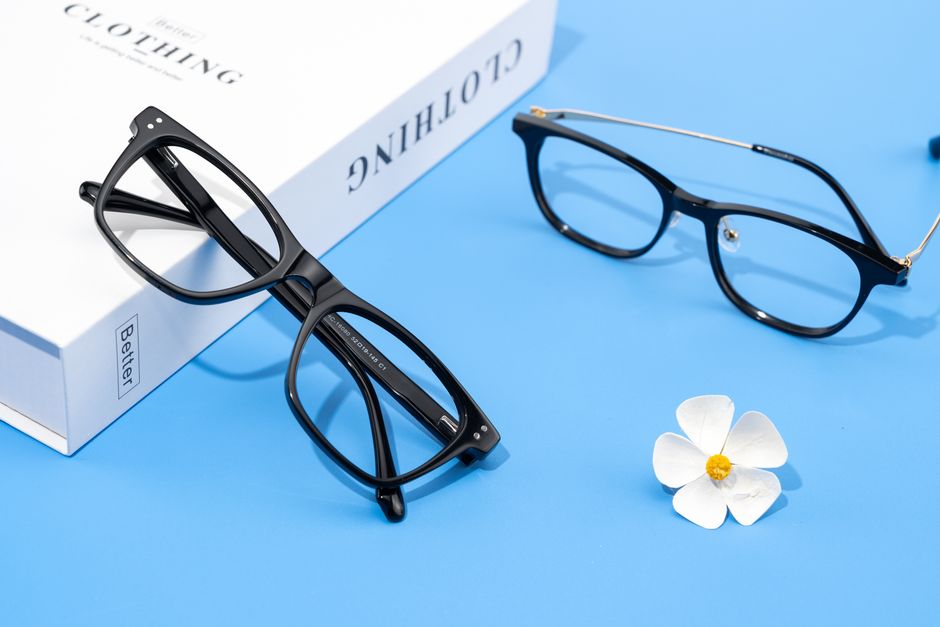
Reading glasses are simple optical devices with lenses that magnify close-up text and objects. They help people with presbyopia, an age-related condition that makes it harder for the eyes to focus on nearby things. By adding magnification, reading glasses reduce the strain on the eye’s focusing muscles, making close work like reading a book or looking at a phone screen more comfortable and clear.
What Are Reading Glasses And How Do They Help?
Reading glasses are single-vision lenses designed specifically for near vision. Unlike regular eyeglasses that correct distance vision, reading glasses only help you see things that are close to your face. They are the most common solution for presbyopia, which typically begins to affect people in their early to mid-40s.
When you look at something close, the lens inside your eye must change shape to focus the image. This process is called accommodation. As we age, the lens becomes less flexible and cannot change shape as easily. Reading glasses provide the extra focusing power that the eye can no longer produce on its own.
The help they provide is immediate and mechanical. The lens magnification does the work that the eye’s natural lens no longer can. This is why people often say that reading glasses make text “pop” into focus. They do not treat or reverse the underlying condition. They simply compensate for it.
How Do I Know I Need Reading Glasses?
The most common early sign is holding reading material farther away from your face. People often find themselves extending their arm to bring text into focus. This is a natural adjustment the brain makes to find a distance where the eye can still focus.
Other common signs include:
- Eye strain or fatigue after reading for a short time
- Headaches after close-up work
- Blurry vision when looking at a menu or phone screen
- Difficulty seeing in dim light when reading
- Needing brighter light to read comfortably
Presbyopia is a normal part of aging, not a disease. Most people begin to notice changes between ages 40 and 45. By age 60, virtually everyone has some degree of presbyopia. The condition progresses gradually until about age 60, when the lens has lost nearly all of its flexibility.
You cannot prevent presbyopia. It happens to everyone, even people who have had perfect vision their entire lives. People who are nearsighted often notice it later because their natural near vision is already somewhat strong. People who are farsighted may notice it earlier.
What Strength Reading Glasses Do I Need?
Reading glasses are measured in diopters, usually ranging from +1.00 to +3.50. The strength you need depends on your age and how close you want to hold reading material. Higher numbers provide more magnification.
A common starting point is +1.00 to +1.25 for people in their early 40s. By the mid-50s, many people need +2.00 to +2.50. By age 60 and beyond, strengths of +2.50 to +3.00 are common. These are general patterns, not rules. Individual needs vary.
Over-the-counter reading glasses are available at drugstores and online. They are sold in standard strengths. These are fine for occasional use and for people who have the same prescription in both eyes. They are not a substitute for a professional eye exam.
You should see an eye care professional before choosing reading glasses. An eye exam can confirm that presbyopia is the cause of your blurry vision. Other conditions, including cataracts, glaucoma, and macular degeneration, can also affect near vision. These require different treatment entirely.
A professional prescription also accounts for the distance between your pupils, which over-the-counter glasses cannot adjust. This measurement matters when the reading glasses are used for tasks that require precise alignment, such as computer work.
Are There Different Types of Reading Glasses?
Yes, and the type you choose depends on how you plan to use them. Full-frame reading glasses have the same magnification across the entire lens. These are best for tasks that require continuous near vision, like reading a book or doing crafts.
Half-eyes, also called half-glasses, are small lenses that sit low on the nose. You can look over them to see distance clearly and look through them for close work. These are popular for people who need to alternate between near and distance vision frequently.
Progressive lenses, sometimes called no-line bifocals, have a gradual shift in magnification from top to bottom. The top helps with distance, the middle with intermediate vision like computer screens, and the bottom with close reading. These require a prescription and an adjustment period.
Bifocal lenses have a visible line separating the distance portion from the reading portion. They are simple and effective but some people find the line distracting. Trifocals add a third segment for intermediate vision.
Computer glasses are a specific type of progressive lens designed for the intermediate distance of a computer screen, which is typically about 20 to 26 inches from your eyes. Standard reading glasses are optimized for a closer distance, usually 14 to 16 inches.
Do Reading Glasses Make Your Eyes Worse?
No. Reading glasses do not weaken your eyes. This is one of the most persistent myths in eye care. The glasses only provide magnification while you wear them. When you take them off, your eyes are exactly as they were before.
What is true is that presbyopia progresses with age regardless of whether you wear reading glasses. Your lens continues to lose flexibility. People often believe the glasses caused this progression because they notice their near vision getting worse over time. The worsening would happen with or without the glasses.
Wearing reading glasses that are too strong can cause eye strain and headaches. This is uncomfortable but not harmful. Your eyes will not be damaged. If you experience discomfort, try a lower strength or see an eye care professional.
Can I Use Reading Glasses for Computer Work?
Standard reading glasses are designed for a reading distance of about 14 to 16 inches. Computer screens are typically positioned farther away, around 20 to 26 inches. Using reading glasses for computer work can cause strain because the magnification is too strong for that distance.
If you spend significant time at a computer, consider a dedicated pair of computer glasses. These are typically about half the strength of your reading prescription. Some people find that a low-strength reading glass, like +1.00, works fine for laptop use. Others need a more precise solution.
Another option is progressive lenses with a computer segment. These provide the right magnification for screens while still allowing clear distance vision when you look up. Discuss your specific work setup with your eye care professional.
When Should I See an Eye Doctor Instead of Buying Over-the-Counter Glasses?
See an eye doctor if you have never had an eye exam as an adult. A comprehensive exam checks for conditions that have no early symptoms, including glaucoma and diabetic retinopathy. These conditions can cause permanent vision loss if not caught early.
See an eye doctor if your vision changes suddenly, if you see flashes of light, or if you experience eye pain. These can be signs of a serious condition requiring immediate attention.
See an eye doctor if over-the-counter reading glasses do not make your vision clear. This could indicate a problem beyond presbyopia. It could also mean you need a different prescription in each eye, which over-the-counter glasses cannot provide.
See an eye doctor if you need reading glasses for work that involves safety, precision, or extended screen time. A professional prescription ensures the glasses are aligned correctly for your specific needs.
The American Academy of Ophthalmology recommends that adults with no vision problems have a baseline eye exam at age 40. People with risk factors, such as diabetes, high blood pressure, or a family history of eye disease, should be examined earlier.
Are Expensive Reading Glasses Better Than Cheap Ones?
The lens strength is the same regardless of price. A +2.00 lens magnifies the same whether it costs $10 or $300. What you pay for in more expensive glasses is lens quality, coatings, and frame durability.
Higher-priced lenses may offer better optical clarity at the edges, scratch resistance, and anti-reflective coatings. These features matter if you wear the glasses for long periods or in situations with glare, like driving at night or working under fluorescent lights.
For occasional use, an inexpensive pair is often perfectly adequate. For daily, prolonged use, investing in a better pair can reduce eye strain and last longer. The right choice depends on your needs and budget.
Frequently Asked Questions
How do I know what strength reading glasses to buy?
Start with a comprehensive eye exam to get an accurate prescription. If you buy over-the-counter glasses, begin with the lowest strength that makes text clear at your comfortable reading distance.
Can reading glasses damage my eyes?
No, reading glasses do not damage your eyes. They only magnify while worn, and your eyes return to their natural state when you remove them.
Do I need reading glasses if I have 20/20 vision?
Yes, you can have perfect distance vision and still need reading glasses. Presbyopia affects near vision independently of distance vision, so 20/20 distance vision does not protect you from it.
How often should I update my reading glasses prescription?
Most people need a stronger prescription every two to three years as presbyopia progresses. Your eye care professional can tell you when a change is needed based on your exam.
