
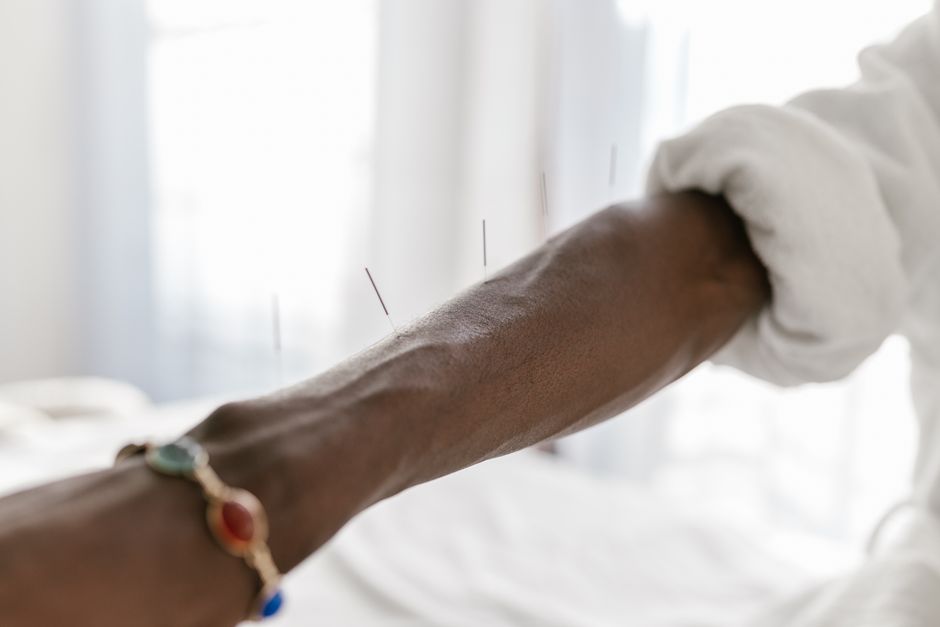
Pressure points are specific spots on the body that are more sensitive to touch or pressure than the tissue around them. They sit where nerves run close to the skin’s surface or pass over bone, so a small amount of force can produce a sharp or lingering sensation. The term gets used in two very different ways: the acupressure points of traditional Chinese medicine, and the tender spots that doctors press during a physical exam.
Both uses describe real anatomy. What differs is the explanation for why pressing them matters, and how strong the evidence is for any health benefit.
What Are Pressure Points?
A pressure point is an area where pressure produces a distinct physical response — pain, tingling, numbness, or a referred ache somewhere else. The clearest examples come from mainstream medicine, not traditional practice.
Doctors have long used tender points as diagnostic tools. In fibromyalgia, clinicians historically checked a set of defined tender points across the body, though current diagnostic criteria rely more on widespread pain and symptom history than on counting tender points. Other examples include the small areas of the skull where nerves emerge, which can feel sharp when pressed, and the tender spots in muscles that clinicians call myofascial trigger points.
The anatomy behind this is straightforward. Nerves travel through soft tissue and cross over bone at predictable places. Where a nerve lies just beneath the skin with little muscle to cushion it, pressure reaches the nerve more easily. That is why pressing certain spots feels sharp, electric, or oddly distant from where your finger is.
Where Are the Main Pressure Points on the Body?
The most commonly cited pressure points cluster around the hands, feet, neck, shoulders, and face. Many of them sit where a nerve or blood vessel passes close to the surface.
Some well-documented examples from standard anatomy:
- The hollow at the base of the skull, where the greater occipital nerve runs. Pressure here can cause a headache-like ache.
- The inner elbow, where the ulnar nerve passes. Pressing it produces the familiar “funny bone” tingle.
- The side of the neck, where the carotid artery and several nerves lie close to the skin. This area is genuinely sensitive and should not be pressed firmly.
- The wrist, where the median nerve passes through the carpal tunnel. Pressure here can cause tingling in the fingers.
- The upper back and shoulder muscles, where trigger points commonly form after strain.
Traditional Chinese medicine maps hundreds of acupressure points along lines it calls meridians. Some of these overlap with the anatomical spots above. Others do not correspond to any known nerve or vessel location.
What Is the Difference Between Acupressure Points and Medical Tender Points?
They use the same word for different things. Acupressure points come from a traditional system that describes energy flow along meridians. Medical tender points come from anatomy and describe spots that hurt when pressed because of nerve or muscle tissue.
The two are not interchangeable. A fibromyalgia tender point is identified because pressure there causes pain in a person with a specific condition. An acupressure point is identified by its position in a traditional map, regardless of whether the person has any condition at all.
This distinction matters for how you read claims. When a website says pressing a point “releases blocked energy,” that is a traditional explanation, not a physiological one. When a doctor presses a spot and asks “does this hurt?”, that is a physical exam finding with a defined clinical purpose.
Do Pressure Points Actually Work for Pain or Other Conditions?
The evidence is mixed and depends entirely on what you are asking. For acupressure as a treatment, research quality varies widely and results are inconsistent.
Some studies suggest acupressure may help with nausea, including during pregnancy and after surgery, though the trials are often small and the results not uniform. Some research indicates acupressure may reduce certain types of pain or anxiety, but the evidence is not strong enough to call it an established treatment. Other studies find no meaningful difference from sham pressure.
A central problem is that pressing a point is hard to disguise. A “sham” acupressure session still involves touch and attention, and touch itself can influence how people feel. Trials that control for this carefully tend to show smaller effects than trials that do not.
For trigger points and muscle pain, some clinicians use targeted pressure or dry needling, and some patients report relief. The evidence here is also mixed, and results vary between studies. What is clear is that pressing a tender spot is not the same as resolving the underlying cause of the pain.
Why Do Some Pressure Points Hurt So Much?
A sharp response usually means you have pressed a nerve or a sensitized area of muscle. That is normal anatomy, not a sign of disease or “blocked energy.”
Nerves are built to carry signals. When you compress one, it fires. The result can be a tingle, a burn, or a jolt that seems to travel. The ulnar nerve at the elbow is the classic example — everyone who has bumped their “funny bone” has felt a nerve respond to pressure.
Muscle tissue behaves differently. After strain, overuse, or prolonged tension, small areas of muscle can become tender and tight. Pressing them may reproduce pain that you recognize, sometimes in a different location. This is called referred pain, and it is a well-documented feature of myofascial trigger points.
Pain sensitivity also varies between people and over time. The same spot can feel mildly tender one day and sharply painful the next, depending on stress, sleep, and recent activity. A pressure point that suddenly becomes much more painful than usual is worth mentioning to a doctor rather than treating at home.
Is It Safe to Press Pressure Points Yourself?
Gentle pressure on most of the body is low risk. Firm pressure on certain areas is not, and some spots should be left alone entirely.
Avoid pressing hard on the front and sides of the neck, where the carotid arteries and major nerves sit close to the skin. Avoid pressing on any area with swelling, redness, or a recent injury. Do not press on a spot that is numb, or on skin that is broken.
People with certain conditions should be cautious. If you take blood thinners, have poor circulation, have nerve damage from diabetes, or are pregnant, check with a clinician before using acupressure or deep pressure techniques. No clinical guidelines specifically cover acupressure for every one of these groups, so individual advice from your own doctor matters more than general rules.
Stop if pressure causes sharp pain that lingers, numbness that does not fade, or any new symptom. Those are signals to get evaluated, not to press harder.
What Should You Expect From Acupressure or Trigger Point Work?
Any relief tends to be temporary. That is the honest expectation, and it applies to both traditional acupressure and clinical trigger point treatment.
Pressure does not repair tissue or correct a structural problem. What it may do is influence how your nervous system interprets sensation for a short time. Some people find it relaxing, and relaxation itself can change how pain feels. That is a real effect, even if it is not the mechanism traditional practice describes.
If you try it, treat it as one small tool among many. Persistent pain, new numbness, or pain that keeps returning to the same spot deserves a proper evaluation. A pressure point that is consistently tender can sometimes point to an underlying issue worth checking — but it is a clue, not a diagnosis.
Frequently Asked Questions
What are pressure points in the body?
They are spots that are more sensitive to touch because a nerve or tender muscle lies close to the surface. The term also refers to acupressure points in traditional Chinese medicine, which are mapped differently.
Do pressure points really work?
The evidence is mixed, and results vary between studies. Some research suggests acupressure may help with nausea and certain types of pain, but it is not an established treatment for most conditions.
Where should you not press on your body?
Avoid firm pressure on the front and sides of the neck, where major arteries and nerves sit close to the skin. Also avoid pressing on swollen, injured, numb, or broken skin.
Why does pressing a pressure point hurt?
It usually means you have compressed a nerve or a sensitized area of muscle. That is normal anatomy, though pain that is sudden, severe, or persistent should be checked by a doctor.
