

A pregnancy scare is the period of time between a possible conception event and the moment a person knows for certain whether they are pregnant. It is a state of intense uncertainty, often lasting days or weeks, where the mind races through outcomes while the body produces symptoms that may or may not mean anything. The fear itself is real, even when the pregnancy is not. Understanding what is happening physically and emotionally can help you manage the wait without losing perspective.
What Are Pregnancy Scares?
A pregnancy scare happens when someone has reason to believe they might be pregnant and does not yet have a confirmed answer. It is not a medical diagnosis. It is a situation defined by waiting, worry, and the gap between a risk event and a reliable test result.
The risk event could be unprotected sex, a broken condom, forgotten birth control, or a mistake in timing. The scare ends only when a test or a healthcare provider gives a definitive yes or no. Until then, the body and the brain can create a feedback loop of anxiety that makes the experience worse than the actual outcome.
Why the Body Produces False Symptoms
Anxiety is not just a feeling. It is a physiological state. When you are stressed, your body releases cortisol and adrenaline, which can slow digestion, alter appetite, and change energy levels. These effects can mimic early pregnancy symptoms such as fatigue, nausea, and breast tenderness.
The medical term for this is somatic symptom amplification. Your brain is hyperaware of every bodily sensation and interprets normal changes as signs of pregnancy. A missed period caused by stress can reinforce the belief that you are pregnant, which creates more stress, which delays the period further. This cycle can continue for weeks without any pregnancy present.
Early pregnancy symptoms and premenstrual syndrome are caused by the same hormone: progesterone. Both conditions involve rising progesterone levels, which means the physical sensations of PMS and early pregnancy are nearly identical. That is why no woman can reliably tell she is pregnant by symptoms alone in the first weeks.
When Can a Test Give a Definite Answer?
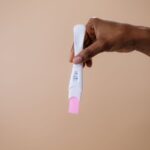
Home pregnancy tests detect human chorionic gonadotropin (hCG), a hormone produced only after a fertilized egg implants in the uterus. Implantation typically happens 6 to 10 days after ovulation. After implantation, hCG levels double roughly every 48 to 72 hours for the first several weeks.
For the most reliable result, take a test on the first day of a missed period, which is approximately 14 days after ovulation. Testing earlier than that risks a false negative because hCG levels may still be too low to detect. If you test before your missed period and get a negative result, test again a few days later.
Blood tests performed by a doctor can detect pregnancy earlier than urine tests, sometimes as soon as 8 to 10 days after ovulation. However, a urine test taken at the right time is highly accurate. When used correctly after a missed period, home pregnancy tests are about 99 percent accurate.




The Emotional Toll of Waiting
The waiting period is often harder than the outcome. Research shows that uncertainty itself is more stressful than knowing a negative outcome. The brain treats the unknown as a threat and keeps the stress response active until the question is resolved.
Common psychological effects during a pregnancy scare include obsessive checking for symptoms, difficulty sleeping, irritability, and withdrawal from social situations. Some people avoid the test entirely because they fear the result, which prolongs the distress. Others test repeatedly, sometimes buying multiple brands, looking for a different answer.
Neither pattern is helpful. The most effective way to end a pregnancy scare is to get a definitive answer as soon as a test can be reliable. Avoiding the test does not change the outcome. It only extends the suffering.
What to Do While You Wait
If you are within the window where a test would be accurate, take one. If you are still too early, focus on what you can control rather than scanning your body for signs.
- Stop symptom-checking. Every twinge and wave of nausea will feed the anxiety loop. Symptoms cannot give you a reliable answer.
- Maintain your routine. Eating regular meals and keeping a normal sleep schedule can prevent the physical effects of stress from compounding.
- Limit caffeine and alcohol. Both can amplify anxiety symptoms and disrupt sleep, making the emotional state worse.
- Talk to someone you trust. Isolation makes worry grow. A supportive friend or partner can provide perspective you cannot access on your own.
- Have a plan for either result. Knowing what you would do if the test is positive can reduce the terror of the unknown. Options include parenting, adoption, and abortion. Knowing your options before you need them reduces panic.
Exercise, when done moderately, can help regulate stress hormones and improve sleep. It does not affect pregnancy status. No amount of exercise, hot baths, or herbal teas will end a pregnancy or start a period. These activities only manage the emotional experience, not the biological reality.
Emergency Contraception and Its Limits
Emergency contraception, often called the morning-after pill, can prevent pregnancy if taken within a specific window after unprotected sex. Levonorgestrel pills (Plan B One-Step and generics) are most effective within 72 hours and work best the sooner they are taken. Ulipristal acetate (ella) is effective up to 120 hours after sex and requires a prescription.
These pills work by delaying ovulation. They do not end an established pregnancy. If ovulation has already occurred, emergency contraception will not prevent fertilization or implantation.
An alternative is the copper intrauterine device (IUD), which can be inserted up to 5 days after unprotected sex and is the most effective form of emergency contraception. It works primarily by preventing fertilization. A healthcare provider must insert it.
If more than 5 days have passed since the risk event, emergency contraception is no longer an option. At that point, the only path to resolution is waiting for a missed period and taking a pregnancy test.
Irregular Periods Make Scares Worse
A regular menstrual cycle lasts 21 to 35 days, with the average around 28 days. But many people do not have regular cycles. Stress, illness, weight changes, thyroid conditions, polycystic ovary syndrome (PCOS), and perimenopause can all cause cycles to vary significantly.
If your periods are already irregular, a late period is not a reliable sign of pregnancy. This makes timing a test more complicated. If you have irregular cycles and are worried about pregnancy, test 21 days after the risk event. By that point, hCG levels will be detectable if pregnancy has occurred, regardless of when ovulation happened.
Tracking your cycle with an app can help you understand your typical pattern, but apps are not always accurate at predicting ovulation. They use algorithms based on past cycles, not real-time biological data. Do not rely on an app to tell you when it is safe to have unprotected sex.
When to See a Doctor
You should see a healthcare provider if you have taken a home pregnancy test and received a positive result, even if you plan to continue the pregnancy. Early prenatal care is important for both maternal and fetal health.
You should also see a doctor if you have a negative test but no period for several weeks, or if you experience severe pelvic pain, unusual bleeding, or dizziness. These symptoms can indicate conditions unrelated to pregnancy, including ovarian cysts, hormonal imbalances, or ectopic pregnancy in rare cases where a test was taken too early.
If you are struggling emotionally with the possibility of pregnancy, a healthcare provider can also connect you with counseling resources. Pregnancy decisions are deeply personal, and having professional support during the decision process can help you make a choice aligned with your values and circumstances.
Frequently Asked Questions
How long does a pregnancy scare last?
A pregnancy scare lasts from the risk event until a reliable test gives a definitive answer, which is typically 2 to 3 weeks. Testing before a missed period risks a false negative and extends the uncertainty.
Can stress delay your period?
Yes, stress can delay ovulation, which delays your entire menstrual cycle. The delay is usually temporary, and your period typically arrives once stress levels decrease.
What are the earliest signs of pregnancy?
The earliest reliable sign is a missed period, though some people notice breast tenderness, fatigue, or nausea before that. These symptoms are not definitive because they also occur with PMS.
Can you have pregnancy symptoms but not be pregnant?
Yes, this is common. PMS, stress, and anxiety can produce symptoms nearly identical to early pregnancy because both involve rising progesterone and stress hormones. Only a pregnancy test can confirm the difference.
