
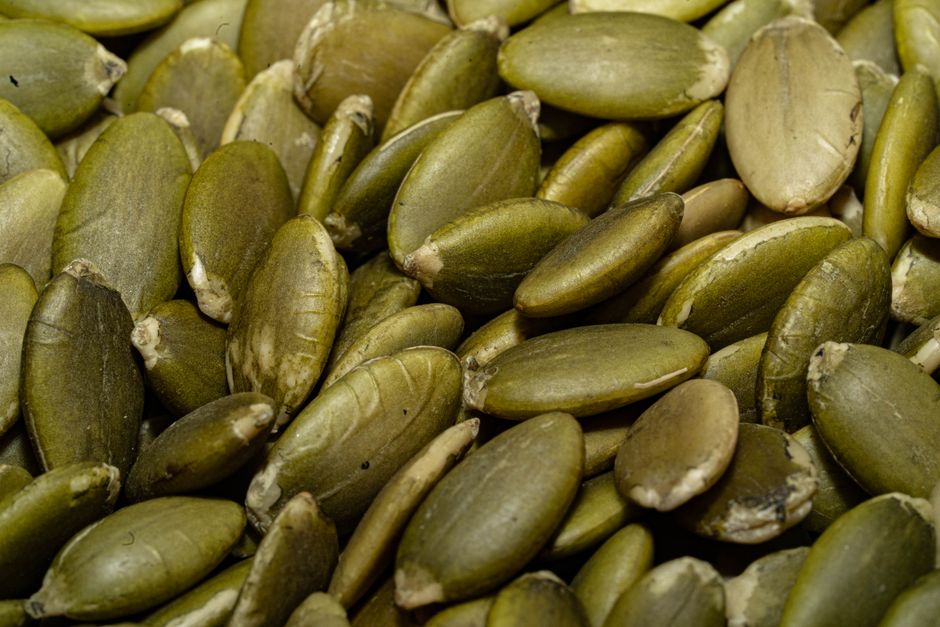
Pepitas are the green seeds inside a pumpkin. The word comes from Mexican Spanish, where it means “little seeds of squash.” They are the same seed as the white pumpkin seed sold in shells — just hulled, meaning the pale outer shell has been removed. The name does not describe a different plant.
What Are Pepita Seeds?
A pepita is a hulled pumpkin seed. Botanically, pumpkins and the seeds inside them are squash — the fruit of plants in the genus Cucurbita. The seed itself has a thin green or greenish-gray outer layer and a soft, pale interior. That green layer is what you see when you buy pepitas.
The confusion comes from naming. In the United States, “pumpkin seed” usually means the whole seed with its hard white or tan shell still on. “Pepita” usually means the shell has been taken off. Both come from the same kind of plant. The difference is processing, not species.
There is one more wrinkle. Not every pumpkin produces hull-less seeds. The seeds sold as pepitas often come from specific varieties bred so the shell does not develop, or they are mechanically hulled from ordinary pumpkins. Either way, the seed you eat is the same part of the plant.
What Nutrients Do Pepitas Contain?
Pepitas are nutrient-dense. A 1-ounce serving (about 28 grams, or a small handful) provides a meaningful share of several minerals and some protein and fat. The table below uses USDA reference values for raw pumpkin seeds, kernels only.
| Nutrient | Amount per 1 oz (28 g) |
|---|---|
| Calories | About 158 |
| Protein | About 8.5 g |
| Total fat | About 13.9 g |
| Carbohydrate | About 3 g |
| Fiber | About 1.7 g |
| Magnesium | About 150 mg |
| Phosphorus | About 332 mg |
| Zinc | About 2.2 mg |
| Iron | About 2.5 mg |
Those figures are for raw kernels. Roasting does not change the mineral content much, but it can slightly reduce some vitamins, and many roasted pepitas are sold salted, which adds sodium. The magnesium number is the one that stands out. One ounce supplies a large fraction of the daily magnesium an adult needs, which is one reason pepitas get attention in nutrition writing.
Pepitas are also a source of plant-based protein and of unsaturated fat, mostly polyunsaturated and monounsaturated. That fat profile is closer to nuts and olive oil than to animal fat.
Are Pepitas the Same as Pumpkin Seeds?
Yes and no. They are the same seed from the same type of plant, but they are sold in different forms.
Whole pumpkin seeds keep their fibrous white or tan hull. That hull is edible and adds fiber, but it is tough. Pepitas have that hull removed, so they are softer, greener, and easier to eat by the handful. The trade-off is that removing the hull removes some of the fiber.
In stores you may also see “pumpkin seeds” that are already green and hull-less. In that case the label is using the terms loosely. The practical way to tell them apart is color and texture: pepitas are flat, oval, and green; whole pumpkin seeds are larger, rounded, and pale.
How Are Pepitas Usually Eaten?
Pepitas are eaten raw, roasted, or salted, and they work in both sweet and savory dishes. Because they are small and soft, they do not need chopping.
- Sprinkled on salads, soups, and grain bowls for crunch
- Blended into pesto or sauces in place of part of the nuts
- Added to trail mix, granola, or yogurt
- Eaten as a snack on their own, plain or roasted
- Ground and used in baked goods or as a thickener
Raw pepitas have a mild, slightly nutty flavor. Roasting deepens that flavor and makes them crisper. If you roast them yourself, keep the heat moderate and watch them closely — the oils in the seeds burn easily, and burnt seeds taste bitter.
What Does the Evidence Say About Health Benefits?
Pepitas supply nutrients the body needs, and that part is well established. What is far less established is the idea that eating pepitas treats or prevents specific diseases. Those claims are common online and mostly not supported by strong human trials.
Here is where the evidence is solid and where it thins out.
Nutrient contribution. Pepitas are a genuine dietary source of magnesium, phosphorus, zinc, iron, and plant protein. If your diet is low in these, adding pepitas can help fill the gap. That is a nutrition fact, not a treatment claim.
Heart health. Seeds and nuts in general are associated with favorable blood lipid patterns in observational research. Some studies suggest that regular nut and seed intake is linked to lower cardiovascular risk, but these are associations, and pepitas specifically have not been tested in large randomized trials as a stand-alone intervention. The evidence points in a favorable direction without proving cause.
Blood sugar. Some small studies have looked at pumpkin seed components and blood sugar, but the results are mixed and the studies are small. No clinical evidence currently confirms that eating pepitas controls blood sugar in people with diabetes.
Prostate and urinary symptoms. Pumpkin seed extracts and oils are marketed for prostate and urinary health. Some trials of concentrated extracts show modest effects on symptom scores, but these use extracts, not the handful of seeds you eat as a snack — and the findings are not consistent across studies. It would be a leap to assume snacking on pepitas produces the same result.
Sleep and mood. Pepitas contain tryptophan, an amino acid the body uses to make serotonin and melatonin. This is often turned into a claim that pepitas improve sleep. The mechanism is real, but the amount of tryptophan in a serving of seeds is small compared with other protein sources, and no good human trials show that eating pepitas improves sleep. The claim outruns the evidence.
The honest summary: pepitas are a nutritious food. They are not a medicine, and most of the dramatic claims attached to them are not backed by strong human research.
Who Should Be Careful With Pepitas?
For most people, pepitas are a normal food with no special precautions. A few groups should pay attention.
Sodium. Many roasted pepitas are heavily salted. If you are watching your blood pressure or your sodium intake, check the label and consider unsalted versions. The seed itself is low in sodium; the salt is added.
Calories. Pepitas are calorie-dense because of their fat content. A small handful is a snack; a large bowl is closer to a meal’s worth of calories. This matters if you are managing weight, but the fat is mostly unsaturated, which is the kind you want.
Allergy. Seed allergies exist but are less common than nut allergies. If you react to other seeds, introduce pepitas cautiously. Anyone with a known seed allergy should avoid them.
Choking risk. Whole and chopped seeds can be a choking hazard for young children. This is a general food-safety point, not specific to pepitas, but it applies.
Medication interactions. Pepitas are a source of vitamin K, which can interact with blood-thinning medications like warfarin. The amount is modest, but if you are on a blood thinner and eat large or sudden amounts of any vitamin K-rich food, it is worth mentioning to your clinician. This is a general caution about diet consistency, not a warning that pepitas are dangerous.
How Should You Store Pepitas?
Pepitas contain unsaturated fats, which go rancid over time when exposed to heat, light, and air. Store them in an airtight container in a cool, dark place for short-term use.
For longer storage, keep them in the refrigerator or freezer. Cold storage slows the breakdown of those fats and keeps the seeds fresh for months rather than weeks. If pepitas smell sharp, paint-like, or stale, they have gone rancid and should be thrown out. Rancid seeds will not make you seriously ill in a single bite, but they taste bad and the fats have degraded.
Buying in bulk is cheaper, but only if you will use them before they turn. For occasional use, smaller packages stored cold are the better choice.
Frequently Asked Questions
Are pepitas and pumpkin seeds the same thing?
They come from the same seed, but pepitas have the hard outer shell removed while whole pumpkin seeds keep it. The green color and softer texture of pepitas are the result of hulling.
Are pepitas healthy to eat every day?
A small daily serving fits well into most diets and adds magnesium, zinc, iron, and plant protein. Watch the portion if you are managing calories, and choose unsalted versions if you are watching sodium.
Do pepitas help you sleep?
No good human trials show that eating pepitas improves sleep. They contain tryptophan, but the amount is small and the sleep claim is not supported by strong evidence.
Can you eat pepitas raw?
Yes, raw pepitas are safe to eat and are commonly sold that way. Roasting only changes flavor and texture, not whether they are edible.
