
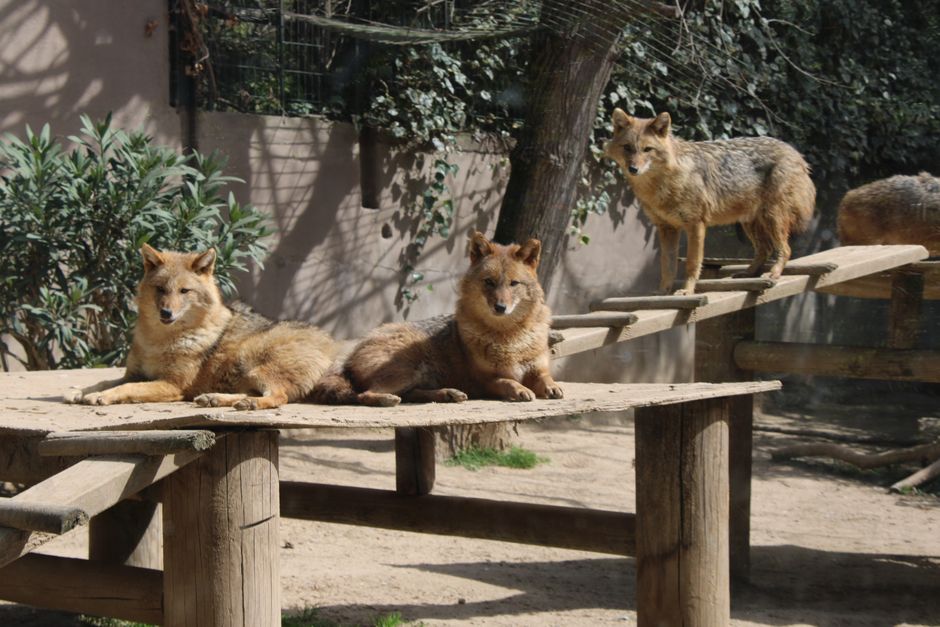
Jackals are medium-sized wild dogs native to Africa, Asia, and southeastern Europe. They look like a cross between a fox and a coyote, with long legs, pointed ears, and a bushy tail. Jackals are opportunistic omnivores: they hunt small animals, scavenge carcasses, and eat fruit, insects, and plant matter depending on what is available.
What Are Jackals Appearance Behavior And Diet?
Jackals belong to the genus Canis, the same group that includes wolves, coyotes, and domestic dogs. There are three widely recognized species: the golden jackal, the black-backed jackal, and the side-striped jackal. A fourth animal sometimes called a jackal — the Ethiopian wolf — is not actually a jackal at all. Genetic studies have shown it is more closely related to gray wolves, which is why many biologists now call it the red wolf or Ethiopian wolf instead.
That naming confusion is worth keeping in mind. “Jackal” is a common name, not a precise biological category. The three true jackal species look similar and fill similar roles in their environments, but they are distinct animals with different ranges, social systems, and habitat preferences.
Where jackals live
The golden jackal has the widest range. It is found across southern Asia, the Middle East, and parts of southeastern Europe, and its range has been expanding westward in recent decades. The black-backed jackal and side-striped jackal are both native to sub-Saharan Africa.
Jackals are highly adaptable. They live in grasslands, savannas, deserts, woodlands, wetlands, and increasingly in agricultural areas and the edges of towns and cities. This flexibility is a big reason golden jackal populations have grown and spread while many other large carnivores have declined.
What Do Jackals Look Like?
Jackals are slender, long-legged canids built for endurance rather than raw power. Adults of the three main species generally weigh somewhere in the range of about 6 to 14 kilograms (roughly 13 to 31 pounds), though size varies by species, sex, and region. They stand about 38 to 50 centimeters at the shoulder, with a body length of roughly 70 to 85 centimeters and a tail adding another 25 to 40 centimeters.
Their coats are short and tawny to reddish-brown, with white or pale markings on the throat, chest, and belly. The black-backed jackal is the most visually distinct, with a saddle of black and silver fur running down its back from the neck to the tail. The side-striped jackal has a pale stripe along its flanks and a white-tipped tail. The golden jackal is more uniform in color, which is part of why it is sometimes mistaken for a small wolf or a large fox.
All jackals have large, pointed ears, a pointed muzzle, and a bushy tail. Their eyes are typically amber or light brown. These features help with heat loss and with detecting prey and predators — jackals are both hunters and hunted.
How Do Jackals Behave?
Jackals are adaptable, intelligent, and largely crepuscular, meaning they are most active around dawn and dusk. In areas with little human disturbance, they may also be active during the day. Near people, they tend to shift toward nighttime activity.
Social structure differs by species. Black-backed jackals typically live in monogamous pairs that defend a territory together, and older offspring often stay to help raise the next litter. Golden jackals can form larger groups in some areas, though the basic unit is still a breeding pair. Side-striped jackals are generally more solitary and less territorial than the other two.
Jackals communicate with a range of vocalizations, including howls, yelps, growls, and barks. The golden jackal’s howl is a common sound in parts of Asia and southeastern Europe at night. These calls help pairs and family groups stay in contact and advertise territory.
Jackals are also known for their flexibility in the face of change. Where wolves and other large predators have been reduced or removed, golden jackals have often expanded into the vacated space. This is one of the better-documented examples of a medium-sized carnivore filling a niche left open by a larger one.
What Do Jackals Eat?
Jackals are opportunistic omnivores. Their diet shifts with season, habitat, and what is easiest to find. In general, they eat a mix of the following:
- Small mammals such as rodents, hares, and young ungulates
- Birds, eggs, reptiles, and amphibians
- Insects and other invertebrates
- Carrion (dead animals they find)
- Fruit, berries, and other plant material
- Human food waste and garbage in areas near people
In many populations, small rodents make up a large share of the diet, with plant material and insects filling in the rest. Jackals will also take livestock such as poultry and young sheep or goats when the opportunity arises, which is a major source of conflict with farmers in some regions.
Jackals usually hunt alone or in pairs rather than in coordinated packs the way wolves do. They rely on speed, agility, and surprise rather than endurance hunting. They are also efficient scavengers and will readily feed on carcasses killed by larger predators.
How Do Jackals Reproduce?
Jackals typically form long-term pair bonds, and in some species the pair stays together across multiple breeding seasons. Mating usually happens once a year, timed so that pups are born when food is most available.
Litters generally range from about two to six pups, though larger litters occur. Pups are born in a den — often an abandoned burrow or a hollow — and are helpless at first. They begin eating solid food within a few weeks and are typically weaned by around two to three months. In black-backed jackals, older offspring from previous litters often help feed and guard the new pups, a form of cooperative breeding.
Jackals can live into their teens in captivity, but life in the wild is much shorter. Many do not survive their first year, and adults face threats from larger predators, disease, and humans.
Are Jackals Dangerous to Humans?
Jackals generally avoid people and are not considered a major threat to humans. Attacks on humans are rare. When they do occur, they are usually linked to rabid animals or to jackals that have become habituated to people through feeding.
Rabies is the main public health concern where jackals and people overlap. Any wild canid acting unusually tame, aggressive, or disoriented should be avoided and reported to local authorities. Jackals can also carry other diseases and parasites that affect domestic dogs and, in some cases, people.
The bigger practical conflict is with livestock. Jackals can do real damage to poultry and small livestock, which is why they are often treated as pests in farming areas. Control measures vary widely by country, and in some regions jackal populations have declined from hunting and habitat loss while in others they have grown.
Jackals vs. Coyotes and Foxes
People often confuse jackals with coyotes or foxes. All three are canids, but they are different animals with different ranges.
Coyotes are native to North America. Jackals are not found in North America at all. Foxes are a broader group — the red fox, for example, is smaller than a jackal, has a more pointed face, and a different hunting style. If you see a wild canid in the United States or Canada, it is not a jackal.
Size is one rough guide, but it overlaps. A large fox can be close in size to a small jackal. Coat pattern, range, and behavior are more reliable for telling them apart.
Are Jackal Populations Growing or Declining?
It depends entirely on the species and location. Golden jackal populations have expanded in parts of Europe and Asia, and the species is classified as least concern by the International Union for Conservation of Nature. Black-backed jackals are also widespread and classified as least concern. Side-striped jackals are more of a concern: their populations are thought to be declining in parts of Africa, and the species is classified as near threatened.
The bigger picture is that jackals, as a group, are doing relatively well compared to many large carnivores. Their adaptability, varied diet, and tolerance of human-modified landscapes have helped them where more specialized predators have struggled.
Frequently Asked Questions
Are jackals related to dogs?
Yes. Jackals belong to the genus Canis, the same group as domestic dogs, wolves, and coyotes. They are not the direct ancestors of domestic dogs, but they are close relatives.
Do jackals live in packs like wolves?
Not usually. Most jackals live in monogamous pairs or small family groups rather than the large coordinated packs typical of wolves. Black-backed jackals are the most social of the three species.
What do jackals eat most often?
Small mammals such as rodents make up a large share of the diet in many populations. Jackals also eat insects, birds, eggs, carrion, fruit, and human food waste depending on what is available.
Are jackals dangerous to people?
Attacks on humans are rare. The main risk is rabies from an infected animal, so any jackal acting unusually tame or aggressive should be avoided and reported to local authorities.
