
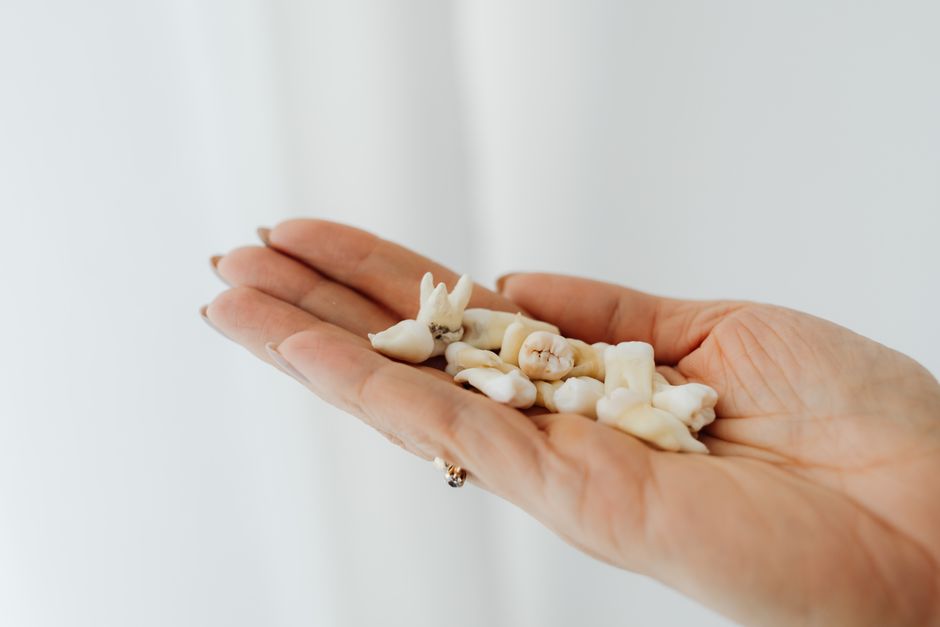
Wisdom teeth are the last molars to develop, usually appearing in the late teens or early twenties. An impacted wisdom tooth is one that has not fully broken through the gum or has grown in at an angle, so it cannot take its normal position in the mouth. Dentists see this often — it is one of the most common reasons young adults are referred for a dental evaluation.
What Are Impacted Wisdom Teeth?
An impacted wisdom tooth is a third molar that is blocked from erupting normally. The tooth may be trapped under the gum, tilted toward a neighboring tooth, or only partly emerged. “Impacted” simply means the tooth cannot move into a normal, functional position.
Wisdom teeth — also called third molars — are the last of the back teeth to form. They typically begin developing in the early teens and try to erupt between roughly ages 17 and 25. By the time they arrive, the jaw has usually finished most of its growth, and there may be little room left at the back of the mouth.
Not every wisdom tooth becomes impacted. Some people have enough space and the tooth comes through cleanly. Others never develop wisdom teeth at all. The variation is normal and depends largely on jaw size and how the teeth are positioned.
Why Do Wisdom Teeth Get Impacted?
Impacted wisdom teeth are mostly a matter of space. The human jaw is often not large enough to hold a fourth set of molars at the very back of the mouth. When there is no room, the tooth has nowhere to go.
Several things can contribute:
- Jaw size. A smaller jaw leaves less room for the tooth to erupt.
- Tooth angle. The tooth may tilt forward, backward, or sideways instead of pointing straight up.
- Crowding. Neighboring teeth can physically block the path.
- Timing. Because wisdom teeth arrive late, the rest of the mouth is already set.
Genetics play a role too. Jaw shape and tooth development run in families, which is part of why some people have trouble and others do not.
What Are the Different Types of Impaction?
Dentists describe impaction by the angle of the tooth and how much of it has emerged. The categories help a clinician plan treatment, but they are descriptive labels, not a ranking of severity.
- Mesial impaction. The tooth tilts forward toward the molar in front of it. This is a common pattern.
- Distal impaction. The tooth tilts backward toward the back of the jaw.
- Vertical impaction. The tooth points straight up but is blocked from fully erupting.
- Horizontal impaction. The tooth lies flat, pointing sideways into the neighboring tooth.
- Soft tissue impaction. The tooth has broken through bone but is still covered by gum.
- Bony impaction. The tooth remains fully encased in the jawbone.
A partly emerged tooth is sometimes called a partial impaction. This matters because a partially erupted tooth can be harder to keep clean, and the gum flap over it can trap food and bacteria.
What Symptoms Do Impacted Wisdom Teeth Cause?
Many impacted wisdom teeth cause no symptoms at all. They are often found on a routine dental X-ray before anything feels wrong. That is an important point — the absence of pain does not mean the tooth is trouble-free, and the presence of an impacted tooth does not mean you will have problems.
When symptoms do appear, they can include:
- Pain or tenderness at the back of the jaw
- Swelling of the gums near the tooth
- Jaw stiffness or difficulty opening the mouth wide
- A bad taste or odor
- Gum redness or bleeding in the area
One common problem is pericoronitis — inflammation of the gum tissue around a partially erupted tooth. Food and bacteria get trapped under the gum flap, and the tissue becomes irritated and infected. This can cause sudden pain and swelling and is a frequent reason people seek care.
Impacted wisdom teeth can also contribute to decay on the adjacent molar, because the trapped position makes cleaning difficult. In some cases a cyst can form around an impacted tooth, though this is less common.
How Are Impacted Wisdom Teeth Diagnosed?
Diagnosis usually starts with a dental exam and imaging. A dentist can often see a partially erupted tooth directly, but a full picture needs X-rays.
Panoramic X-rays show the entire jaw and reveal the position and angle of the wisdom teeth, their roots, and their relationship to nearby structures such as nerves. These images are the standard tool for planning whether and how a tooth should be removed.
A clinician will also consider symptoms, your age, the health of the surrounding gums, and whether the tooth is causing problems for the neighboring molar. There is no single test that decides the question — it is a clinical judgment.
Do Impacted Wisdom Teeth Always Need to Be Removed?
No. Not every impacted wisdom tooth needs to come out. This is one of the most debated areas in dentistry, and the honest answer is that the decision is individualized.
Removal is often recommended when a tooth is causing repeated infection, damaging the adjacent molar, or showing signs of decay or cyst formation. In those situations the case for removal is fairly clear.
The harder question is what to do about an impacted tooth that causes no symptoms. Some clinicians recommend removal to prevent future problems. Others take a watchful approach, especially when the tooth is healthy, fully buried, and not damaging anything. The evidence on which approach is better for symptom-free teeth is mixed, and professional guidance has shifted over time. This is a conversation to have with your own dentist rather than something to decide from a general rule.
Age matters in the discussion. Removal tends to be easier and recovery tends to be smoother in younger people, before the roots are fully formed and the bone is more flexible. That is one reason the timing question comes up early.
What Does Removal Involve?
The procedure depends on how the tooth sits. A fully erupted tooth may be removed like any other extraction. An impacted tooth often requires a surgical approach.
Most wisdom tooth removal is done with local anesthesia, sometimes with sedation for comfort. The dentist or oral surgeon makes a small opening in the gum, removes bone if needed, and may section the tooth into pieces to lift it out. The area is then cleaned and closed, often with stitches.
Recovery varies from person to person. Swelling and discomfort in the first few days are common. Your clinician will give specific instructions on pain relief, eating, and oral care. Follow those instructions rather than general advice from the internet, because they are tailored to your case.
As with any procedure, there are risks. These include bleeding, infection, dry socket, and — for lower wisdom teeth — possible temporary or, rarely, longer-lasting changes in sensation near the lip or tongue if nerves are close to the tooth. A surgeon assesses this risk using imaging before operating. Ask about the specific risks for your tooth rather than assuming they are the same for everyone.
How Can You Care for Impacted Wisdom Teeth?
If you and your dentist decide to leave an impacted tooth in place, good hygiene in that hard-to-reach area matters. A partly erupted tooth can trap food and bacteria, so careful brushing and flossing around it helps reduce the chance of decay and gum irritation.
Watch for signs of trouble — new pain, swelling, a bad taste, or difficulty opening your mouth. These can signal pericoronitis or another problem and are worth a prompt call to your dentist. Routine dental visits let a clinician monitor the tooth over time.
There is no home remedy that changes whether a tooth is impacted. Position and jaw space are structural, so no rinse, supplement, or exercise will make an impacted tooth erupt normally. Be skeptical of anything that claims otherwise.
When Should You See a Dentist?
See a dentist if you have pain, swelling, or a bad taste at the back of your mouth, or if you have trouble opening your jaw. These can point to infection and should not be ignored.
If you have no symptoms but are in the age range when wisdom teeth appear, a routine exam with X-rays can show where your teeth stand. That gives you and your dentist the information to make a plan — whether that means monitoring or removal.
The most useful thing you can do is get an accurate picture of your own teeth and have an honest conversation about the trade-offs. Impacted wisdom teeth are common, and the right decision depends on your specific situation.
Frequently Asked Questions
What are impacted wisdom teeth?
They are third molars that cannot fully break through the gum or grow into a normal position because of blocked space or an angled path. They may sit under the gum, tilt toward a neighboring tooth, or only partly emerge.
Do impacted wisdom teeth always need to be removed?
No, removal is not always necessary and depends on your individual case. Teeth causing infection, decay, or damage to nearby teeth are often removed, while symptom-free teeth may be monitored instead.
Can impacted wisdom teeth cause problems later?
They can contribute to gum inflammation around a partly erupted tooth, decay on the adjacent molar, and in some cases cyst formation. Many impacted teeth, however, never cause symptoms.
How do I know if my wisdom teeth are impacted?
Only a dental exam with X-rays can confirm it, since many impacted teeth cause no symptoms. Imaging shows the position and angle of the teeth and whether they are affecting nearby structures.
