
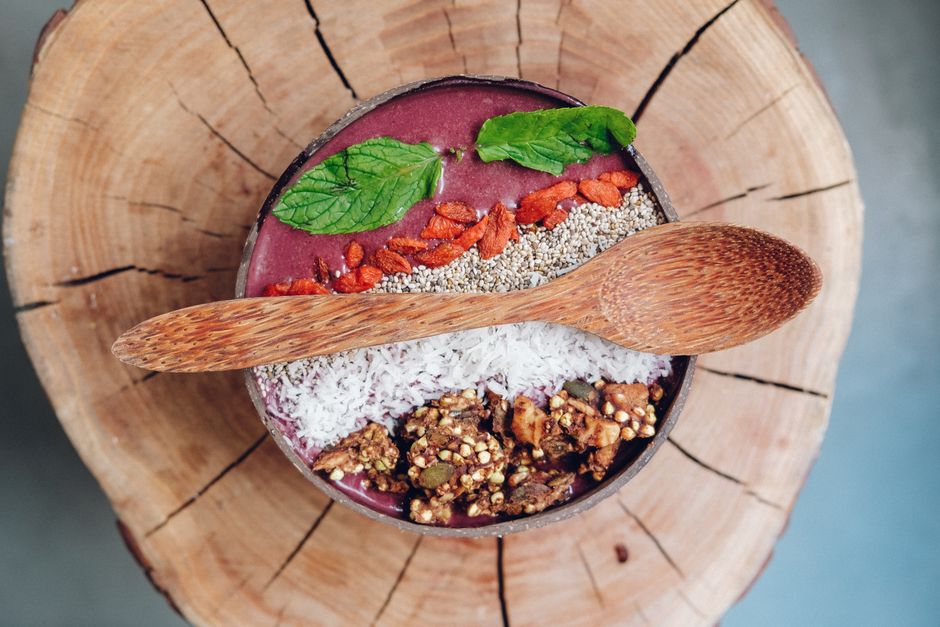
Goji berries are the small red fruit of Lycium barbarum, a shrub native to Asia. They have been used in traditional Chinese medicine for centuries and are now sold worldwide as a dried “superfood.” They do contain real nutrients — including vitamin A precursors, vitamin C, iron, and zeaxanthin — but most of the dramatic health claims attached to them are not supported by strong human evidence. The most important safety issue is a genuine drug interaction: goji berries can increase the effect of warfarin and other blood thinners.
What Are Goji Berries Nutrition Benefits And Safety?
Goji berries are a decent source of several vitamins and minerals, but they are not a nutritional outlier compared with other dried fruit. Their main safety concern is their interaction with blood-thinning medication.
Dried goji berries are roughly 45 to 50 percent carbohydrate by weight, which is typical for dried fruit. That means a small handful delivers a meaningful amount of sugar. They also contain protein, fiber, and a range of micronutrients.
Based on USDA nutrient data for dried goji berries, a 100-gram portion provides approximately:
- About 250 calories
- Around 14 grams of protein
- Roughly 13 grams of fiber
- Substantial vitamin A (as carotenoids)
- Vitamin C
- Iron
- Zinc
- Zeaxanthin, a carotenoid also found in the retina
A 100-gram serving is large — that is nearly a full cup of dried berries. Most people eat a tablespoon or two at a time, which delivers a proportionally smaller amount of each nutrient. This matters because many online claims quote the 100-gram figures as if they reflect a normal serving.
The vitamin A content is worth a closer look. Goji berries do not contain preformed vitamin A (retinol). They contain carotenoid precursors such as beta-carotene and zeaxanthin, which the body converts to vitamin A at a limited and variable rate. So the “vitamin A” number on a label overstates what the body actually uses.
Do Goji Berries Have Proven Health Benefits?
No large, long-term human trial has confirmed that eating goji berries prevents disease or extends life. The evidence base is small and mostly short-term.
Most published human studies on goji berries are small, short in duration, and often use concentrated juice or extracts rather than whole dried berries. Some studies suggest modest improvements in markers like antioxidant capacity in the blood or subjective measures of fatigue and mood. These findings are interesting but preliminary. They do not establish that goji berries improve health outcomes that matter, such as heart disease, cancer, or lifespan.
There is one area where the biology is more concrete. Goji berries contain zeaxanthin, a carotenoid that concentrates in the macula of the eye. Zeaxanthin and lutein are well established as important for macular health, and research on these carotenoids is substantial. But that research is largely about zeaxanthin and lutein from other sources, not about goji berries specifically. Eating goji berries raises blood zeaxanthin levels, but whether that translates into protection against age-related macular degeneration has not been demonstrated in rigorous trials using goji berries.
This is a good example of a broader pattern. A nutrient can have well-documented effects while the specific food containing it does not have proven effects. The two are not the same claim.
How Do Goji Berries Compare to Other Berries?
Goji berries are not clearly superior to common berries, and in several respects they are less convenient to eat. The table below compares dried goji berries with a few familiar fruits using USDA nutrient data.
| Nutrient (per 100 g) | Dried goji berries | Blueberries (raw) | Strawberries (raw) |
|---|---|---|---|
| Calories | ~250 | ~57 | ~32 |
| Protein | ~14 g | ~0.7 g | ~0.7 g |
| Fiber | ~13 g | ~2.4 g | ~2 g |
| Vitamin C | Present | Moderate | High |
The calorie gap is the key point. Dried goji berries have roughly four times the calories of raw blueberries per 100 grams because drying removes water and concentrates everything, including sugar. Fresh berries are mostly water, so you can eat a large volume for relatively few calories.
Goji berries do offer more protein and fiber per 100 grams than blueberries or strawberries. If you eat a small portion, though, that advantage shrinks to a few grams at most. For most people, a mix of berries is a reasonable approach rather than treating any single fruit as special.




Are Goji Berries Safe? Who Should Avoid Them?
For most healthy adults, eating goji berries in food amounts is not associated with serious harm. The exception is people taking certain medications, especially blood thinners.
The best-documented safety concern involves warfarin. Multiple case reports have described increased anticoagulant effect — measured by a rising INR — in people taking warfarin who also consumed goji berry juice or tea. In some cases this led to bleeding. The interaction is thought to involve compounds in goji berries that affect how the body metabolizes warfarin. Because warfarin has a narrow therapeutic window, even a modest change can matter.
People taking warfarin or similar anticoagulants should talk to their clinician before eating goji berries. This is not a theoretical caution — it is based on documented cases.
Other reported concerns include:
- Possible interaction with drugs processed by certain liver enzymes, though this is less well documented than the warfarin interaction
- Allergic reactions, which have been reported, including in people with related plant allergies
- Digestive upset when eaten in large amounts, likely from the fiber content
Goji berries also belong to the nightshade family, which includes tomatoes, potatoes, and peppers. People with nightshade sensitivities sometimes report symptoms, though this is not a well-established clinical syndrome.
One more point on supplements. Goji berry extracts and powders are not regulated the way medications are. The amount of active compound can vary widely between products, and some have been found to contain contaminants or undeclared ingredients. Whole dried berries are generally a more predictable choice than concentrated extracts, though neither is risk-free.
Can Goji Berries Interact With Medications?
Yes. The warfarin interaction is the most clearly documented, but it is not the only one worth knowing about.
Beyond warfarin, there are case reports of goji berries affecting people taking drugs for blood pressure and diabetes. These reports are less consistent and less well characterized than the warfarin findings. That does not mean the risk is zero. It means the evidence is thinner.
The reason medication interactions are plausible at all is that goji berries contain compounds that can influence liver enzymes involved in drug metabolism. Many drugs are broken down by these same enzymes. When a food changes how fast an enzyme works, it can change how much drug stays in the bloodstream.
If you take any prescription medication, especially one with a narrow safety margin, the sensible step is to ask your pharmacist or clinician before adding goji berries to your diet. Pharmacists are often the best resource for food-drug interaction questions.
How Should You Eat Goji Berries?
There is no official recommended serving size for goji berries. A typical portion is a small handful or a tablespoon or two, often added to oatmeal, yogurt, or tea.
Because they are dried and concentrated, they are calorie-dense. If you are watching your weight or blood sugar, portion size matters more than it would with fresh fruit. A tablespoon of dried goji berries is a reasonable addition to a meal, not a free food.
Dried goji berries are sometimes sold with added sugar or sulfites. Reading the ingredient list helps. Plain dried berries should list only the berries.
No clinical guidelines currently exist for goji berry intake during pregnancy or breastfeeding. Given the lack of safety data in these groups and the documented drug interactions, pregnant and breastfeeding women should treat goji berries as something to discuss with a clinician rather than a routine food.
Do Goji Berries Live Up to the Marketing?
Mostly no. Goji berries are a real food with real nutrients, but the claims made about them go far beyond the evidence.
Common marketing claims include that goji berries boost the immune system, improve eyesight, slow aging, and support liver health. None of these has been confirmed in large, well-controlled human trials. Some rest on laboratory or animal studies, which are a starting point for research, not proof of benefit in people.
The word “superfood” has no regulatory meaning. It is a marketing term, not a scientific category. Any fruit that is high in vitamins, fiber, and plant compounds can be called a superfood, which is why the label shows up on everything from blueberries to kale.
A reasonable way to think about goji berries is this: they are a nutrient-dense dried fruit that can be part of a varied diet. They are not a treatment, a cure, or a shortcut to better health. If you enjoy them, eat them in normal food amounts. If you take blood thinners, check with your clinician first. And if a product promises dramatic results, that is a signal to be skeptical, not a reason to buy.
Frequently Asked Questions
Are goji berries actually good for you?
They contain useful nutrients like fiber, iron, and carotenoids, so they can be part of a healthy diet. However, no large human trial has confirmed the disease-prevention claims often made about them.
Can goji berries interact with blood thinners?
Yes. Case reports have documented that goji berries can increase the effect of warfarin, raising INR and in some cases causing bleeding. Anyone on warfarin or similar anticoagulants should check with their clinician before eating them.
How many goji berries should I eat per day?
There is no official recommended serving size. A tablespoon or two is a typical portion, and because they are calorie-dense when dried, portion size is worth watching.
Are goji berries safe during pregnancy?
No clinical guidelines currently exist for goji berry intake during pregnancy or breastfeeding. Given the lack of safety data and documented drug interactions, pregnant women should ask a clinician before eating them.
