
Eyelashes are short hairs that grow along the edge of your eyelids, and their main job is protection. They help keep dust, sweat, and small debris out of your eyes. They also act like tiny sensors. When something touches them, you blink without thinking, often before the object reaches your eye.
That much is well established. But eyelashes do more than block particles. Their length, spacing, and growth cycle all affect how well they work. And some popular beliefs about what they do — or what makes them grow — do not hold up under study.
What Are Eyelashes For?
Eyelashes serve two connected purposes: they are a physical barrier and an early-warning system.
The barrier part is straightforward. Lashes sit at the front edge of the eyelid and catch airborne particles before they land on the surface of the eye. They also redirect airflow across the eye. That matters because a steady stream of moving air dries out the tear film, the thin layer of moisture that keeps the eye lubricated and clear. By deflecting some of that airflow, lashes help the tear film stay stable longer.
The sensor part works through touch. Each eyelash follicle is wrapped in nerve endings. These are among the most sensitive touch receptors in the body. When anything brushes a lash — an insect, a speck of dust, a stray hair — the signal reaches the brainstem and triggers a reflex blink in a fraction of a second. You do not decide to blink. It happens before you are aware of it.
This reflex is not a small thing. It is one of the fastest protective responses the human body has.
How Do Eyelashes Actually Protect Your Eyes?
The protection happens in layers, and each layer does something a little different.
The first layer is mechanical. Lashes form a curved fence along the upper and lower lid margins. Larger particles hit the lashes and stop. Smaller ones may pass through, which is where the next layers come in.
The second layer is the blink reflex described above. It is fast enough to close the eye before many objects make contact with the cornea.
The third layer is tear distribution. Every blink spreads tears across the eye surface and sweeps debris toward the inner corner, where it drains through the tear ducts into the nose. Lashes support this by triggering more frequent blinks when the eye is exposed to irritants.
Research has also looked at how lash length affects airflow around the eye. Some studies suggest that lashes that are too long may actually channel more air toward the eye rather than away from it. The relationship between lash length and protection appears to be a curve, not a straight line — more is not always better. This is an area where findings are still developing, and it does not mean long lashes are harmful. It means the biology is more specific than “longer equals more protection.”
How Do Eyelashes Grow and Fall Out?
Eyelashes follow a growth cycle just like the hair on your head, but on a much shorter timeline. Each lash grows for a few weeks, rests for a period, then falls out and is replaced. At any given time, different lashes on the same eyelid are at different stages, which is why you do not lose them all at once.
The upper lid typically has around 90 to 150 lashes per eye. The lower lid has roughly half that. These numbers vary from person to person and are not a sign of health or disease on their own.
Lash length is largely determined by genetics. Nutrition, thyroid function, and certain medical conditions can affect hair growth broadly, including lashes, but there is no diet or supplement proven to make lashes longer in healthy people.
Losing a few lashes a day is normal. Losing many at once, or noticing patches of missing lashes, is not and is worth discussing with a doctor. It can be associated with conditions affecting the hair follicles, the immune system, or the thyroid, though it can also result from habits like rubbing the eyes or using irritating products.





Why Do We Have Eyelashes and Eyebrows?
Eyelashes and eyebrows are often grouped together, and they do share a general purpose: keeping irritants and moisture out of the eyes. But they work in different ways.
Eyebrows sit above the eye and catch sweat and moisture running down from the forehead. They divert that flow toward the sides of the face instead of letting it drip directly into the eye. Eyelashes, by contrast, work at the eye itself, filtering particles and triggering the blink reflex.
Together they form a system. One handles what comes from above. The other handles what comes from the front.
Do Eyelash Extensions and Serums Affect Eye Health?
This is where the evidence gets thinner and the marketing gets louder.
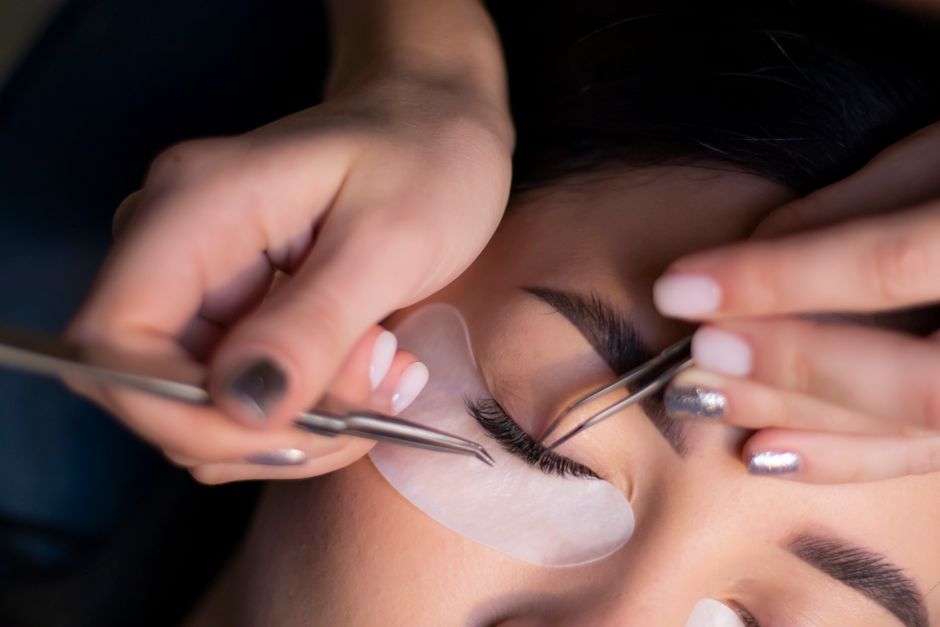
Eyelash extensions — individual fibers glued to natural lashes — are widely used. Some clinicians report that the adhesives and the weight of extensions can irritate the eyelid margin or contribute to lash loss over time, particularly with repeated applications. The evidence on how often this happens is limited. It is not that harm is proven to be common. It is that long-term safety data are not strong.
Lash serums are a different category. Some prescription products contain analogs of a compound called a prostaglandin, which is known to lengthen the growth phase of eyelashes. These are regulated as drugs, not cosmetics, and have documented side effects, including eye redness, itching, and darkening of the skin around the eyelid. Some users also report a change in eye color, which may not reverse after stopping. These are real risks, not rare theoretical ones, and they are why these products require a prescription.
Over-the-counter lash serums are typically marketed as cosmetics. Most contain conditioning ingredients like peptides or biotin. No large human trials have confirmed that these products meaningfully increase lash length or density. Some users report a difference. That is not the same as evidence.
If you are considering any lash product and you have sensitive eyes, dry eye, or a history of eye surgery, talk to an eye doctor first. That is not caution for its own sake — the eyelid margin is delicate, and products applied there can affect the tear film and the glands that produce it.
What Happens If You Lose Your Eyelashes?
People can lose lashes for many reasons. Chemotherapy is one of the most common. Others include autoimmune conditions, thyroid disorders, skin conditions affecting the eyelid, and chronic rubbing or pulling.
When lashes are lost, the eyes lose some of their first-line protection. Many people notice more watering, more sensitivity to wind and light, and more frequent irritation from dust. These symptoms are usually manageable, but they are real.
Lashes typically grow back once the underlying cause resolves, though the timeline varies. Regrowth after chemotherapy generally happens within weeks to a few months after treatment ends. In conditions where the follicle itself is damaged, regrowth may be partial or may not happen. This is something a dermatologist or eye doctor can assess.
In the meantime, lubricating eye drops and sunglasses can reduce discomfort. For people who want a cosmetic option, temporary lashes or lash tinting are sometimes used, but these should be applied carefully and avoided if the eyelid skin is irritated or broken.
Do Eyelashes Have a Purpose Beyond Protection?
They do, though this part is harder to measure.
Eyelashes frame the eye and are part of how faces are read. Studies on facial perception suggest that lashes influence judgments about attractiveness and, to some degree, about health and youthfulness. This is not trivial. It is part of why lash products are a large industry.
But the cosmetic role is secondary to the functional one. The lashes exist first to protect the eye. Everything else is a byproduct of that design.
What Damages Eyelashes?
Several common habits can weaken or damage lashes over time.
- Rubbing the eyes repeatedly, especially with force
- Using waterproof mascara and removing it aggressively
- Curling lashes with a mechanical curler, which can break or pull them
- Sleeping in eye makeup, which can clog the oil glands along the lid margin
- Pulling at extensions or picking at them
- Applying strong adhesives or irritants near the lash line
Some of these are habits you can change. Others are harder to avoid. The general principle is that the lash follicle is small and does not recover quickly from repeated trauma. Gentle handling matters more than most people assume.
When Should You See a Doctor About Your Eyelashes?
Most lash changes are not serious. But some are worth a medical visit.
See a doctor if you lose lashes in patches, if the loss is sudden and widespread, if the eyelid is red, swollen, or painful, or if you notice a stye or bump that does not go away. These can point to conditions that need treatment, and some are treatable.
If you have an underlying condition like thyroid disease, alopecia, or a skin condition affecting the eyelids, lash changes may be part of that picture. Your doctor can help sort out what is related and what is not.
Frequently Asked Questions
What is the main function of eyelashes?
Eyelashes protect the eye by blocking dust, sweat, and small particles, and by triggering a reflex blink when something touches them. They also help keep airflow from drying out the eye surface.
Do eyelashes grow back if you lose them?
In most cases, yes, once the underlying cause resolves. Regrowth after chemotherapy typically occurs within weeks to a few months, but if the follicle is damaged, regrowth may be partial or may not happen.
Are eyelash extensions safe for your eyes?
The long-term safety data are limited, and some clinicians report irritation or lash loss with repeated use. If you have sensitive eyes or dry eye, talk to an eye doctor before getting them.
Do over-the-counter eyelash serums actually work?
No large human trials have confirmed that these products meaningfully increase lash length or density. Prescription serums contain different active ingredients and have documented effects and side effects, which is why they require a prescription.
