
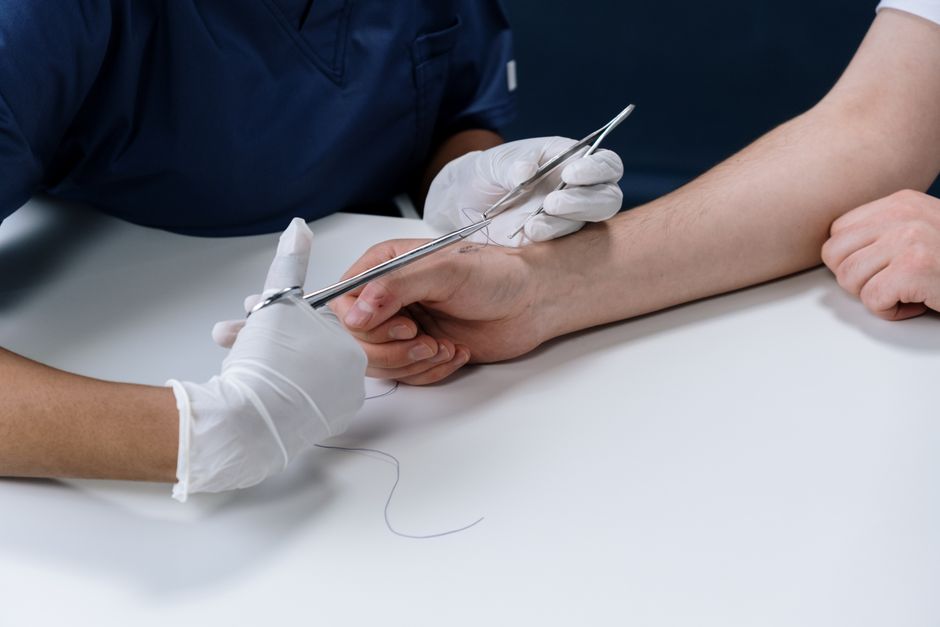
Dissolvable sutures are made from synthetic polymers or treated natural proteins that the body breaks down over time. The two main synthetic materials are poliglecaprone 25 and polyglactin 910. The main natural one is purified collagen from animal intestines, often called catgut. Each material dissolves at a different speed, which is why surgeons pick one type over another depending on the wound.
That is the short answer. The longer answer involves understanding why the body accepts these materials, how long each one lasts, and why “dissolvable” does not mean “gone by next week.”
What Are Dissolvable Sutures Made Of?
Dissolvable sutures fall into two broad categories: synthetic and natural. Both are designed to hold tissue together while a wound heals, then break down into substances the body can absorb and clear.
Synthetic absorbable sutures are made from manufactured polymers. The most common ones include:
- Polyglactin 910 — a copolymer of glycolic acid and lactic acid, sold under brand names like Vicryl
- Poliglecaprone 25 — a copolymer of glycolide and caprolactone, sold as Monocryl
- Polydioxanone — a polymer used in sutures like PDS II, known for holding strength longer
- Polyglycolic acid — a simpler polymer used in some absorbable sutures
Natural absorbable sutures are made from collagen taken from animal tissue. Catgut comes from the submucosa layer of sheep or cow intestines. It is purified, stretched, and sterilized. Despite the name, it has nothing to do with cats.
There is also a category of absorbable staples and clips used internally, but those are a different product class.
How Do These Materials Break Down in the Body?
Synthetic absorbable sutures break down through hydrolysis. Water in your tissues attacks the chemical bonds in the polymer chain. The long chains split into shorter ones, then into individual molecules like glycolic acid and lactic acid. Your body already makes and processes both of these. They enter normal metabolic pathways and are eventually exhaled as carbon dioxide or excreted in urine.
This process is predictable. It does not depend on enzymes or immune cells. That is one reason synthetic absorbable sutures are popular — their breakdown timeline is consistent from person to person.
Natural collagen sutures break down differently. They are broken down by enzymes called proteases, and to some degree by the immune system. Because this involves a biological response, the timeline can vary more between patients. Catgut also tends to trigger more tissue inflammation than synthetic options.
One clarification worth making: “dissolvable” does not mean the suture vanishes overnight. It means the material loses strength gradually and is eventually absorbed. The wound closes long before the suture is fully gone.
How Long Do Dissolvable Sutures Last?
Different materials lose strength at different rates. This is measured in two ways: how long the suture keeps its tensile strength, and how long until the material is fully absorbed.
The general ranges are well established in surgical references:
- Catgut (plain) — loses strength in about 7 to 10 days
- Catgut (chromic) — treated to last longer, roughly 2 to 3 weeks
- Polyglactin 910 — holds strength for about 3 to 4 weeks
- Poliglecaprone 25 — holds strength for about 2 to 3 weeks
- Polydioxanone — holds strength for about 6 weeks or longer
Full absorption takes longer than strength loss. Polyglactin 910, for example, may take 8 to 12 weeks to be completely absorbed. Polydioxanone can take 6 months or more. These are approximate ranges, and individual healing varies.
The key point is that a suture only needs to hold until the tissue can support itself. After that, the remaining material is just being cleared away.
Why Do Surgeons Choose Different Materials?
The choice depends on the wound. A surgeon considers how much tension the tissue is under, how fast it heals, and whether the suture will be visible or buried.
Fast-healing tissue like the mouth or face may only need a suture that holds for a week or two. Slow-healing tissue like fascia or abdominal wall needs a suture that holds for weeks. That is why polydioxanone is often used for closing abdominal fascia — it keeps its strength long enough for that tissue to regain its own.
Other factors matter too. Some sutures are braided (multifilament), which handles well and ties securely but can harbor bacteria. Others are monofilament, a single strand that slides through tissue more easily and resists infection better. Catgut is rarely used in modern surgery in the United States because synthetic options have more predictable behavior and cause less inflammation.
There is no single “best” dissolvable suture. There is only the right one for a specific wound in a specific patient.
What Happens If a Dissolvable Suture Does Not Dissolve?
This is uncommon but does happen. Sometimes a suture is placed in tissue that heals slowly, or the body’s absorption process is slower than expected. In rare cases, a stitch can remain for months.
More often, what people notice is a “spitting suture.” This is when a piece of the suture works its way to the surface of the skin. It may look like a small bump, a piece of thread, or a pimple. This is not usually dangerous. It can be a sign of mild inflammation as the body pushes the material out.
If you see a suture coming through the skin, do not pull it. Pulling can reopen the wound or introduce bacteria. Contact the clinician who placed it. In many cases they will simply trim the visible piece.
Signs that warrant a call to your doctor include increasing redness, swelling, warmth, pus, or fever. These can indicate infection rather than a normal reaction to the suture material.
Are Dissolvable Sutures Safe?
Absorbable sutures have been used for decades and are well established in surgical practice. For most people, they cause no lasting problems. The materials are designed to be compatible with human tissue.
Reactions do occur. Some people develop mild inflammation around the suture site. True allergy to synthetic absorbable sutures is rare but has been reported. Catgut, being animal-derived, can trigger a stronger immune response in some people.
If you have had a reaction to a suture before, tell your surgeon. They can choose a different material. This is a routine part of surgical planning.
It is also worth knowing that absorbable sutures are not the only option. Non-absorbable sutures like nylon or polypropylene are used when a wound needs long-term support or when the suture will be removed later. Staples, adhesive strips, and surgical glue are other closure methods. The choice depends on the location and type of wound.
Do Dissolvable Sutures Leave Scars?
Any wound that breaks the skin can leave a scar. The suture material itself is not the main factor. Scar formation depends on the depth of the wound, its location, how it is closed, and how it heals.
Absorbable sutures are often used in layers below the skin. These buried stitches hold deeper tissue together while the surface heals. This can reduce tension on the outer skin, which may lead to a thinner scar. But it does not prevent scarring entirely.
Good wound care during healing matters more than the suture type. Keeping the area clean, avoiding sun exposure, and not picking at the wound all support better healing. Some research suggests that silicone gel or sheets can help improve scar appearance, though results vary.
Frequently Asked Questions
What are dissolvable sutures made of?
They are made from either synthetic polymers like polyglactin 910 and poliglecaprone 25, or natural collagen from animal intestines, commonly called catgut. Each material is designed to break down in the body after the wound has healed enough to hold itself.
How long do dissolvable stitches take to dissolve?
It depends on the material. Most absorbable sutures lose their holding strength within 2 to 6 weeks and are fully absorbed over a period of weeks to months. Your surgeon chooses the material based on how long the wound needs support.
Are dissolvable sutures better than regular stitches?
Neither is universally better. Absorbable sutures are convenient because they do not need removal, but non-absorbable sutures may be preferred when a wound needs long-term support. The choice depends on the wound and its location.
What happens if a dissolvable stitch comes out too early?
If a stitch comes out before the wound has healed enough, the wound may reopen or heal with a wider scar. Contact your doctor if you notice a stitch coming loose or the wound edges separating.
