
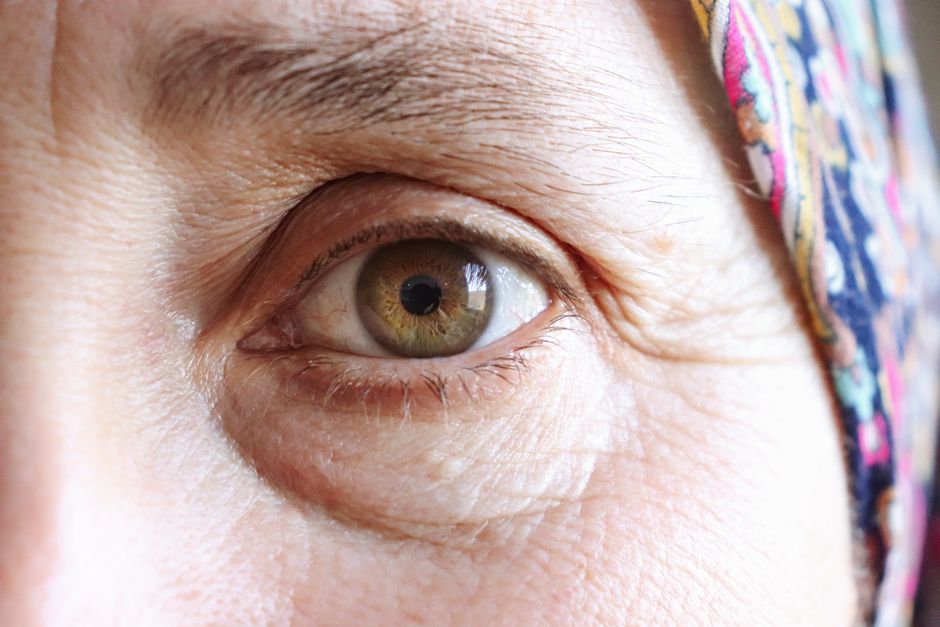
Crow’s feet are the fine lines and wrinkles that radiate from the outer corners of your eyes. They form from a combination of repeated facial expressions, sun damage, and the natural loss of collagen and elastin in the skin as you age. Prevention relies heavily on sun protection and lifestyle habits, while treatment ranges from topical creams to in-office procedures like Botox and laser therapy.
What Causes Crow’s Feet?
Crow’s feet develop because the skin around your eyes is thin and delicate. It has fewer oil glands than the rest of your face, which makes it prone to dryness and damage.
The main driver is repeated muscle movement. Every time you squint, smile, or laugh, the orbicularis oculi muscle contracts. Over decades, these repeated contractions crease the skin. When you are young, the skin springs back. As you age, it loses that ability.
Sun exposure is the other major cause. Ultraviolet radiation breaks down collagen and elastin fibers in the skin. This process, called photoaging, accelerates wrinkle formation. Research consistently shows that sun damage accounts for a large portion of visible skin aging, including crow’s feet.
Other contributing factors include:
- Smoking, which reduces blood flow to the skin and damages collagen
- Poor sleep, which raises cortisol levels and can impair skin repair
- Genetics, which determine how quickly your skin ages
- Repeated sleeping on your side or stomach, which presses the face into the pillow
Can You Prevent Crow’s Feet?
You cannot stop the aging process entirely, but you can slow it down significantly. The most effective prevention is daily sunscreen use.
Choose a broad-spectrum sunscreen with an SPF of 30 or higher. Apply it every morning, even on cloudy days and even if you are indoors near windows. UV rays penetrate glass and clouds. The skin around your eyes needs the same protection as the rest of your face, but be careful not to get sunscreen directly into your eyes.
Sunglasses are a practical second line of defense. They block UV rays and prevent you from squinting. Wearing them consistently can reduce the repetitive muscle movement that contributes to crow’s feet.
Moisturizers help by keeping the skin hydrated. Well-hydrated skin looks plumper and shows fewer fine lines. Look for moisturizers containing hyaluronic acid or ceramides, which help the skin retain water. No moisturizer can erase existing wrinkles, but consistent use can improve the appearance of fine lines.
Retinoids are the most evidence-backed topical ingredient for wrinkle prevention. Prescription tretinoin and over-the-counter retinol both stimulate collagen production. They also speed up cell turnover, which helps fade fine lines over time. Retinoids can cause irritation, so start with a low concentration and use them only at night. Apply a small amount and always pair them with sunscreen, because retinoids increase sun sensitivity.
Lifestyle habits matter too. Avoid smoking. Protect your skin from excessive sun exposure. Aim for consistent sleep. These habits do not guarantee you will avoid crow’s feet, but they reduce your risk and slow progression.
What Treatments Work for Crow’s Feet?
Treatment options fall into three categories: topical products, injectables, and procedures. The right choice depends on the depth of your wrinkles and your budget.
For fine lines, topical retinoids are the first-line treatment. Prescription tretinoin has the strongest evidence for improving fine wrinkles. Over-the-counter retinol is weaker but still effective for many people. Results take time. You will typically need to use a retinoid consistently for several months before you see visible improvement.
Vitamin C serums are a useful addition. Vitamin C is an antioxidant that neutralizes free radicals from sun exposure. It also supports collagen production. Some research suggests it can improve the appearance of fine lines when used consistently. It does not work as quickly as retinoids or injectables.
Peptides are another common ingredient in anti-aging creams. They are short chains of amino acids that signal the skin to produce more collagen. The evidence for peptides is less robust than for retinoids. Some studies show modest improvement in fine lines, but results vary widely by product.
For deeper wrinkles, neuromodulators are the most effective treatment. Botox, Dysport, and Xeomin are brand names for botulinum toxin type A. These injections temporarily relax the orbicularis oculi muscle. When the muscle stops contracting, the skin smooths out. Results appear within a few days and typically last three to four months.
Botox does not remove wrinkles that are already etched into the skin at rest. It prevents new wrinkles from forming and softens existing ones. For deep static wrinkles, you may need a combination of Botox and a dermal filler.
Dermal fillers like hyaluronic acid can plump up hollow areas and smooth deep creases. They are injected directly into the wrinkle. Results are immediate and can last six to twelve months, depending on the product and the individual.
Laser resurfacing and chemical peels are additional options. These treatments remove the outer layer of damaged skin and stimulate new collagen growth. They can significantly improve the appearance of crow’s feet, but they require downtime. Redness, swelling, and peeling are common for several days after treatment.
Microneedling is a less invasive option. It uses tiny needles to create micro-injuries in the skin, which triggers a healing response and collagen production. Some studies show improvement in fine lines, but results are modest compared to lasers or injectables.





Do Home Remedies Work?
Many people try home remedies for crow’s feet, including egg whites, cucumber slices, and coconut oil. None of these have clinical evidence supporting their effectiveness.
Aloe vera gel is often recommended for skin health. It is moisturizing and can soothe the skin, but no reliable studies show it reduces wrinkles. It may provide temporary plumping from hydration, but that effect fades quickly.
Facial exercises are sometimes promoted as a natural alternative to Botox. The logic is that strengthening facial muscles will firm the skin. However, the evidence is mixed and some dermatologists warn that repeated muscle movement can worsen wrinkles. Since crow’s feet are caused by muscle contractions, exercising those muscles could make the problem worse.
Cold compresses can temporarily reduce puffiness and make fine lines less visible. The effect lasts only a short time and does not change the underlying skin structure.
When Should You See a Dermatologist?
You do not need a dermatologist for mild fine lines. Consistent use of sunscreen, moisturizer, and a retinoid is a reasonable first step.
See a dermatologist if your crow’s feet are deep, if they bother you, or if you are considering injectables or procedures. A dermatologist can assess your skin type and recommend the right treatment. They can also rule out other skin conditions that may mimic wrinkles, such as dryness or sun damage.
If you are considering Botox or fillers, always see a licensed medical professional. Injectables are prescription medical devices. Receiving them from someone without proper training increases the risk of complications like drooping eyelids, bruising, or uneven results.
No treatment is permanent. Maintenance is required for all medical treatments. Budget for repeat appointments if you choose injectables or procedures.
What Are Crows Feet Causes Prevention Treatment?
Crow’s feet are caused by muscle movement, sun damage, and age-related collagen loss. Prevention centers on daily sunscreen, sunglasses, and a consistent skincare routine with retinoids. Treatment ranges from topical products for fine lines to Botox, fillers, and laser therapy for deeper wrinkles. The best approach combines prevention with the treatment that matches your wrinkle depth and your goals.
Frequently Asked Questions
Is Botox the best treatment for crow’s feet?
Botox is the most effective treatment for dynamic crow’s feet, which are wrinkles that appear when you smile or squint. For wrinkles that remain visible at rest, fillers or laser treatments may be needed in addition to Botox.
How long does it take for retinol to reduce crow’s feet?
Visible improvement typically takes three to six months of consistent use. Retinol works slowly because it stimulates collagen production, which is a gradual process.
Can sunscreen alone prevent crow’s feet?
Sunscreen is the most important preventive measure, but it does not block all damage. Combining daily SPF with sunglasses, a retinoid, and a moisturizer gives you the best protection against crow’s feet.
Do eye creams work better than regular moisturizers?
Eye creams are not inherently stronger than facial moisturizers. The active ingredients matter more than the product category. A facial moisturizer with retinol or vitamin C can be just as effective as an eye cream with the same ingredients.
