
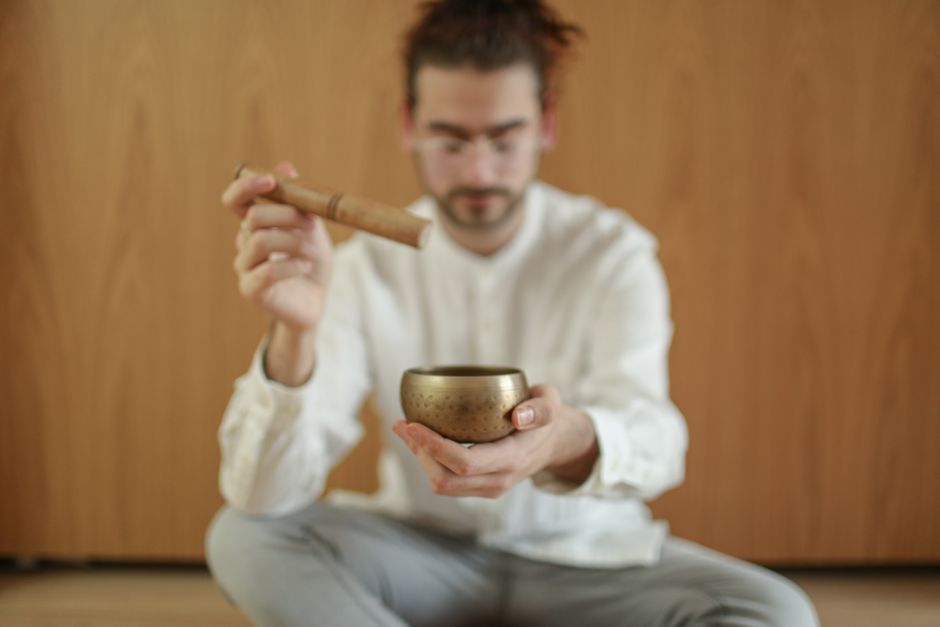
Contemplative practices are structured ways of directing attention inward — toward the breath, a word, an image, or the present moment — usually with the aim of steadying the mind or examining experience more closely. They work by engaging and training specific mental processes, especially attention regulation and emotional self-awareness. Meditation, prayer, journaling, and certain movement traditions all fall under this umbrella, and each one works a little differently.
The word “contemplative” gets used loosely, so it helps to start with what it actually means. These are deliberate practices, not passing moods. You set aside time, follow some method, and repeat it. That repetition is the point. Most of what the practices do, they do gradually.
What Counts As A Contemplative Practice?
A contemplative practice is any repeated activity whose main purpose is to shape how you pay attention or how you relate to your own thoughts. The category is broader than most people assume, and it crosses religious and secular lines.
Common examples include:
- Meditation — focused-attention styles (on the breath or a sound) and open-monitoring styles (watching thoughts without chasing them)
- Contemplative prayer — centering prayer, the rosary, repetitive mantra, and similar traditions
- Mindfulness — paying attention to the present moment on purpose, often taught in secular programs
- Journaling and reflective writing — expressive writing, gratitude logs, self-inquiry
- Movement-based practices — yoga, tai chi, walking meditation, where attention stays anchored to the body
- Nature and solitude practices — silent sitting, contemplative walks
What ties these together is not a shared belief system. It is the deliberate redirection of attention and the regularity of doing it. A person praying a rosary and a person doing a body scan are not doing the same thing, but both are training the same basic capacity to notice where the mind has gone and bring it back.
What Are Contemplative Practices And How Do They Work?
They work through attention training and emotional regulation, and the best evidence for both comes from brain-imaging and behavioral research rather than from any single breakthrough study. The core mechanism is simple to describe: you repeatedly notice that your attention has drifted, and you bring it back. That noticing-and-returning is the exercise.
Over time, that repetition appears to strengthen the mental processes involved in catching distraction and letting go of it. Brain imaging studies in experienced meditators have found changes in regions tied to attention and to the perception of the body’s internal state. These findings are real but come mostly from small studies, and the field is still working out how much of the effect comes from the practice itself versus the kind of person who sticks with it.
There is a second mechanism that matters just as much. Many practices ask you to observe a thought or feeling without immediately acting on it. That gap — between noticing an emotion and responding to it — is where a lot of the reported benefit seems to sit. It is not that the practice removes difficult feelings. It is that it may change your relationship to them.
One clarification worth making: contemplative practice is not the same as relaxation. Relaxation is a side effect for many people, but the training is about attention and awareness. That distinction explains why some sessions feel calm and others feel restless or uncomfortable — and why the restless ones are not failures.
What Does The Research Actually Show?
The strongest evidence is for mindfulness-based programs in specific, well-studied situations. The evidence is weaker and more mixed for broad claims about general health, longevity, or “transformation.”
Mindfulness-based stress reduction (MBSR) and mindfulness-based cognitive therapy (MBCT) are the most researched secular programs. MBCT has been studied as a way to reduce the risk of depressive relapse, particularly in people with a history of recurrent depression. Research published in journals such as JAMA Internal Medicine and JAMA Psychiatry has examined meditation programs for anxiety, depression, and pain, and generally found modest benefits — comparable in some analyses to what other active treatments provide, not superior to them.
Where the evidence is thinner:
- Physical health outcomes — claims about meditation lowering blood pressure, improving immune function, or slowing aging are based on limited or inconsistent data. Some studies suggest small effects; others find none.
- Long-term brain change — intriguing but based largely on small samples and cross-sectional designs. It is not yet established how much structural change occurs, or whether it persists.
- Contemplative prayer and journaling — far less rigorous research exists. Some studies suggest expressive writing can affect mood and stress, but results vary by population and method.
The honest summary: these practices have real, measurable effects on attention and emotional regulation for many people, with modest average benefits. They are not a treatment for serious mental or physical illness on their own, and no major clinical guideline recommends them as a replacement for standard care.
How Do Different Practices Compare?
Different practices emphasize different mental skills, and the research base for each varies widely. This table summarizes the general direction of the evidence, not a ranking of effectiveness.
| Practice | Main focus | Strength of evidence |
|---|---|---|
| Mindfulness meditation (MBSR, MBCT) | Present-moment awareness, emotional regulation | Most studied; modest benefits for anxiety, depression, and stress |
| Focused-attention meditation | Sustaining attention on one object | Some evidence for attention improvements |
| Open-monitoring meditation | Observing thoughts without attachment | Limited, mostly small studies |
| Contemplative prayer | Repetition, devotion, reflection | Limited rigorous research; many report calm and meaning |
| Expressive writing / journaling | Processing emotion and experience | Mixed; some studies suggest mood and stress effects |
| Yoga, tai chi, walking meditation | Attention anchored to body and movement | Some evidence for stress and balance; varies by style |
No practice has been shown to be clearly superior to the others across the board. What tends to matter more than the specific method is consistency and whether the practice fits the person doing it.
What Happens In The Brain And Body During Practice?
During focused attention, brain networks involved in sustaining attention and in monitoring for mind-wandering become more active and better coordinated. When the mind wanders, a separate set of regions — often called the default mode network — becomes active, and the practice is essentially the repeated switching between these states.
On the body side, many practices are associated with increased activity in the parasympathetic nervous system, the branch that supports rest and recovery. Slow breathing in particular tends to shift heart rate variability in a direction associated with calm. This is a well-established physiological response, though how much it contributes to the longer-term benefits of practice is not fully settled.
People also commonly report changes in how they notice body sensations — hunger, tension, fatigue. That is consistent with what imaging studies show about increased engagement of regions that map internal body states, though the strength of this effect varies a great deal between individuals.
Are There Risks Or Downsides?
Yes, and they are underreported. Contemplative practice is generally low-risk for most people, but it is not risk-free, and the research on adverse effects is still limited.
Some people experience increased anxiety, intrusive thoughts, or unsettling emotional material during or after practice, particularly in intensive retreat settings or with trauma histories. A small body of research and clinical reports documents these experiences, though how common they are is not well established. If you have a history of trauma, psychosis, or severe mental illness, it is worth talking with a clinician before starting an intensive practice.
There is also a practical risk that gets less attention: treating meditation as a substitute for care. For depression, anxiety disorders, or any physical condition, contemplative practice can sit alongside treatment but should not replace it. Some clinicians recommend it as an adjunct; that is different from a treatment in its own right.
How Do You Start A Practice?
Start small and pick one method. Short daily sessions tend to be more sustainable than occasional long ones, and consistency matters more than duration for most beginners.
A few practical points that hold across traditions:
- Choose a clear anchor — the breath, a word, a sound, or physical sensation — so you know what to return to.
- Expect the mind to wander — noticing it and coming back is the practice, not a sign you are doing it wrong.
- Keep sessions short at first — a few minutes daily is a reasonable starting point for most people.
- Skip intensive retreats early on — build tolerance gradually, especially if you have any mental health history.
- Try a structured program — MBSR and MBCT are the best-studied formats and are widely available in person and online.
There is no clinical guideline specifying how long or how often a person should practice for general benefit. Recommendations vary by program and tradition. If a specific app or course promises a fixed outcome in a fixed number of days, treat that as marketing rather than evidence.
Frequently Asked Questions
What are contemplative practices in simple terms?
They are repeated activities that train your attention and awareness, such as meditation, contemplative prayer, or reflective journaling. The common thread is deliberately noticing where your mind goes and gently bringing it back.
Do contemplative practices actually work?
Research shows modest, measurable benefits for attention, stress, and some mental health outcomes, especially with mindfulness-based programs. The evidence is weaker for broad physical health claims, and these practices are not a substitute for medical or psychiatric treatment.
How long does it take to notice a difference?
Some people notice changes within a few weeks of regular practice, but there is no established timeline and responses vary widely. No clinical guideline specifies how long it takes to see benefit.
Can meditation or contemplative practice be harmful?
For most people it is low-risk, but some experience increased anxiety, intrusive thoughts, or emotional distress, particularly in intensive settings or with trauma histories. If you have a mental health condition, talk with a clinician before starting an intensive practice.
