
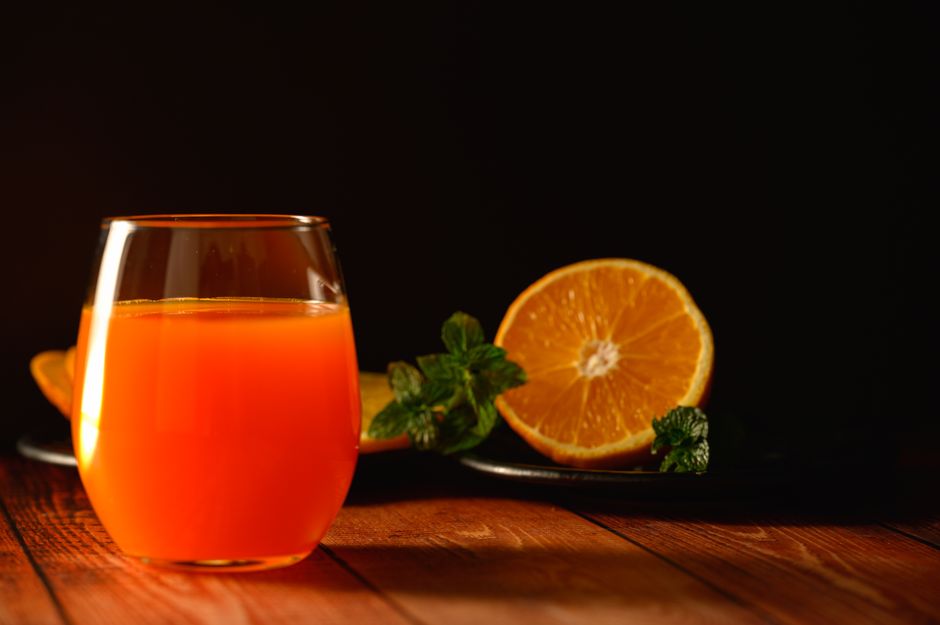
Concentrated juices are liquids made by removing most of the water from fruit or vegetable juice. What’s left is a thick syrup that gets sold as-is, used as an ingredient, or mixed with water to make juice “from concentrate.” The key point: removing water concentrates everything dissolved in that juice, including the sugars.
What Are Concentrated Juices?
Concentrated juice starts as regular juice. Manufacturers heat it, then pull out most of the water under low pressure so the juice doesn’t boil and cook. What remains is a dense, syrupy liquid — often roughly one-fifth the volume of the original juice.
The water removal is the whole trick. Sugars, acids, and plant compounds stay behind because they don’t evaporate with the water. That’s why a small amount of concentrate can be reconstituted into a full glass of juice.
This is an old food preservation method. Concentrating juice lowers shipping weight, extends shelf life, and makes storage cheaper. It’s a logistics solution that became a product category.
One detail worth knowing: “from concentrate” on a label isn’t a quality grade. It’s a description of how the juice was processed. The concentrate was made somewhere, shipped, then water was added back. Sometimes flavor compounds are added back too, because the heating step strips some of them out.
How Is Concentrated Juice Different From Regular Juice?
The main difference is water content, not nutrition. When water is removed, the remaining solids become more concentrated by volume. When water is added back during reconstitution, the drink returns to roughly its original strength.
So a glass of reconstituted orange juice from concentrate and a glass of not-from-concentrate orange juice can land in a similar nutritional range. Vitamin C content, for example, is often comparable because many juices are fortified or adjusted after processing.
What does change is flavor and aroma. Heat during concentration drives off volatile compounds that give fresh juice its smell and bright taste. Some manufacturers add back “flavor packs” — blends of essential oils and essences captured during processing — to restore that character. This is standard industry practice, not a shortcut.
Texture and color can shift too. Fresh-squeezed juice separates and looks cloudy. Reconstituted concentrate often looks more uniform. Neither difference tells you much about nutrition.
Is Concentrated Juice Bad for You?
Concentrated juice is not inherently harmful, but it delivers sugar the same way regular juice does — quickly and in large amounts. The concentration step doesn’t add sugar. It just makes the sugar easier to ship and easier to drink in volume.
Here’s the part that matters. A 12-ounce glass of apple juice contains roughly the sugar of three apples, without the fiber that slows absorption. Whether that juice came from concentrate or was pressed fresh, your body handles the sugar similarly.
Fruit juice lacks most of the fiber of whole fruit. Fiber is one reason whole fruit affects blood sugar more gradually. When you drink juice, that buffering effect is largely gone.
For most healthy adults, a small glass of juice occasionally is not a problem. The concern is daily, large-volume juice drinking — especially in place of water. That pattern adds calories and sugar without the fullness whole fruit provides.
Some concentrated juices are also used as sweeteners in other products. Apple, pear, and grape juice concentrates show up in everything from fruit snacks to granola bars. On a label they may appear as “fruit juice concentrate” rather than “sugar,” but nutritionally they function as added sugar. The FDA has addressed this labeling question directly, and the general direction is that juice concentrate used as a sweetener is treated as added sugar for labeling purposes.
Does Concentration Destroy Nutrients?
Some nutrients are lost during concentration, and some survive. It depends on the nutrient and the process.
Vitamin C is heat-sensitive, and it degrades during the heating and water-removal steps. That’s why many juices — from concentrate or not — are fortified with vitamin C after processing. The label will tell you the final amount.
Other nutrients hold up better. Potassium and most minerals are not destroyed by heat. They concentrate along with the sugars and stay in the final product.
Plant compounds called polyphenols are a mixed case. Some degrade with heat, others survive. The research here is genuinely mixed, and results vary by fruit, processing method, and how the compound is measured. It’s not accurate to say concentration “strips” all nutrients or that it “preserves” them. Both claims oversimplify.
What you can rely on is the nutrition facts panel. It reflects what’s actually in the bottle after processing and any fortification. That’s more useful than general claims about fresh versus concentrated.
| Factor | Fresh Juice | Reconstituted Concentrate |
|---|---|---|
| Sugar content | Varies by fruit | Similar to fresh |
| Fiber | Low | Low |
| Vitamin C | Varies; may degrade over time | Often fortified to a set level |
| Flavor compounds | Naturally present | Some lost; may be added back |
| Shelf life | Shorter | Longer |
Is Juice Concentrate Used as a Sweetener?
Yes, and this is where concentrated juice gets complicated. Juice concentrates are widely used as sweeteners because they’re cheaper than sugar in some applications and let manufacturers avoid listing “sugar” on the label.
Common ones include apple, pear, grape, and white grape juice concentrate. They show up in cereals, fruit bars, sauces, yogurts, and beverages.
The nutrition reality: your body processes the sugar in juice concentrate much like other added sugars. It’s still sugar. The source doesn’t change how it’s metabolized in any meaningful way.
Label reading helps here. If “fruit juice concentrate” appears in the first few ingredients, the product likely contains a meaningful amount of added sugar — even if the front of the package says “no sugar added.” No sugar added doesn’t mean no sugar present. It means no sugar was added beyond what’s in the ingredients.
Should You Choose Concentrate or Not-From-Concentrate?
For nutrition, the difference is smaller than marketing suggests. Both are juice. Both are low in fiber. Both deliver sugar quickly.
Not-from-concentrate juice is often pasteurized and stored in tanks, sometimes for months, before packaging. It’s not necessarily fresher than concentrate. The “not from concentrate” label describes the process, not the freshness.
Concentrate is generally cheaper and has a longer shelf life. If cost matters, it’s a reasonable choice.
What matters more than the label is how much juice you drink and how often. A small glass occasionally fits into most diets. A large glass several times a day adds up fast.
If you’re choosing between juice and whole fruit, whole fruit wins on fiber and fullness. That’s true regardless of how the juice was processed.
What About Vegetable Juice Concentrate?
The same principles apply. Vegetable juice concentrate is made by removing water from vegetable juice, concentrating the natural sugars and minerals along with it.
Vegetable juices tend to have less sugar than fruit juices, but they’re not sugar-free. Beet, carrot, and sweet potato juices carry notable natural sugar. Tomato juice is lower.
Vegetable juice concentrates are also used as ingredients — for color, flavor, or to boost the vegetable content listed on a label. A product might list “vegetable juice concentrate” for color rather than nutrition. The amount used for coloring is typically small.
If you’re drinking vegetable juice for nutrition, check the sodium content. Many vegetable juice products are high in sodium, and that matters more for most people than whether the juice was concentrated.
How Should You Read a Juice Label?
Start with the ingredients list. If it says “100% juice,” the product is juice with no added sweeteners. If it says “juice cocktail” or “juice drink,” it likely contains added sugar or water.
Then check the nutrition facts. Look at total sugars per serving and the serving size. A bottle that looks like one serving may actually contain two or three.
Watch for these terms:
- From concentrate — water was removed, then added back
- Not from concentrate — juice was pasteurized but not concentrated
- Fruit juice concentrate in the ingredients — often functioning as added sugar
- No sugar added — no sugar was added, but natural sugars are still present
- 100% juice — all juice, no added sweeteners
None of these terms tell you the product is healthy or unhealthy on its own. They describe processing. The nutrition facts panel tells you what you’re actually drinking.
Frequently Asked Questions
Is concentrated juice the same as regular juice?
Concentrated juice has had most of its water removed, then it’s usually reconstituted with water before sale. The final nutrition is often similar to regular juice, but some flavor compounds and heat-sensitive vitamins may be lost.
Is concentrated juice bad for you?
It’s not inherently harmful, but it delivers sugar quickly and lacks the fiber of whole fruit. Drinking it in large amounts daily can add significant sugar and calories to your diet.
Does concentrated juice have more sugar than fresh juice?
No, the sugar content is generally similar once the concentrate is mixed back to normal strength. The concentration step removes water, not sugar, so the sugar stays in the product.
Is fruit juice concentrate just sugar?
Nutritionally, it functions much like added sugar in the body. It contains natural fruit sugars and some trace nutrients, but the sugar is processed similarly to other sweeteners.
