
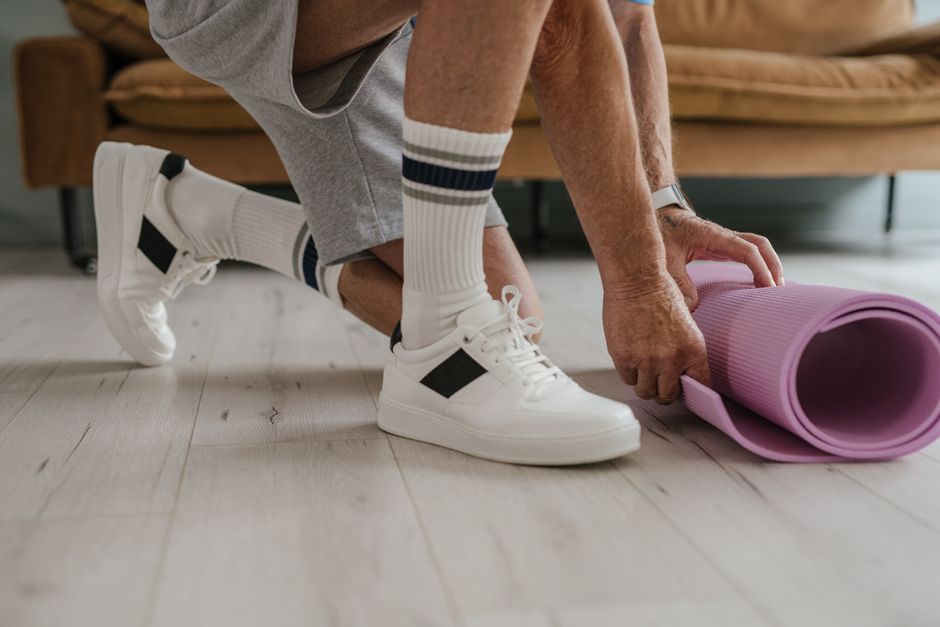
Compression socks are tight-fitting stockings that squeeze the legs, usually with the most pressure at the ankle and less as they go up the calf. That graded squeeze helps blood move back up toward the heart instead of pooling in the lower legs. People wear them to prevent swelling on long trips, to manage leg symptoms from vein problems, and sometimes to help recovery after exercise.
They are not a cure for anything. They are a mechanical tool, and how well they work depends on the condition, the fit, and the amount of pressure. Here is what the evidence actually supports, what it does not, and who should check with a doctor first.
What Are Compression Socks For?
Compression socks are used to counter the pooling of blood and fluid in the lower legs. Your veins have to push blood upward against gravity, and they rely on one-way valves and the calf muscles to do it. When you sit or stand still for a long time, that system slows down. Fluid leaks into the surrounding tissue, and the ankles and calves swell.
A compression sock adds external pressure that supports the vein walls and helps the valves close. It also gives the calf muscle something firm to push against. The result is better return flow and less fluid buildup. This is well-established physiology, not a marketing claim.
The pressure is measured in millimeters of mercury (mmHg), the same unit used for blood pressure. Over-the-counter socks typically fall in a mild range, while prescription-strength garments are higher. The higher the pressure, the more support it provides, and the more it needs to be fitted correctly.
What Conditions Do Compression Socks Help With?
The strongest evidence is for preventing swelling and clot risk in situations where the legs are still for long periods, and for managing symptoms of chronic vein problems. The support is real but varies by condition.
- Long periods of sitting or standing. This includes flights, long drives, and jobs where you are on your feet all day. Compression reduces ankle and calf swelling in these situations. Evidence here is fairly consistent.
- Chronic venous insufficiency. This is a condition where veins struggle to return blood, often causing heaviness, aching, and swelling. Compression is a standard part of management. Some clinicians use it as first-line treatment alongside other measures.
- Prevention of blood clots after surgery or during hospitalization. This is a well-established medical use. In hospitals, compression is often combined with medication and movement. This is a clinical decision, not something to self-manage.
- Lymphedema. Compression is part of specialized care for this condition, but it requires trained management. It is not a do-it-yourself situation.
For varicose veins, compression can ease aching and heaviness, but it does not remove the veins or reverse the underlying problem. It manages symptoms. That distinction matters.
Do Compression Socks Help With Exercise and Recovery?
The evidence for exercise performance and recovery is mixed. Some studies suggest reduced muscle soreness and faster perceived recovery after intense exercise. Others show little or no measurable benefit. Results vary by sport, sock pressure, and how recovery is measured.
What is clearer is that compression during exercise can reduce swelling in the lower legs, which some runners and athletes find comfortable. Whether that translates into better performance is not well established. No strong evidence shows that wearing compression socks makes you faster or stronger.
If you find them comfortable during or after workouts, that is a reasonable reason to wear them. Just do not expect them to replace sleep, hydration, or proper training.
Do Compression Socks Help With Pregnancy Swelling?
Leg swelling is common in pregnancy, especially in the later months, because of increased blood volume and pressure on the veins in the pelvis. Compression socks can help reduce that swelling and the heaviness that comes with it. Some clinicians recommend them for this purpose.
Pregnancy is a situation where you should talk to your healthcare provider before using compression socks, particularly if swelling is sudden, one-sided, or accompanied by pain. Sudden swelling in one leg can be a sign of a blood clot, which is a medical emergency. Do not assume it is normal pregnancy swelling.
No clinical guidelines set a universal pressure level for compression socks in pregnancy. Fit and comfort matter, and a provider can advise on what is appropriate for your situation.
What Pressure Level Do You Need?
Over-the-counter socks are usually sold in mild ranges, while higher pressures require a prescription and proper fitting. The right level depends on why you are wearing them. There is no single correct number for everyone.
For general swelling prevention on a flight or during long sitting, a mild over-the-counter sock is often enough. For chronic venous insufficiency or other diagnosed conditions, a clinician may recommend a specific higher pressure and measure your leg to fit it. Wearing a sock that is too tight can be uncomfortable and, in some cases, reduce circulation rather than help it.
Fit matters as much as pressure. A sock that bunches, rolls down, or cuts in at the top will not work well and can cause discomfort. Measure your calf and ankle according to the manufacturer’s sizing guide rather than guessing.
Who Should Not Wear Compression Socks?
Compression socks are not safe for everyone. The main concern is reduced blood flow to the legs, which compression can worsen in some people.
Talk to a doctor before using compression socks if you have peripheral artery disease, which is narrowed arteries that reduce blood flow to the legs. Compression can make this worse. The same caution applies if you have significant heart failure, because shifting fluid back into circulation can add strain. People with diabetes-related nerve damage or skin wounds on the legs should also get medical advice first.
If you have an open sore, a skin infection, or sudden one-sided leg swelling, do not put on a compression sock and hope for the best. Get it checked.
Do Compression Socks Actually Prevent Blood Clots?
Compression helps reduce the risk of blood clots in specific medical settings, particularly during and after surgery and for people who cannot move much. In hospitals, it is often used alongside medication and early movement, not as a stand-alone measure.
For healthy people on a long flight, the picture is less dramatic. Compression reduces swelling and may lower clot risk in people at higher risk, but the absolute risk of a clot on a normal flight for a healthy person is low. Wearing socks is reasonable, but so is getting up and moving. No sock replaces movement.
If you have had a clot before, have a clotting disorder, or are on certain medications, ask your doctor what is appropriate for travel.
How Should You Wear and Care for Compression Socks?
Put them on in the morning, before swelling has had a chance to build up. They are easier to get on then, and they work better from the start of the day. Most people take them off before bed unless a clinician has told them otherwise.
Wash them regularly according to the manufacturer’s instructions. Elastic wears out over time, and a stretched-out sock loses its pressure. If the sock feels looser than when you bought it, it is probably time to replace it. There is no universal replacement schedule, but loss of snugness is the practical signal.
A note on getting them on: they are meant to be tight, and that can make them hard to pull on. Putting them on first thing, before your legs swell, makes a real difference. Some people find a stocking aid helpful.
Frequently Asked Questions
Do compression socks really work?
Yes for reducing leg swelling and supporting vein function in situations where the legs are still for long periods. The evidence is stronger for swelling and chronic vein symptoms than for athletic performance.
Can you sleep in compression socks?
Most people should not wear them overnight unless a clinician has advised it. When you lie flat, the pooling that compression addresses is reduced, and overnight wear is not needed for most people.
How tight should compression socks be?
They should feel firm but not painful, with no pinching or numbness. For diagnosed conditions, a clinician can recommend a specific pressure and measure your leg for a proper fit.
Are compression socks safe for everyone?
No. People with peripheral artery disease, significant heart failure, or skin wounds on the legs should check with a doctor before wearing them. Compression can worsen reduced blood flow in some cases.
