
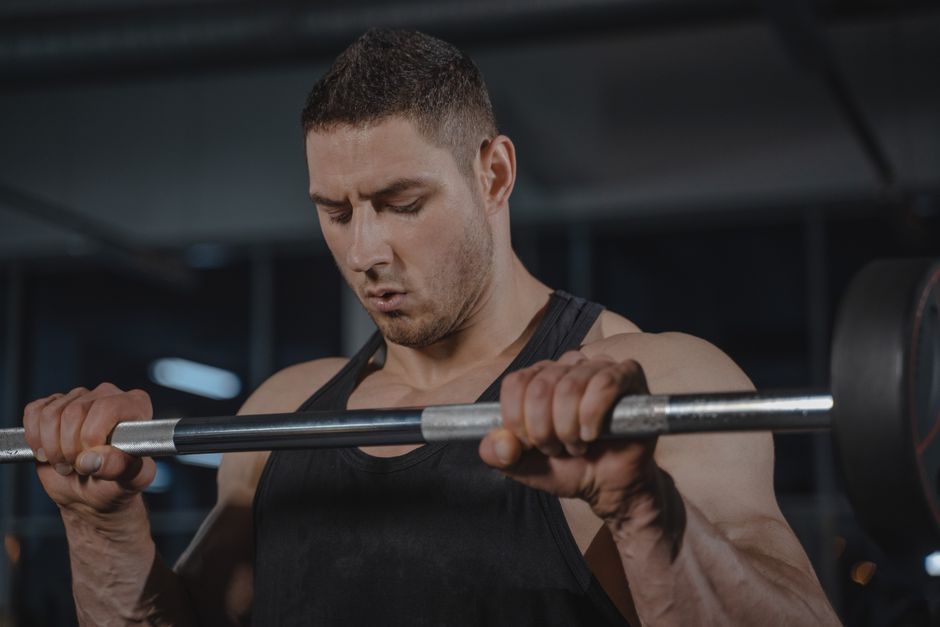
A compound workout is any exercise that moves more than one joint and works several muscle groups at the same time. Think squats, push-ups, rows, and lunges. These movements train your body the way it actually moves in daily life, which is why trainers build programs around them instead of isolating one muscle at a time.
If you have spent any time in a gym or scrolling through fitness advice online, you have seen the debate. Some people swear by heavy compound lifts. Others prefer machines that target a single muscle. Both have a place. But understanding what compound workouts are, and what they actually do for your body, helps you decide where to put your time.
What Are Compound Workouts? Key Information
A compound workout is a movement that involves two or more joints working together. A bicep curl moves only your elbow, so it is an isolation exercise. A push-up moves your shoulders, elbows, and shoulder blades at once, so it is a compound exercise. That single difference changes how much muscle you recruit and how much total work your body does.
The main compound movement patterns fall into a few groups:
- Squat — works quads, glutes, hamstrings, and core
- Hinge — deadlifts and hip thrusts, driven by glutes and hamstrings
- Push — bench press, overhead press, push-ups, working chest, shoulders, and triceps
- Pull — rows and pull-ups, working back and biceps
- Lunge and step — single-leg patterns for quads, glutes, and balance
- Carry — loaded carries that train grip, core, and posture
Most well-designed strength programs are built around these patterns. Isolation exercises get added afterward to address specific weak points or goals.
How Do Compound Exercises Differ From Isolation Exercises?
An isolation exercise targets one muscle group across one joint. A compound exercise spreads the load across several muscles and joints. That is the core distinction, and it has practical consequences.
When you squat, your quadriceps do a lot of the work, but your glutes, hamstrings, calves, and trunk muscles are all contributing. Your heart and lungs are also working harder because more muscle is demanding oxygen. That is why a set of heavy squats can leave you breathing hard in a way a leg extension never will.
Isolation exercises are not useless. If you are recovering from an injury and need to strengthen one specific muscle, isolation work can be the right tool. If your triceps are lagging behind your chest strength, adding triceps extensions can help. But for most people most of the time, compound movements give you more return for the time you spend.
One point that often gets lost: compound exercises are not automatically better for building muscle in every muscle they touch. A squat works your glutes, but a dedicated hip thrust may load them more directly. Research on muscle growth suggests that training a muscle through a full range of motion with enough volume and effort matters more than whether the exercise is compound or isolation. Compound lifts are efficient, not magic.
What Are the Benefits of Compound Workouts?
The benefits come from three places: more muscle worked per rep, higher total energy expenditure, and better transfer to real-life movement.
Because compound exercises recruit large amounts of muscle, they tend to burn more calories per session than isolation work. A session built on squats, rows, and presses will generally cost more energy than one built on curls and leg extensions. That said, the difference in daily calorie burn is not enormous. Exercise alone is a modest lever for weight management compared to diet.
Compound training also improves coordination and balance. When you lunge, your body has to stabilize itself while producing force. Over time, that carries over to stair climbing, carrying groceries, and getting up off the floor.
Research consistently shows that resistance training of any kind supports bone density, muscle mass, and metabolic health. Compound movements are one effective way to deliver that training stimulus. They are not the only way, but they are efficient.




Do Compound Workouts Build Muscle Faster Than Isolation?
Not necessarily faster for a specific muscle, but they build more total muscle per unit of time. That is the honest answer.
Muscle growth depends mainly on mechanical tension, training volume, and progressive overload, meaning you gradually ask your muscles to do more over time. A compound lift applies tension to several muscles at once. So in a 45-minute session, you can accumulate meaningful volume for your legs, back, chest, and shoulders. If you tried to hit all those muscles with isolation exercises, the session would take much longer.
Where isolation wins is precision. If a muscle is not getting enough stimulus from your compound lifts, adding direct work for it can help. Many experienced lifters do both: compound movements first, then isolation exercises to fill gaps.
Some studies suggest that compound and isolation exercises produce similar muscle growth when volume is matched. That is a useful reminder that the exercise type is not the whole story. How hard you train and how much total work you do matter at least as much.
Can Beginners Start With Compound Workouts?
Yes, and most beginner strength programs are built on them. Squats, push-ups, rows, and hip hinges can all be scaled to a beginner’s level using body weight, lighter loads, or assisted variations.
The key is learning technique before adding weight. A poorly performed squat under load is a recipe for a sore back or cranky knees. A well-performed bodyweight squat teaches the pattern safely.
Beginners often make faster progress on compound lifts than on isolation exercises because the movement itself is a skill. Your nervous system gets better at coordinating the muscles involved, and that improvement shows up quickly in the first weeks of training.
If you have joint issues, a history of injury, or a medical condition, talk to a doctor or a qualified trainer before starting. That is not a disclaimer for its own sake. Some conditions genuinely change which movements are appropriate.
What Are the Risks and Common Mistakes?
Compound exercises are not inherently dangerous, but they demand more coordination than isolation movements. That means technique errors have more room to cause problems.
The most common mistakes:
- Adding weight before the movement pattern is solid
- Using a range of motion that is too short to be useful
- Letting the lower back round under load during hinges and squats
- Skipping warm-up sets
- Training to failure on heavy compound lifts every session
None of these guarantee injury, and many people train hard for years without problems. But the risk of a compound lift is higher when form breaks down under fatigue or when load increases faster than the body can adapt.
A less obvious point: compound lifts are not automatically safer than machines. Machines control the path of the movement, which can reduce the skill demand. Free-weight compound lifts require you to control the path yourself. That is part of why they build coordination, and also part of why they are less forgiving of sloppy technique.
How Should You Program Compound Workouts?
Most strength programs place compound lifts early in a session, when you are fresh. That is when you can handle the most load and produce the best technique. Isolation work usually comes after.
A simple weekly structure for a beginner might include two to three full-body sessions, each built around a squat, a hinge, a push, and a pull. More experienced lifters often split the body across more days or focus on specific lifts.
Rest between sets matters more for compound lifts than isolation work because they are more demanding. Resting longer between heavy sets generally allows better performance on the next set. The exact rest period depends on your goal and the load, so there is no single number that fits everyone.
Progressive overload is the principle that ties it all together. Over weeks and months, you gradually increase weight, reps, or difficulty. Without that progression, results stall regardless of which exercises you choose.
Do You Need Compound Workouts to Get Results?
No. You can build muscle and strength with isolation exercises or machines alone. The body responds to tension and effort, not to a specific exercise list.
But compound workouts are efficient. They let you train more muscle in less time, they carry over well to daily movement, and they are the backbone of most evidence-based strength programs. For most people with limited time, they are the smartest place to start.
If you enjoy isolation work more, or if a condition limits what you can do, that is a valid path too. The best program is one you can stick with and progress on.
Frequently Asked Questions
What are compound workouts?
Compound workouts are exercises that move two or more joints and work multiple muscle groups at once, like squats, push-ups, and rows. They differ from isolation exercises, which target a single muscle across one joint.
Are compound exercises better than isolation exercises?
Compound exercises are more efficient because they train more muscle per rep, but isolation exercises are useful for targeting specific muscles. Most well-designed programs use both, with compound lifts as the foundation.
Can beginners do compound workouts?
Yes, beginners can and often should start with compound movements scaled to their level. Learning proper technique before adding weight is the key step.
How often should you do compound workouts?
Most beginner programs include two to three full-body sessions per week built around compound lifts. The right frequency depends on your experience, recovery, and goals.
