
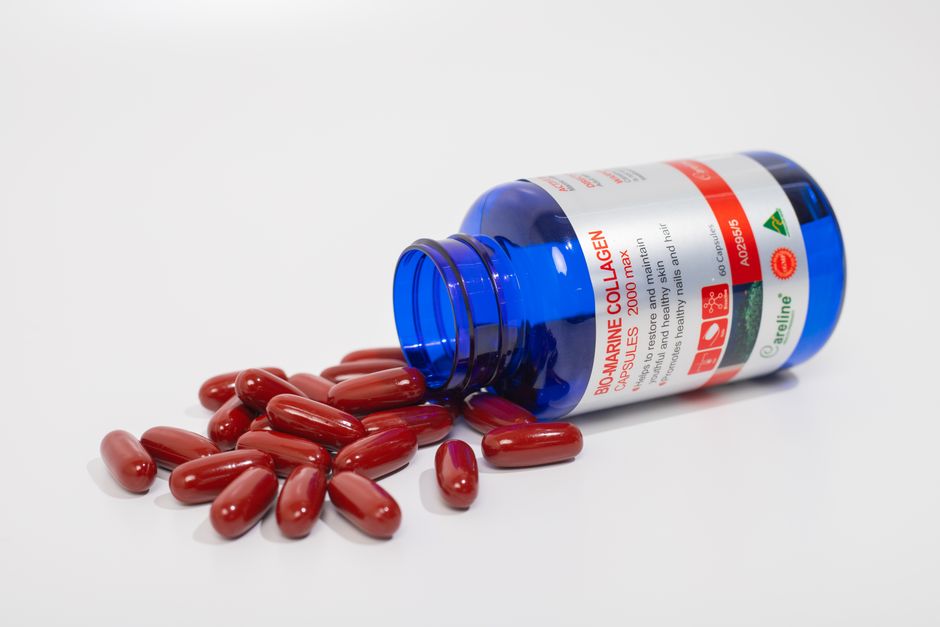
Collagen peptides are short chains of amino acids made by breaking down collagen, the protein that gives structure to your skin, bones, tendons, and cartilage. They are sold as powders and capsules, mostly marketed for skin, joints, and bone health. The honest summary: some benefits have reasonable evidence behind them, others are mostly marketing, and none of it is a substitute for a balanced diet or medical care.
If you are considering collagen peptides, the useful question is not “do they work” but “for what, and how strong is the proof.” This guide separates what research supports from what it does not.
What Are Collagen Peptides Good For?
Collagen peptides are most plausibly useful for skin elasticity and hydration, and there is moderate evidence for joint comfort in some people with osteoarthritis. Bone health evidence is weaker and mixed. Claims about hair, nails, muscle building, and weight loss are not well supported by large human trials.
The key point is that collagen peptides are not a complete protein and are not a treatment for any disease. They are a dietary supplement. Their effects, where they exist, are modest and build slowly over weeks to months.
Here is a rough map of the evidence:
- Skin elasticity and hydration: Several small randomized trials suggest modest improvements. Most are short, small, and often funded by manufacturers.
- Joint pain in osteoarthritis: Some trials show small improvements in pain and stiffness. Results vary, and the studies are generally small.
- Bone mineral density: A few small trials suggest possible benefit, but the evidence is limited and not consistent enough to call it established.
- Hair and nails: Weak evidence, mostly small studies or anecdotal reports.
- Muscle mass and strength: Collagen is a poor source of the amino acid leucine, which drives muscle protein synthesis. It is not a good substitute for whey or other complete proteins.
How Do Collagen Peptides Actually Work in the Body?
When you eat collagen peptides, your digestive system breaks them into individual amino acids and small peptides. Most of these are absorbed into the bloodstream. Your body does not send them directly to your skin or joints intact.
This is where marketing often overstates the science. A common claim is that collagen peptides “travel to your skin and rebuild it.” That is not how it works. Your body pools amino acids and uses them wherever they are needed. There is no direct delivery system to your face.
What may happen is more indirect. Collagen peptides are rich in the amino acids glycine, proline, and hydroxyproline. Some research suggests these peptides may act as signaling molecules that nudge your body’s own collagen-producing cells, called fibroblasts, to make more collagen. That mechanism is plausible and has some laboratory support, but it is not fully proven in humans.
Another point worth knowing: your body makes its own collagen. Dietary collagen does not automatically increase collagen production. The body regulates this tightly, and supplementing does not override that regulation.
What Does the Evidence Say About Skin Benefits?
Skin is where collagen peptides have the most research, and the results are cautiously positive. Several randomized controlled trials have found small improvements in skin elasticity, hydration, and roughness after daily supplementation over periods of roughly two to six months.
The caveats matter. Most of these trials were small, often fewer than 100 participants. Many were funded by companies that sell collagen products. The improvements were modest, not dramatic. And skin aging is driven by many factors, including sun exposure and genetics, that a supplement cannot offset.
If you are looking for meaningful skin benefits, sun protection and not smoking have far stronger evidence than any supplement. Collagen peptides may add a small amount on top, but they are not a replacement for basic skin care.
Do Collagen Peptides Help With Joint Pain?
Some studies suggest collagen peptides may modestly reduce joint pain and stiffness in people with osteoarthritis, particularly of the knee. The trials are generally small and short, and results are not consistent across all studies.
It is important to be clear about what this means. Collagen peptides are not a treatment for osteoarthritis. They are not a substitute for physical therapy, weight management, or medications your doctor recommends. At best, they may offer a small amount of symptom relief for some people.
Collagen peptides are also sometimes marketed for exercise-related joint discomfort. The evidence here is weaker still. Some athletes report benefit, but large, well-controlled trials are lacking.
Are Collagen Peptides Safe, and Who Should Avoid Them?
For most healthy adults, collagen peptides appear to be safe when taken in typical supplement amounts. Side effects are uncommon and usually mild, such as digestive discomfort. There are no established clinical guidelines for a standard dose, and doses used in studies vary widely.
Some cautions apply. People with allergies to the source animal, such as fish or shellfish, should check the label carefully. Collagen peptides are not appropriate for people who need to limit protein intake, such as some people with kidney disease, without checking with a doctor.
Pregnant and breastfeeding women, and children, should not assume these supplements are safe. No clinical guidelines currently exist for these populations, and evidence is lacking. Ask a healthcare provider before use.
One more point: supplements are not tightly regulated in the same way as medications. Quality and purity can vary between brands. Third-party testing labels can help, but they are not a guarantee.
How Do Collagen Peptides Compare With Other Protein Sources?
Collagen peptides are an incomplete protein. They lack tryptophan, an essential amino acid, and are low in others. That means they cannot replace complete proteins like eggs, dairy, meat, soy, or a balanced plant protein mix.
For muscle building and general protein needs, collagen is a poor choice. Whey and other complete proteins are far better supported by research for muscle protein synthesis. Collagen’s value, if any, is specific to skin and joint tissue, not general nutrition.
If you take collagen, think of it as a targeted supplement, not a protein source. Do not count it as your main protein for the day.
What Should You Realistically Expect?
Expect modest, slow changes at best, and only for skin and possibly joint comfort. Most studies that showed benefit ran for at least eight to twelve weeks. Nothing happens overnight.
Do not expect collagen peptides to reverse aging, cure arthritis, or replace medical treatment. If a product promises dramatic results, that is a sign to be skeptical, not a sign of quality.
If you decide to try them, choose a product with third-party testing, follow the label, and give it a fair trial of a few months. If you notice no difference, there is no strong reason to continue. And if you have a medical condition or take medications, talk to your doctor first.
Frequently Asked Questions
What are collagen peptides good for?
They are most plausibly useful for modest improvements in skin elasticity and hydration, and possibly joint comfort in some people with osteoarthritis. Evidence for bone, hair, and muscle benefits is weaker or mixed.
Do collagen peptides actually work?
Some small trials suggest modest benefits for skin and joints, but the evidence is not strong enough to call them proven for everyone. Results vary, and many studies were small or industry-funded.
How long does it take for collagen peptides to work?
Most studies that showed benefit ran for at least eight to twelve weeks. There is no reliable evidence of faster results, and many people notice no change at all.
Are collagen peptides safe for everyone?
They appear safe for most healthy adults at typical supplement amounts, but people with animal allergies or kidney disease should check with a doctor. No guidelines exist for pregnant women, breastfeeding women, or children.
