
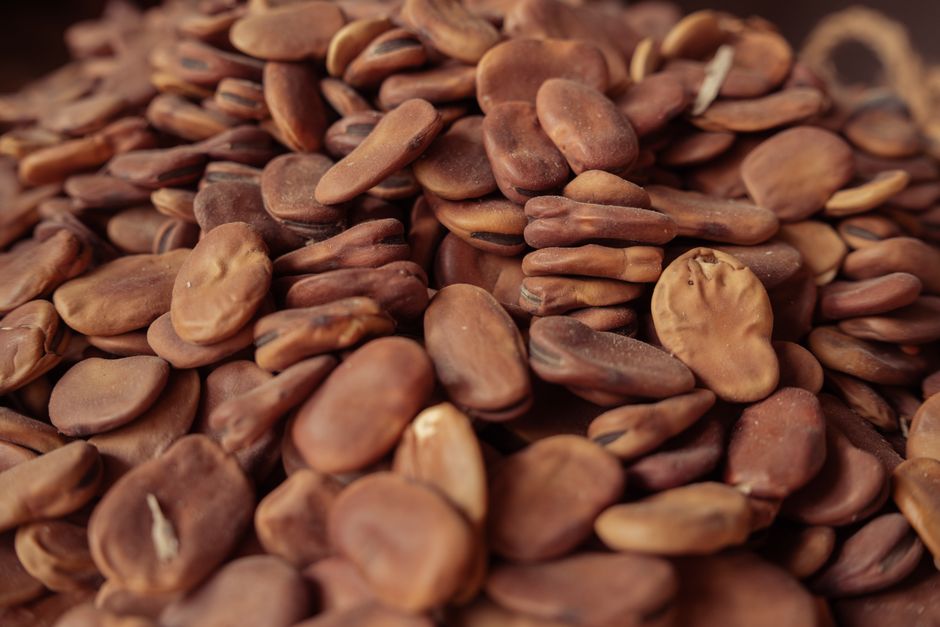
Broad beans are the large, flat, pale-green beans found inside the thick pods of the Vicia faba plant, which is also known as the fava bean. They are one of the oldest cultivated crops in human history, grown for thousands of years across the Mediterranean, North Africa, and Asia. Unlike green beans or snap peas, you do not eat the pod; you eat the beans inside, which have a distinct, earthy, and slightly buttery flavor.
Broad Beans vs. Fava Beans: Are They the Same?
Yes, broad beans and fava beans are the exact same species. The name “broad bean” is commonly used in the United Kingdom, Australia, and New Zealand, while “fava bean” is the standard term in the United States and parts of Europe. You might also see them labeled as horse beans, field beans, or Windsor beans depending on the variety and how they are used.
The confusion usually happens at the grocery store. In the US, you are more likely to find them dried, split, or shelled in the frozen aisle under the name “fava beans.” In the UK, they are often sold fresh in the pod as “broad beans.” The product is identical; only the regional vocabulary differs.
What Do Broad Beans Look and Taste Like?
Fresh broad beans sit inside a thick, fuzzy, bright-green pod that can grow 6 to 12 inches long. Each pod holds 4 to 8 beans nestled in a soft white lining. The beans themselves are flat and kidney-shaped when raw, covered by a tough, translucent skin.
The flavor is hard to compare to other vegetables. It is earthy, starchy, and slightly sweet with a subtle bitterness. Some people describe the taste as similar to edamame but richer and more complex. When cooked and peeled, the inner bean is tender and creamy, almost like a soft legume rather than a crisp vegetable.
Nutritional Profile of Broad Beans
Broad beans are a nutrient-dense food with an impressive balance of protein, fiber, and micronutrients. A standard 100-gram serving of cooked broad beans provides about 110 calories, 7.6 grams of protein, and 5.4 grams of dietary fiber. That protein content is notably higher than most other vegetables and comparable to many legumes.
They are particularly rich in several vitamins and minerals:
- Folate: Essential for cell division and especially important during pregnancy.
- Manganese: Supports bone formation and nutrient metabolism.
- Copper: Aids iron absorption and red blood cell production.
- Phosphorus: Works with calcium to build strong bones and teeth.
- Magnesium: Involved in over 300 enzymatic reactions in the body.
- Potassium: Helps regulate blood pressure and fluid balance.
They also contain significant amounts of iron, zinc, and B vitamins. The combination of protein and soluble fiber makes them a satisfying food that digests slowly, which helps stabilize blood sugar levels after meals.




Health Benefits of Eating Broad Beans
Research consistently shows that regular consumption of legumes, including broad beans, is linked to better heart health and lower rates of chronic disease. The soluble fiber in broad beans binds to cholesterol in the digestive tract and helps remove it from the body, which can lower LDL (“bad”) cholesterol levels over time.
The high protein and fiber content also supports weight management. Foods that are rich in both nutrients increase satiety — the feeling of fullness — which naturally reduces overall calorie intake at subsequent meals. This is not a weight-loss miracle food, but it is a smart addition to any balanced eating plan.
Broad beans contain L-dopa, a compound that the brain converts into dopamine. Some clinical studies have investigated whether this could benefit people with Parkinson’s disease, and the results are promising but preliminary. No current medical guidelines recommend broad beans as a treatment for Parkinson’s. If you have this condition, discuss any dietary changes with your neurologist first.
Who Should Avoid Broad Beans?
Some people must avoid broad beans entirely due to a genetic condition called glucose-6-phosphate dehydrogenase deficiency, commonly shortened to G6PD deficiency. This is the most common enzyme deficiency in humans, affecting an estimated 400 million people worldwide.
In people with G6PD deficiency, eating fava beans can trigger hemolytic anemia — a condition where red blood cells break down faster than the body can replace them. Symptoms include sudden fatigue, dark urine, jaundice, and shortness of breath. This reaction is so well documented that the condition is sometimes called “favism.” If you know you have G6PD deficiency or have a family history of it, do not eat broad beans in any form.
Broad beans also contain lectins and other antinutrients that can cause digestive discomfort in some people, especially when eaten raw or undercooked. Cooking thoroughly deactivates most of these compounds. If you are not used to eating high-fiber legumes, start with small portions and increase gradually to avoid bloating and gas.
How to Prepare and Cook Broad Beans
Preparing fresh broad beans takes more effort than most vegetables, but the payoff is worth it. The process involves three steps: shelling, blanching, and peeling.
First, snap the pod open and push the beans out with your thumb. Discard the pod. Bring a pot of salted water to a boil and cook the beans for 2 to 3 minutes. Drain them and immediately plunge them into ice water to stop the cooking process. This loosens the tough outer skin.
To peel, pinch the skin at one end and squeeze gently. The bright-green inner bean will pop out. This double-shelling process is time-consuming — expect it to take 15 to 20 minutes for a pound of beans — but the texture difference is dramatic. Unpeeled beans have a waxy, tough exterior; peeled beans are silky and delicate.
If you are short on time, frozen broad beans are widely available and often already peeled. Dried broad beans require overnight soaking and a longer cooking time of 45 to 60 minutes. Canned broad beans are the fastest option but contain added sodium, so rinse them thoroughly before use.
Simple Ways to Eat More Broad Beans
Broad beans are versatile and work in both hot and cold dishes. Their creamy texture pairs well with salty cheeses like pecorino or parmesan, fresh herbs like mint and parsley, and acidic ingredients like lemon juice.
Some easy starting points:
- Mash them with olive oil, garlic, and lemon for a quick spread on toast.
- Toss them into pasta with pancetta and pecorino for a Roman-style dish.
- Add them cold to salads with shaved parmesan and a simple vinaigrette.
- Stir them into risotto or grain bowls during the last few minutes of cooking.
- Blend them into a dip similar to hummus, using broad beans instead of chickpeas.
If you are buying dried broad beans, look for the split variety, which cooks faster and does not require peeling. Whole dried beans keep for up to a year in an airtight container in a cool, dark place.
Safety and Storage Considerations
Fresh broad beans should be stored in the refrigerator in a plastic bag and used within 3 to 5 days of purchase. The sugar in the beans converts to starch quickly after harvest, so fresher beans taste noticeably sweeter. If you grow your own, pick them young when the pods are bright green and the beans inside are small.
Cooked broad beans will keep in the refrigerator for up to 4 days in a sealed container. They also freeze well for up to 6 months. Spread them in a single layer on a baking sheet to freeze individually first, then transfer to a freezer bag. This prevents them from clumping together.
Never eat raw broad beans straight from the pod. Raw legumes contain lectins that can cause severe stomach cramps, nausea, and vomiting. Cooking is not optional — it is a food safety requirement.
Frequently Asked Questions
Can you eat broad beans raw?
No, you should not eat raw broad beans. They contain lectins that can cause stomach cramps and nausea, and cooking is required to make them safe to eat.
Do broad beans cause gas and bloating?
Yes, they can, especially if you are not used to eating high-fiber legumes. Start with small portions and increase gradually to let your digestive system adapt.
Are broad beans the same as lima beans?
No, they are different species. Broad beans are Vicia faba, while lima beans are Phaseolus lunatus, a type of Phaseolus bean native to South America.
Why do broad beans make some people sick?
People with G6PD deficiency can develop hemolytic anemia after eating broad beans. This genetic condition affects red blood cells and requires complete avoidance of fava beans.
