
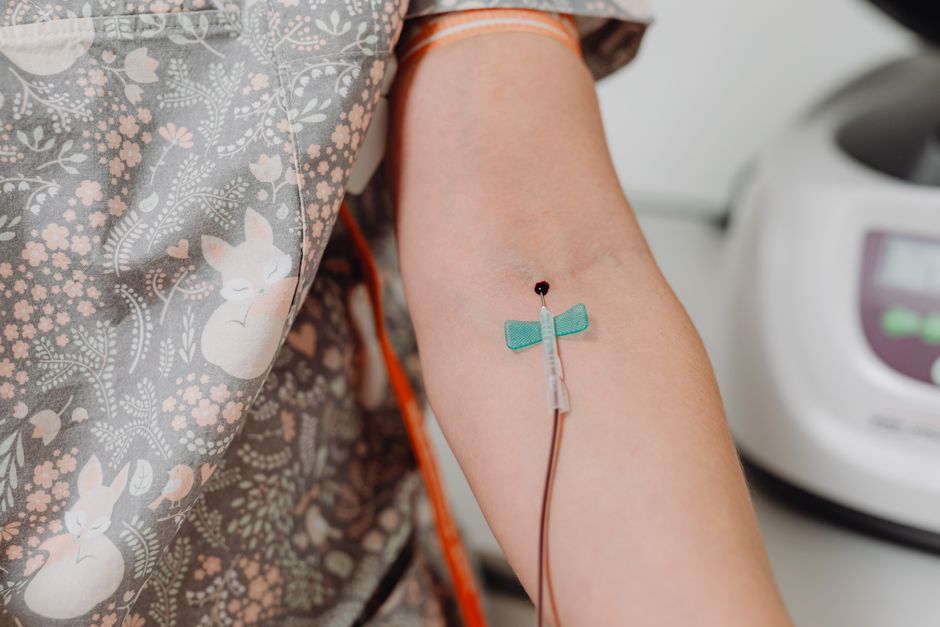
Blood platelets are small, disc-shaped cell fragments that circulate in your blood and help it clot. They are not whole cells. They are pieces of larger cells made in the bone marrow, and they contain no nucleus. When a blood vessel is injured, platelets rush to the site, stick together, and form a plug that helps stop the bleeding.
That plug is only the first step. Platelets also release chemical signals that trigger the clotting cascade and help repair the damaged vessel wall. Without enough platelets, you can bleed or bruise easily. With too many, or with platelets that clump when they should not, dangerous clots can form.
What Are Blood Platelets Made Of?
Platelets are produced in the bone marrow from very large cells called megakaryocytes. Each megakaryocyte is a single cell with many copies of its DNA, and it sheds thousands of small platelet fragments into the bloodstream.
Each platelet is a membrane-bound package packed with granules. These granules store proteins and other molecules that are released when the platelet is activated. Platelets also carry receptors on their surface that let them bind to damaged tissue and to each other.
A platelet has no nucleus, so it cannot divide or make new proteins in the way most cells can. It does contain mitochondria, which supply the energy it needs to change shape and release its granules. Platelets survive in the bloodstream for roughly 8 to 10 days before being cleared, mostly by the spleen.
The bone marrow constantly replaces them. This is why platelet counts can recover after a temporary dip, though the timeline depends on the cause.
What Is a Normal Platelet Count?
A normal platelet count is generally between 150,000 and 450,000 platelets per microliter of blood. This is the reference range used in most clinical laboratories, and it is measured with a routine blood test called a complete blood count, or CBC.
Counts outside this range are not automatically a problem. Many healthy people sit slightly above or below the standard range. What matters is the pattern, the direction of change over time, and whether there are symptoms.
| Platelet count (per microliter) | Term | General meaning |
|---|---|---|
| 150,000–450,000 | Normal | Typical reference range |
| Below 150,000 | Thrombocytopenia | Lower than normal |
| Above 450,000 | Thrombocytosis | Higher than normal |
Platelet counts can shift with infection, inflammation, pregnancy, certain medications, and iron deficiency. A single abnormal result usually prompts a repeat test rather than an immediate conclusion.
What Do Platelets Do in the Body?
Platelets do two main jobs: they stop bleeding, and they help the vessel wall repair itself.
When a blood vessel is cut or damaged, the exposed tissue triggers platelets to stick to the injury site. They flatten, spread out, and recruit more platelets. Together they form a temporary plug. At the same time, they release granules that start the clotting cascade, a chain of reactions that turns fibrinogen into fibrin threads. Fibrin makes the plug strong and permanent.
Platelets also play a role in wound healing and in the lining of blood vessels. They release growth factors that help tissue repair. This is part of normal physiology, not a special supplement effect.
One point worth clarifying: platelets are not the same as red or white blood cells. Red blood cells carry oxygen. White blood cells fight infection. Platelets are the clot-forming fragment, and the three are counted separately on a CBC.
What Happens When Platelet Levels Are Too Low?
When the platelet count drops below normal, the condition is called thrombocytopenia. Mild drops often cause no symptoms and are found on a routine blood test.
More significant drops can cause:
- Easy bruising
- Small red or purple spots on the skin, called petechiae
- Bleeding gums or nosebleeds
- Heavier or longer menstrual bleeding
- Blood in the stool or urine
Low platelets have many causes. The bone marrow may produce fewer of them. They may be destroyed faster than normal. They may be trapped in an enlarged spleen. Some medications, viral infections, heavy alcohol use, and certain autoimmune conditions can lower the count.
The severity depends on the number and the cause. A count that is mildly low is often monitored. A very low count needs evaluation, because the risk of serious bleeding rises as the number falls. Symptoms like bleeding that will not stop, blood in the stool, or a severe headache after a head injury are reasons to seek urgent medical care.
What Happens When Platelet Levels Are Too High?
A high platelet count is called thrombocytosis. There are two broad types.
Reactive thrombocytosis happens when something else raises the count. Infection, inflammation, iron deficiency, surgery, and some cancers can do this. In this type, the bone marrow is responding to a signal, and the platelets themselves usually work normally.
Essential thrombocythemia is a rare condition in which the bone marrow makes too many platelets on its own. This is a blood disorder that requires specialist care.
Many people with a high count have no symptoms. When symptoms do occur, they can include headache, dizziness, and in some cases bleeding or clotting problems. The risk depends heavily on the cause and the degree of elevation, so a high count should be evaluated rather than assumed harmless.
How Is Platelet Function Tested?
The first test is the platelet count from a CBC. If the count is abnormal, the next step is usually a blood smear, where a specialist looks at the platelets under a microscope to check their size and appearance.
Sometimes a low count on an automated machine is not real. Platelets can clump together in the test tube, and the machine counts the clumps as fewer individual platelets. This is a lab artifact, not a medical condition. A repeat test or a manual review usually clears it up.
When the count is normal but bleeding is unexplained, doctors may test platelet function. These tests check how well platelets stick and clump. They are used less often than the count and are ordered when there is a specific reason to suspect a function problem.
What Affects Platelet Health?
Platelet health is mostly a matter of the underlying conditions that affect the bone marrow and the blood. There is no proven diet or supplement that reliably raises or lowers platelet counts in otherwise healthy people.
Established factors that can affect platelets include:
- Certain medications, including some antibiotics, seizure drugs, and blood thinners
- Viral infections such as dengue and some others
- Heavy alcohol use
- Iron deficiency
- Autoimmune conditions
- Pregnancy, which can lower the count modestly
Some supplements and foods are marketed for platelet support. No clinical evidence currently confirms that these products change platelet counts in a meaningful way. The evidence here is limited, and anyone with an abnormal count should work with a clinician rather than self-treat.
For people with a known platelet disorder, avoiding unnecessary medications that affect clotting and following medical advice about bleeding precautions matters more than any dietary change.
When Should You See a Doctor About Platelets?
An abnormal platelet count on a blood test is a reason to follow up, not a reason to panic. Most abnormal results have a clear cause once evaluated.
Seek care promptly if you have unexplained bruising, bleeding that will not stop, blood in your stool or urine, or a severe headache after a head injury. These can be signs of a low platelet count that needs attention.
For a high count, ask your doctor whether it is reactive or due to a bone marrow disorder. The distinction changes what comes next.
Frequently Asked Questions
What are blood platelets?
Blood platelets are small cell fragments that circulate in the blood and help it clot. They are made in the bone marrow and contain no nucleus.
What is a normal platelet count?
A normal platelet count is generally 150,000 to 450,000 per microliter of blood. Slightly outside this range is not always a problem, so a single result is usually repeated or reviewed.
What causes low platelets?
Low platelets can come from reduced bone marrow production, faster destruction, trapping in an enlarged spleen, certain medications, viral infections, or autoimmune conditions. The cause determines the treatment.
Can you raise platelets with food or supplements?
No clinical evidence currently confirms that foods or supplements reliably raise platelet counts in otherwise healthy people. Anyone with an abnormal count should work with a clinician rather than self-treat.
