
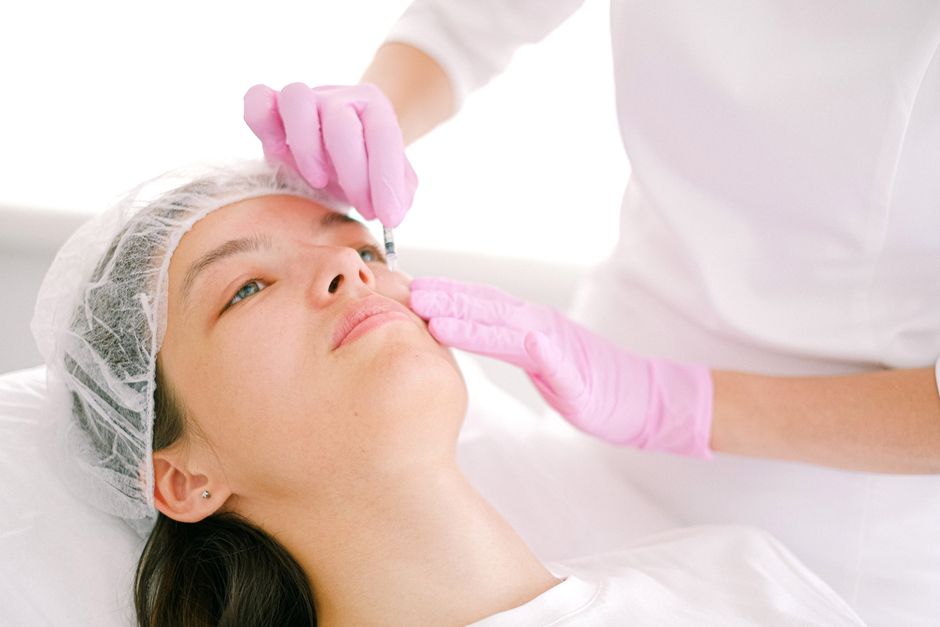
Biostimulator injections are a category of injectable treatments designed to trigger your body’s own collagen production rather than filling wrinkles with a gel-like substance. The most widely known types are poly-L-lactic acid (sold as Sculptra) and calcium hydroxylapatite (sold as Radiesse). A third category, polynucleotides, is used in some countries but is not approved in the United States. Unlike traditional hyaluronic acid fillers that add volume immediately, biostimulators work gradually by causing a controlled inflammatory response that prompts fibroblasts to lay down new collagen over weeks to months.
What Are Biostimulator Injections For Collagen?
Biostimulators are injectable substances that provoke a wound-healing response in the skin. The needle creates microscopic trauma, and the injected material amplifies that signal, drawing immune cells and fibroblasts to the area. Fibroblasts are the cells responsible for producing collagen, elastin, and other structural proteins in the dermis.
The result is new collagen deposited around the injected particles. Over time the carrier material is absorbed and broken down, leaving behind the collagen framework your body built. This is fundamentally different from hyaluronic acid fillers, which occupy space and hold water but do not stimulate meaningful new collagen production.
Two products dominate the US market. Poly-L-lactic acid has been used since the late 1990s, originally for facial wasting in people with HIV, and later approved for cosmetic use. Calcium hydroxylapatite is a mineral compound chemically similar to the mineral component of bone and teeth. Both are synthetic, biocompatible, and eventually metabolized by the body.
How Do Biostimulators Actually Build Collagen?
The process is a controlled inflammatory cascade. When the product is injected into the deep dermis or subcutaneous layer, the immune system recognizes foreign particles and sends macrophages to surround them. These macrophages release signaling molecules called cytokines that recruit fibroblasts.
Fibroblasts then synthesize type I and type III collagen, wrapping it around each particle. This is essentially the same repair process that occurs after any injury, but directed and sustained by the presence of the slowly degrading particles.
Collagen production does not happen overnight. Early collagen deposition begins within weeks, but meaningful visible change typically takes two to three months. The effect continues to build for several months after that as the particles break down and collagen continues to mature.
One detail that often surprises people: the particles themselves provide some immediate volume, but that volume fades as the carrier gel is absorbed. The lasting result comes from the collagen your body produces. This is why results look gradual and natural rather than sudden.
What Is the Difference Between Biostimulators and Traditional Fillers?
| Feature | Biostimulators | Hyaluronic Acid Fillers |
|---|---|---|
| Primary mechanism | Stimulates new collagen | Adds volume directly |
| Onset of results | Gradual, over weeks to months | Immediate |
| Duration | Often 1-2 years or longer | Typically 6-18 months depending on product and area |
| Reversibility | Not reversible with an enzyme | Reversible with hyaluronidase |
| Best suited for | Overall skin quality, diffuse volume loss | Targeted volume, specific folds, lips |
The reversibility difference matters. If a hyaluronic acid filler produces an unwanted result, a clinician can inject hyaluronidase to dissolve it. No equivalent reversal agent exists for biostimulators. Once injected, you wait for the material to break down naturally. This is a key reason some clinicians are conservative with biostimulators in first-time patients.
Biostimulators also tend to be better for global facial volume loss and skin laxity rather than for precise contouring. They are not appropriate for lips, and using them there is outside approved indications.
Who Is a Candidate for These Injections?
Biostimulators are generally considered for adults with mild to moderate facial volume loss and skin thinning, often related to aging. They are not intended for people seeking lip enhancement or correction of severe folds, where other approaches may work better.
They are not recommended during pregnancy or breastfeeding. No clinical guidelines exist for use in these populations, and treatment is generally deferred. People with active skin infections, certain autoimmune conditions, or a history of keloid scarring should discuss risks with a qualified clinician.
A thorough consultation matters more with biostimulators than with reversible fillers. Because the result cannot be undone, the injector’s experience and technique carry significant weight. The product must be placed at the correct depth and massaged properly afterward to reduce the risk of nodules.
What Are the Risks and Side Effects?
Common short-term effects include redness, swelling, bruising, and tenderness at injection sites. These typically resolve within days to a couple of weeks.
The most discussed complication is the formation of small bumps or nodules under the skin. These can appear weeks to months after treatment. Reported rates vary widely in the medical literature, and estimates differ by product, injection technique, and dilution protocol. Older techniques and higher concentrations were associated with more nodules. Current practice generally uses more dilute preparations and deeper placement, which appears to reduce the risk.
Other uncommon risks include granuloma formation, which is a more organized inflammatory reaction, and vascular occlusion if material is inadvertently injected into a blood vessel. Vascular occlusion is a rare but serious event that requires immediate medical attention.
No large long-term human trials have confirmed the safety of repeated treatments over many years. The evidence base for biostimulators is smaller than for hyaluronic acid fillers, which have a longer and broader safety record. This does not mean biostimulators are unsafe, but it does mean the long-term data are less complete.
How Long Do Results Last and How Many Sessions Are Needed?
Most protocols involve a series of sessions spaced several weeks apart rather than a single treatment. The exact number depends on the product, the area treated, and individual response. Many clinicians plan two to three sessions initially, with maintenance treatments later.
Results typically last one to two years, though this varies. Some people maintain results longer because the collagen they built persists even after the particles are gone. Others see gradual fading as natural aging continues.
It is difficult to predict individual response precisely. Collagen production varies with age, genetics, smoking status, and overall health. A clinician can give a reasonable estimate, but no method reliably predicts exactly how much collagen any given person will produce.
What Should You Know Before Considering Treatment?
Biostimulators are legitimate medical products with real evidence behind them, but they are not simple or risk-free. They require more planning, more patience, and more trust in your injector than reversible fillers.
Be skeptical of marketing that promises dramatic rejuvenation or describes these as a substitute for surgery. They address volume loss and skin quality, not sagging tissue. If your primary concern is significant facial laxity, biostimulators will not correct it.
Ask your clinician specific questions: Which product, and why? How many sessions? What is the plan if nodules develop? What is the cost, and is it per session or per vial? These are reasonable questions and any qualified provider should answer them clearly.
Finally, understand that “collagen stimulation” has become a marketing phrase applied to many things, including creams, supplements, and devices with far less evidence than injectable biostimulators. The injections discussed here are a specific, regulated category of medical treatment. The phrase alone does not guarantee a product works.
Frequently Asked Questions
Are biostimulator injections the same as dermal fillers?
No. Biostimulators trigger your body to produce new collagen over time, while traditional hyaluronic acid fillers add volume immediately. The two work through different mechanisms and have different onset times and durations.
How long does it take to see results from collagen biostimulators?
Early changes may appear within a few weeks, but meaningful visible results typically take two to three months and continue improving for several months. This gradual timeline reflects how long collagen remodeling takes.
Can biostimulator injections be reversed?
No. There is no enzyme or antidote that dissolves poly-L-lactic acid or calcium hydroxylapatite once injected. This is a key difference from hyaluronic acid fillers, which can be dissolved with hyaluronidase.
Are biostimulator injections safe for everyone?
They are not recommended during pregnancy or breastfeeding, and people with active infections or certain autoimmune conditions should consult a clinician first. The evidence base is smaller than for hyaluronic acid fillers, and long-term data on repeated use over many years are limited.
