
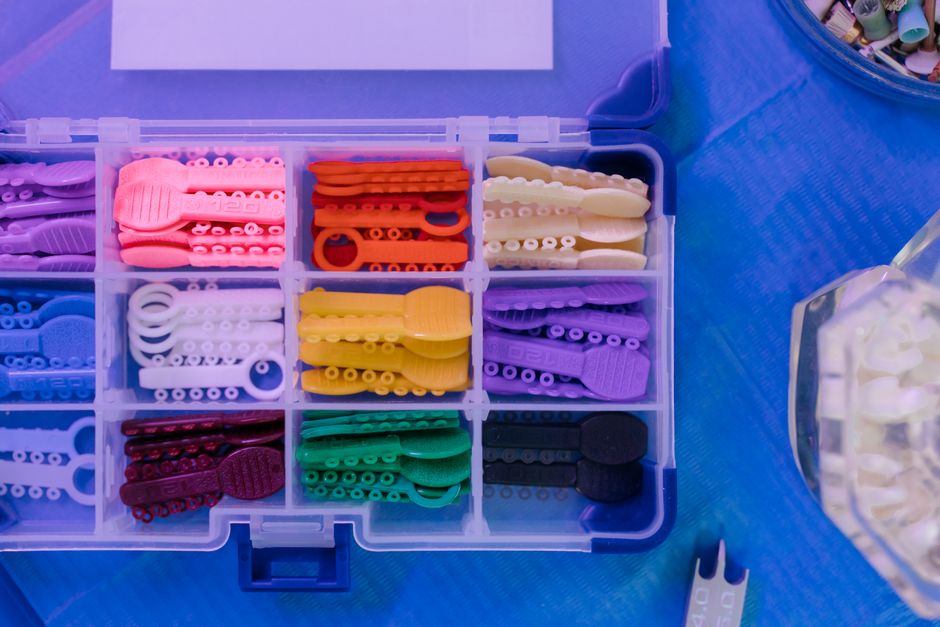
Bands for braces are small elastic rings, usually called orthodontic elastomeric ligatures, that fit around the brackets on your braces to hold the archwire in place. They are also called “o-rings” or “colors” because they come in many shades. These tiny rubber rings are one of the most visible parts of braces, and they are also one of the parts that need the most attention between visits.
If you have braces or are about to get them, you will hear the word “bands” used for more than one thing. That can be confusing. This article explains what bands are, how they work, and how they differ from the other bands your orthodontist may talk about.
What Are Bands For Braces?
Bands for braces are the elastic rings that snap around each bracket to keep the wire attached to the bracket. A bracket is the small square piece glued to each tooth. The archwire is the main wire that runs across your teeth. The elastic ring holds that wire inside the bracket slot.
They are made of a stretchy rubber-like material. Each ring is small, about the size of a pencil eraser or smaller depending on the bracket. Your orthodontist or assistant stretches one around each bracket at every adjustment visit.
The rings come in many colors and some are clear or tooth-colored. People often pick colors to match a season, a school, or a sports team. Color choice does not change how the braces work.
Why Are There Two Different Things Called Bands?
Orthodontists use the word “band” for two different parts of braces, and this is where a lot of confusion starts. The elastic rings around brackets are one meaning. The other meaning is metal bands that wrap all the way around a back tooth.
A metal band is a thin ring of stainless steel that goes around the entire tooth, like a belt. It is cemented in place and is usually used on the back molars to anchor other parts of the braces. These are not removable and are not the colorful rings most people mean when they talk about bands.
Some braces, called self-ligating braces, do not use elastic rings at all. They have a built-in clip or door on each bracket that holds the wire. If you have self-ligating braces, you will not have the small colored rings.
What Do Bands For Braces Actually Do?
The main job of the elastic ring is to hold the archwire inside the bracket slot. Without something holding the wire in place, the wire would slip out and the braces would not work.
The ring also adds a small amount of continuous pressure to the tooth. Orthodontists can change the tightness or the way the ring is placed to help guide a tooth in a certain direction. This is a small adjustment compared with the main force from the archwire, but it can matter for fine-tuning.
It helps to think of the wire as the engine and the elastic ring as the fastener. The wire does the real moving. The ring keeps everything connected so the wire can do its job.
Do Bands For Braces Hurt?
Bands for braces do not usually hurt when they are put on. Most people feel a little pressure or tightness, not sharp pain. The pressure is often strongest in the first day or two after an adjustment.
Some people feel mild soreness in their teeth after a new wire or new rings are placed. This is normal and usually fades within a few days. Over-the-counter pain relievers can help if needed, and your orthodontist can tell you which ones are appropriate for you.
One thing that can cause real discomfort is a ring that comes loose or breaks. A loose ring can let the wire poke your cheek or gum. If that happens, call your orthodontist. Do not try to fix it yourself with tools.
How Often Do Bands For Braces Need to Be Changed?
Bands for braces are usually changed at every adjustment visit. Orthodontists typically see patients every few weeks to check progress and make changes. The exact schedule depends on your treatment plan and your orthodontist’s approach.
The rings lose some stretch over time. They can also stain, especially if you eat foods that color them, like curry, coffee, or tomato sauce. Changing them at each visit keeps the pressure consistent and keeps your braces looking fresh.
If a ring breaks or falls off between visits, tell your orthodontist. A missing ring can slow down treatment or let the wire move out of place.
How Do You Take Care of Bands For Braces?
You do not need special products to care for the rings. Good brushing and flossing around the brackets is the main thing. Food and plaque can get trapped around the rings and brackets, which raises the risk of tooth decay and gum irritation.
Here are practical steps that help:
- Brush after meals and before bed, spending extra time around each bracket.
- Use a soft brush and angle it to clean under the wire and around the rings.
- Floss daily, using a floss threader or orthodontic floss if your orthodontist recommends it.
- Avoid hard, sticky foods that can break rings or brackets, like hard candy, ice, and sticky caramel.
- Keep your regular dental checkups during treatment.
Some people worry that colored rings stain their teeth. The rings themselves can stain, but they do not permanently stain teeth. Any staining on the teeth usually comes from plaque left around the brackets, not from the rings.
Can You Choose the Color of Your Bands?
Yes, in most cases you can choose the color of your bands. Many orthodontic offices let patients pick from a range of colors at each visit. Some people choose clear or tooth-colored rings to make the braces less noticeable.
Clear rings can show staining more easily than darker colors. That is a practical trade-off, not a health issue. If you want the least visible option, ask your orthodontist what they recommend for your brackets.
Color choice does not affect how fast your teeth move or how well the braces work. It is a personal preference.
What Should You Do If a Band Comes Off?
If a band comes off, call your orthodontist’s office. A missing ring is not an emergency in most cases, but it should be replaced so your treatment stays on track. The office can tell you whether you need to come in sooner or whether it can wait until your next scheduled visit.
If the wire is poking your cheek or gum, orthodontic wax can cover the end as a temporary measure. Your orthodontist can give you wax and show you how to use it. Do not cut or bend the wire yourself.
If a bracket comes loose along with the ring, that is more serious. A loose bracket can let a tooth move in the wrong direction. Call your orthodontist promptly so they can decide how soon you need to be seen.
Are Bands For Braces the Same as Rubber Bands?
No. Bands for braces around brackets are not the same as the rubber bands some people wear between their upper and lower jaws. Those are called elastics or interarch rubber bands, and they connect hooks on the braces to help correct the bite.
Elastics are usually worn for a set number of hours per day and removed for eating and brushing. They are larger than the small rings around brackets and serve a different purpose. If your orthodontist gives you elastics, follow their instructions closely, because skipping them can lengthen treatment.
So the word “bands” can mean three things in orthodontics: the small rings around brackets, the metal rings around back teeth, and the rubber bands worn between the jaws. Ask your orthodontist which one they mean if you are unsure.
Frequently Asked Questions
What are bands for braces made of?
Most are made of a stretchy elastomeric material, a type of rubber-like polymer. Some are latex-free for people with latex allergies.
Do bands for braces really work?
Yes, they hold the archwire in the bracket so the braces can move teeth. Without them, the wire would not stay in place.
How long do bands for braces last?
They are usually replaced at each adjustment visit, which is typically every few weeks. They can break or stain sooner, so tell your orthodontist if that happens.
Can you eat with bands for braces?
Yes, you can eat with the small rings on your brackets, but avoid hard and sticky foods that can break them. If you wear removable elastics between your jaws, follow your orthodontist’s instructions about when to take them out.
