
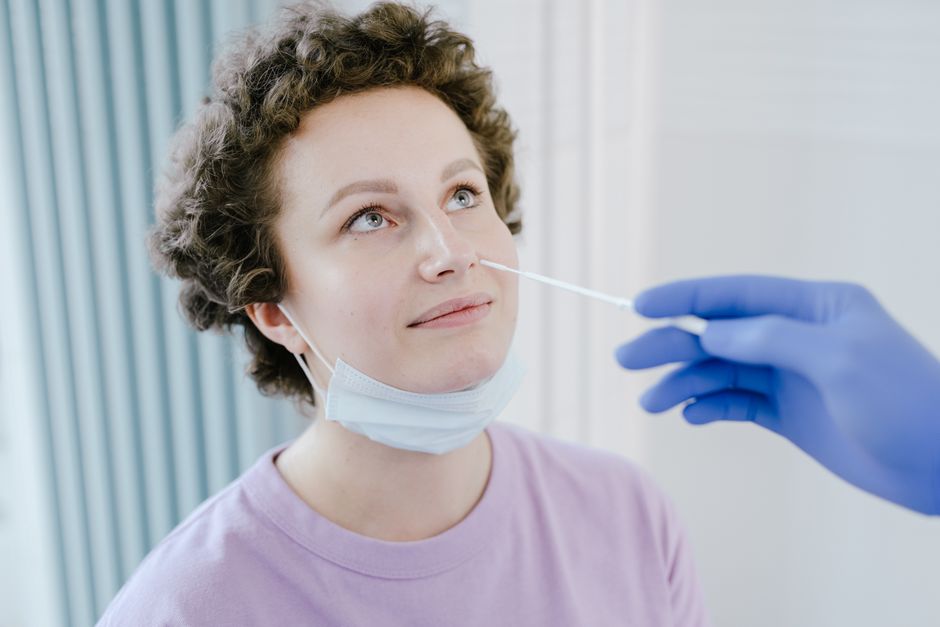
An STI test involves collecting a sample from the part of the body where the infection is likely to be, then testing that sample in a lab. The three main sample types are swabs (cells and fluid taken from the throat, genitals or rectum), blood (drawn from a vein in your arm), and urine (a first-catch sample collected in a cup). Which one you’re asked for depends on the infection being tested and the kind of sample the test can actually detect it in.
That last point matters more than most people realize. A urine test cannot detect every STI. A blood test cannot detect every STI. And a swab is only useful if it’s taken from the right place. Understanding what each method is for removes a lot of the confusion around testing.
What An STI Test Involves Swabs Blood Urine?
Each of the three methods works because it looks for a different kind of evidence in a different part of the body. The test is chosen to match where the organism lives and what can be reliably detected.
Swabs collect cells and fluid directly from a surface. For chlamydia and gonorrhea, a swab can be taken from the throat, rectum, cervix, urethra or vagina. Modern swabs are usually soft and thin, and many clinics let you collect a vaginal swab yourself in a private room. A swab can also collect visible discharge or sores for examination under a microscope or for culture.
Blood tests look for antibodies or genetic material from an infection circulating in your bloodstream. They are the standard method for HIV, syphilis and hepatitis B and C. These infections are not reliably detected in urine or a routine surface swab, which is why a blood draw is used.
Urine tests are used mainly for chlamydia and gonorrhea in people with a penis. The sample needs to be first-catch urine — the first part of the stream, not midstream. That’s because the organism is most concentrated near the urethral opening, and a midstream sample dilutes it. For people with a vagina, urine is less reliable for these infections, so a vaginal swab is generally preferred.
One clarification that surprises people: a standard urine test ordered for an STI check is not the same as a urine test ordered for a urinary tract infection. They are different tests looking for different organisms. A negative UTI test does not rule out chlamydia or gonorrhea.
Which STIs Are Tested With Which Sample?
The method follows the biology of the infection. Some organisms live on mucosal surfaces, some circulate in the blood, and some can be found in both.
Chlamydia and gonorrhea are bacterial infections of mucous membranes. They can be detected by nucleic acid amplification testing — often called NAAT — which looks for the organism’s genetic material. This can be done on a urine sample or a swab, depending on the site and the person.
HIV, syphilis and hepatitis B and C are detected by blood tests. Syphilis testing usually involves a screening test followed by a confirmatory test. HIV testing looks for antibodies and, in some tests, viral antigens. Hepatitis testing looks for antibodies, antigens or viral genetic material depending on the test used.
Trichomoniasis is often detected by a swab or a urine sample, and sometimes by examining fluid under a microscope. Herpes is best confirmed by swabbing an active sore, because a blood test only shows past exposure and cannot tell you whether a particular sore is herpes.
Here is how the main methods compare:
| Sample type | Commonly used for | How it’s collected |
|---|---|---|
| Urine (first-catch) | Chlamydia, gonorrhea (mainly in people with a penis) | You collect the first part of your urine stream in a cup |
| Swab | Chlamydia, gonorrhea (throat, rectum, cervix, vagina), herpes sores, trichomoniasis | Soft swab brushed against the site; often self-collected for vaginal samples |
| Blood | HIV, syphilis, hepatitis B and C | Drawn from a vein in your arm by a clinician |
This is why a full STI screen often involves more than one sample. No single sample type covers everything.
What Actually Happens During the Appointment?
The appointment is usually shorter and less uncomfortable than people expect. Most of it is conversation, not sampling.
You’ll be asked about your sexual history — what kinds of sex you’ve had, whether you use condoms, and whether you have symptoms. These questions are not judgment. They determine which sites need testing. A throat swab may be recommended if you’ve had oral sex, for example, because a urine test will not detect a throat infection.
Then the samples are collected. A blood draw takes a minute or two. A urine sample you collect yourself in a private bathroom. Swabs depend on the site — a vaginal swab is often self-collected, while throat and rectal swabs may be taken by a clinician or self-collected depending on the clinic.
Most results come back within a few days to about a week, though some rapid tests give results the same day. Clinics vary, so ask when to expect yours. If a result is positive, treatment is usually straightforward and the clinic will discuss it with you.
Does a Urine Test Detect Every STI?
No. A urine test detects only the infections it is designed to look for, and it is not equally reliable for every infection or every person.
Urine testing is well established for chlamydia and gonorrhea in people with a penis. For people with a vagina, a vaginal swab is generally more sensitive for these infections, which is why many guidelines favor swabs in that group.
Urine testing is not used to detect HIV, syphilis or hepatitis. Those require a blood test. So if you’ve only ever given a urine sample at a check-up, you may not have been tested for those infections at all.
This is one of the most common misunderstandings about STI testing. People assume a “full screen” is a single test. In practice, a complete screen combines several sample types to cover the range of infections.
How Accurate Are These Tests?
Accuracy depends on the infection, the test type, the sample site and how recently you may have been exposed. No test is perfect, and timing matters as much as the method.
Nucleic acid amplification tests for chlamydia and gonorrhea are highly sensitive and specific when used on the right sample from the right site. That means they rarely miss an infection or produce a false positive — but “right site” is doing real work in that sentence. A urine test will not pick up a throat infection, no matter how good the test is.
Blood tests for HIV and syphilis are generally reliable, but there is a window period after exposure during which a test may not yet detect the infection. Your body needs time to produce antibodies or reach detectable levels of the organism. Testing too early can give a negative result that is not yet meaningful. The length of that window varies by infection and by the specific test used, so ask the clinic what applies to your situation.
Swabs of active sores can confirm herpes, but a negative swab does not always rule it out if the sore has already begun healing. This is a case where the timing of the swab affects the result.
What Should You Do Before and After Testing?
Preparation is simple, but a few details affect sample quality. For a first-catch urine test, avoid urinating for about an hour or two before the sample if the clinic advises it, and collect the very start of the stream. Follow whatever instructions your clinic gives, since protocols differ.
Tell the clinic about any symptoms — discharge, sores, pain when urinating, or unusual bleeding. Symptoms change which sites get swabbed. If you have a visible sore, mention it, because swabbing it directly is the most reliable way to identify the cause.
After testing, if you receive a positive result, follow the treatment advice and ask about retesting. Some infections require a test of cure, and some do not. Ask whether your partners need testing and treatment as well — for several infections, treating partners is part of breaking the cycle of reinfection.
Testing is a routine health check, not a verdict. The purpose of matching the right sample to the right infection is simply to get an accurate answer, and that starts with knowing which test you’re actually having.
Frequently Asked Questions
Can I get tested for STIs with just a urine sample?
A urine sample can detect chlamydia and gonorrhea, mainly in people with a penis, but it cannot detect HIV, syphilis or hepatitis. A full screen usually needs a blood test and sometimes a swab as well.
Is a swab test painful?
Most swabs cause brief discomfort rather than pain, and vaginal swabs are often self-collected. Throat and rectal swabs may feel odd for a second but are quick.
How long after exposure should I get tested?
It depends on the infection, because each has a different window period before a test can detect it. Ask your clinic what timing applies to the specific tests you’re having.
Do I need to fast or prepare for an STI blood test?
No fasting is needed for routine STI blood tests. For a urine test, follow the clinic’s instructions on timing and collect the first part of your stream.
