
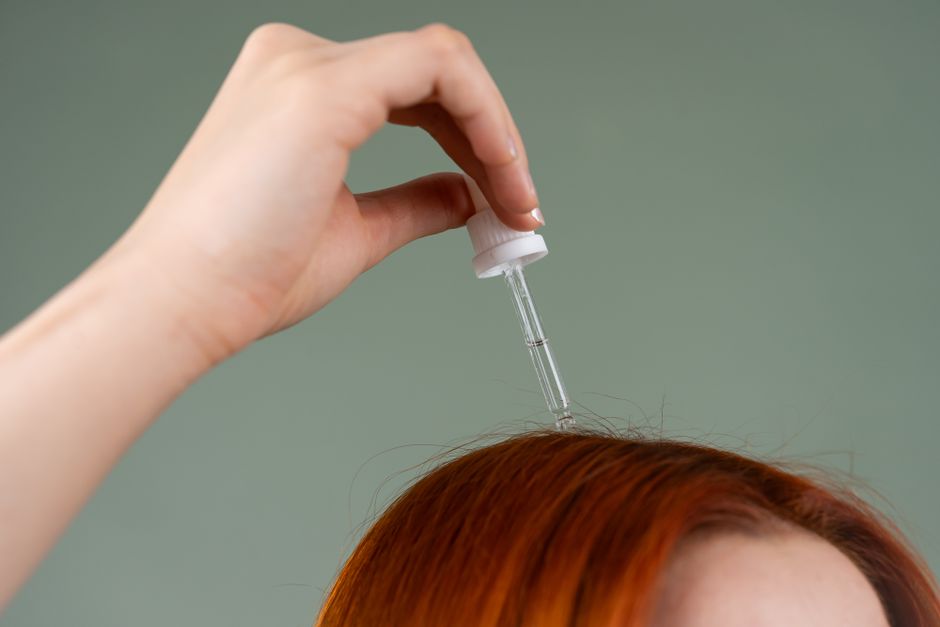
Hair loss during menopause is common, and it is driven mostly by shifting hormones rather than by anything you are doing wrong. The single most effective step is getting an accurate diagnosis, because menopause-related thinning, female pattern hair loss, thyroid problems, iron deficiency, and telogen effluvium can all look similar but need different responses. What actually helps falls into a few evidence-supported categories: treating any underlying medical cause, using proven medications such as minoxidil where appropriate, and supporting hair with adequate nutrition and gentle handling. Most over-the-counter “menopause hair” supplements have no strong human evidence behind them.
Why does hair thin during menopause?
Hair thinning around menopause is largely a hormonal story, and the hormones involved are androgens and estrogen, not just “aging.”
Estrogen appears to help keep hair in its growth phase longer. As estrogen levels fall during the menopausal transition, the balance shifts, and some hair follicles spend less time growing and more time resting before shedding. At the same time, androgens (male-type hormones that women also produce) can gradually shrink hair follicles on the scalp in people who are genetically prone to it. This is the same process behind female pattern hair loss, which often speeds up around menopause.
Two things are worth separating. First, the diffuse shedding many women notice during perimenopause is often temporary and linked to hormonal fluctuation or a stress trigger. Second, the gradual widening of the part and thinning at the crown is more consistent with pattern hair loss, which tends to be progressive without treatment. They can happen at the same time.
It is also easy to blame menopause for hair loss that has another cause. Thyroid disease, iron deficiency, and several medications are all more common in this age group and all cause thinning. A dermatologist can usually tell the difference with a focused history and, sometimes, a scalp exam or blood tests.
What actually helps hair loss during menopause?
The approaches with the most reliable evidence are medical treatments and correcting underlying causes, not supplements or shampoos.
Minoxidil is the best-studied topical treatment for female pattern hair loss. It is available over the counter in the US as a 2% or 5% topical solution or foam. Research consistently shows it can slow shedding and, in some women, regrow hair, though results vary and it must be used ongoing to maintain benefit. It is not a quick fix; visible change typically takes several months. Oral minoxidil is also used by some clinicians at low doses, but that is a prescription decision made with a doctor.
Spironolactone is a prescription oral medication some dermatologists use for androgen-related hair loss in women. The evidence is encouraging but less definitive than for minoxidil, and it is generally avoided in pregnancy. This is a decision for a clinician, not a self-treatment.
Correcting an underlying cause matters more than many people realize. If blood tests show low iron stores or an underactive thyroid, treating that can improve shedding. This is one of the clearest, most evidence-based steps, and it is why testing comes before guessing.
What does not have strong human evidence: most hair supplements marketed to menopausal women, biotin (unless you are genuinely deficient), and special shampoos. Biotin in particular is widely sold, but no good evidence shows it helps hair growth in people who are not deficient. It can also interfere with certain lab tests, which is a real practical concern.
Does hormone therapy help menopausal hair loss?
Hormone therapy is not a proven hair-loss treatment, and the evidence here is genuinely limited.
Because estrogen appears to support hair growth, it is reasonable to ask whether replacing it helps. Some women report that their hair feels fuller on hormone therapy, and some clinicians observe improvement. But this is largely based on mechanism and observation, not on large controlled trials designed to measure hair growth. The evidence is not strong enough to recommend hormone therapy as a hair-loss treatment.
Hormone therapy carries its own risk profile that depends on your personal health history, and those risks should be weighed for their established purposes, not for hair. If you are already considering hormone therapy for menopausal symptoms, hair changes are worth mentioning to your clinician, but they should not be the deciding factor.
What role does nutrition play?
Nutrition matters mainly when you are actually deficient in something. For most well-nourished women, adding more supplements does not regrow hair.
The nutrients most tied to hair are protein, iron, zinc, and vitamin D. Severe protein restriction and iron deficiency are both linked to shedding. But “more” is not better. Taking high-dose supplements you do not need does not help and can cause problems. Zinc in particular can cause harm in excess.
The practical approach is testing, not guessing. If you have heavy periods, a restricted diet, or digestive issues that affect absorption, low iron is more likely and worth checking. A clinician can order ferritin (stored iron), thyroid function, and a basic panel. Treating a documented deficiency is well supported. Taking supplements “just in case” is not.
A normal, varied diet with adequate protein supports hair like it supports the rest of the body. That is a modest, honest statement, not a marketing one.
Do hair supplements and special shampoos work?
No strong human evidence shows that the popular menopause hair supplements or thickening shampoos regrow hair, and this is one area where marketing runs well ahead of the science.
Many supplements combine biotin, collagen, vitamins, and herbal extracts. Some small studies suggest possible benefit for specific ingredients, but the evidence is weak and inconsistent, and the products are rarely tested as a whole. Shampoos and conditioners can make hair look and feel thicker by coating the shaft, which is a cosmetic effect, not new growth. That is not nothing if appearance matters to you, but it is not a treatment.
Be cautious with products making bold claims. “Supports healthy hair” is not the same as “regrows hair,” and no supplement is a substitute for treating a real cause or using a proven treatment when one is appropriate.
What can you do day to day to protect the hair you have?
Gentle handling and realistic expectations reduce avoidable breakage and help you track what is actually happening.
- Avoid tight hairstyles, harsh brushing on wet hair, and frequent heat or chemical treatment, all of which cause breakage that can look like thinning.
- Do not stop a proven treatment early. Minoxidil and similar approaches take months to show change, and stopping abruptly can trigger shedding.
- Take photos in similar lighting every few months. This is more reliable than judging by feel, because hair changes slowly.
- See a dermatologist if thinning is rapid, patchy, or accompanied by scalp symptoms. Rapid or patchy loss has different causes and needs a proper look.
One clarification worth knowing: shedding more than usual for a few weeks is often temporary and linked to a trigger like illness, stress, or a change in hormones. Gradual thinning over months is a different pattern and more often reflects pattern hair loss. The distinction guides what to do next.
When should you see a doctor about menopausal hair loss?
See a clinician if the thinning is rapid, patchy, or comes with scalp itching, redness, or scaling, because those patterns point to causes beyond hormones.
Also seek evaluation if you notice other symptoms like fatigue, unusual weight change, or irregular periods, which can signal thyroid or other issues. And if over-the-counter approaches have not helped after several months, a dermatologist can confirm the type of hair loss and discuss prescription options. Getting the diagnosis right is the step that makes everything else work.
Frequently Asked Questions
Does menopause cause permanent hair loss?
Menopause itself does not make hair loss permanent, but the pattern hair loss that often speeds up around this time tends to be progressive without treatment. It can be managed, and in some cases partially reversed, with proven treatments and by correcting underlying causes.
Is biotin good for menopausal hair loss?
Biotin only helps if you are genuinely deficient, and no good evidence shows it regrows hair in people who are not. It can also interfere with certain lab tests, so tell your doctor if you take it.
Will hormone therapy stop my hair from thinning?
The evidence does not show that hormone therapy reliably treats hair loss, so it should not be used for that purpose. Any decision about hormone therapy should be based on its established benefits and risks for your situation.
How long does it take to see results from hair loss treatment?
Visible change from proven treatments like minoxidil usually takes several months, and results vary between people. Consistency matters, because stopping early often means losing any gain.
