
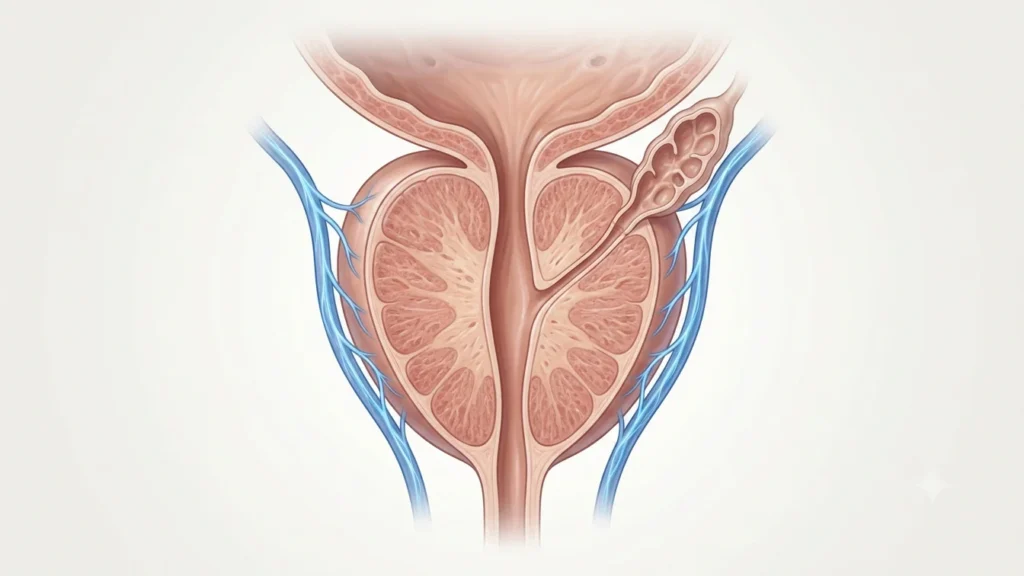
Prostate removal changes your body. That’s the truth. Most men going into this surgery want one thing — a straight answer about what comes next. This article gives you that. No scare tactics. No glossing over the hard parts.
Here are the real side effects of prostate removal: what usually goes away, what takes longer, and what stays for good.
The Two Side Effects of Prostate Removal Most Men Face First
Almost every man after prostate removal deals with two things early on: bladder leakage and erection changes. Both show up quickly. Both are manageable.
Bladder leakage catches many men off guard. The prostate sits right at the base of the bladder. When it’s removed, the muscles that hold urine get disturbed. Coughing, sneezing, or standing up quickly can cause leaks.
It gets better for most men. The first 3 to 12 months bring steady improvement. Pelvic floor exercises — Kegel exercises — help the muscles recover faster. Most urology teams recommend starting them before surgery even begins.
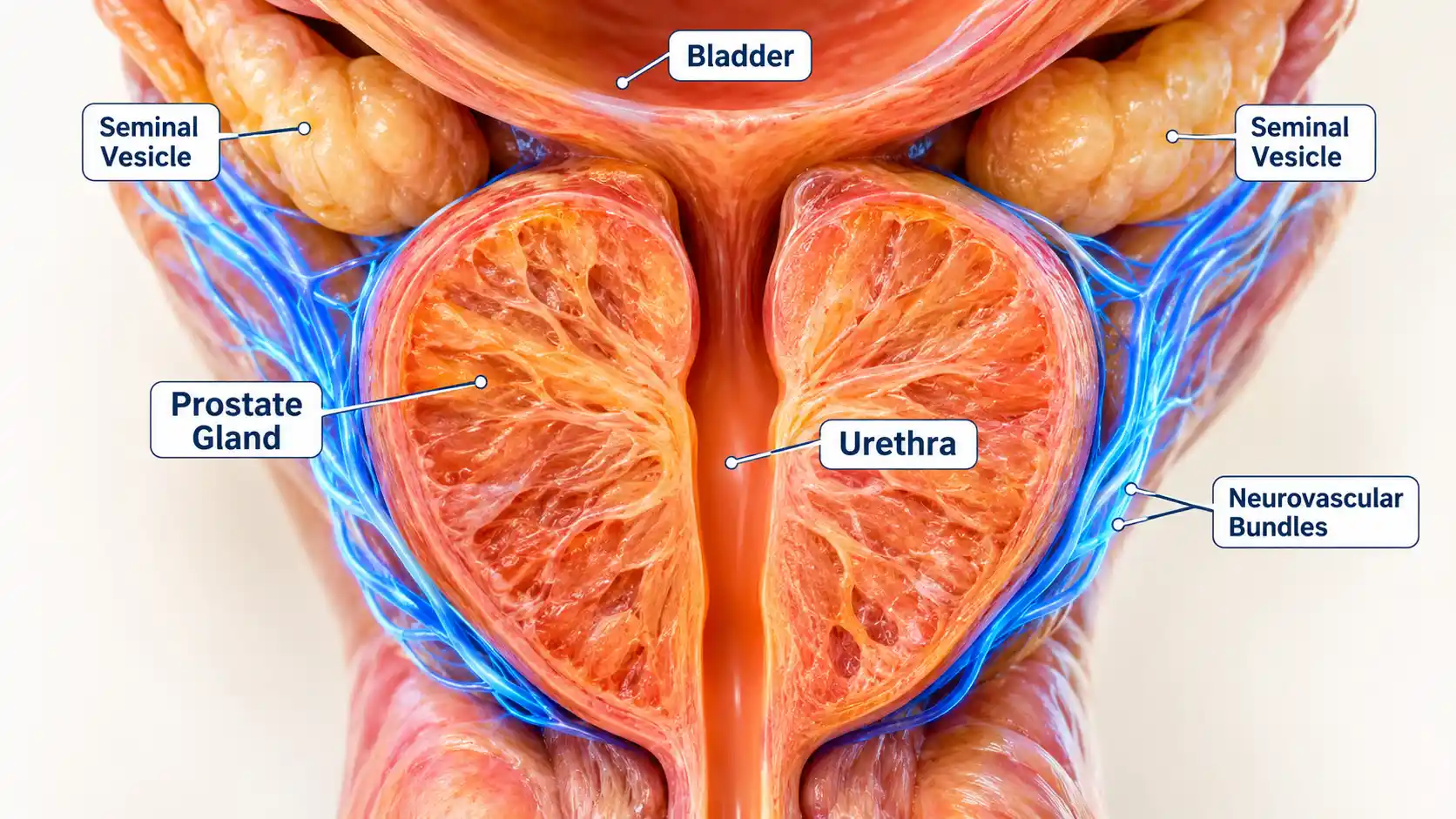
Erection problems are the other early concern. The nerves that trigger erections run right alongside the prostate.1Cavernous Nerve Injury Resulted Erectile Dysfunction and Regeneration, PubMed Central.↓ Even in a careful surgery, those nerves can get bruised or stretched.
Erections do return for many men — but it takes time. Sometimes 6 months. Sometimes 2 to 3 years. The best outcomes belong to men who had strong erections before surgery and whose nerve bundles were fully preserved during the operation.
Talk to your surgeon about nerve-sparing techniques before you go in. It’s one of the most important questions you can ask.
Permanent Side Effects of Prostate Removal Most Articles Don’t Mention
Some side effects go away. These don’t.
Most articles focus on the temporary ones — bladder leaks, erection timelines. But a few changes after prostate removal stay for life. Men deserve to know about them before surgery, not after.
- Infertility is permanent. There is no way to father children naturally after full prostate removal. The surgical pathway for sperm is gone. If fathering children is still a goal, sperm banking before surgery is the only option.
- Dry orgasm is permanent. The glands that produce semen fluid are removed during surgery. Ejaculation does not return. This isn’t a recovery issue—it’s a structural change.
- Long-term erection problems affect a portion of men. For most, erections improve over time. But some men — especially older men or those for whom nerve-sparing wasn’t possible — face ongoing erectile dysfunction. Treatments like medication, vacuum devices, or surgical implants can still help significantly.
- Lymphedema is less common but worth knowing about. If nearby lymph nodes are removed during surgery — which happens when cancer may have spread — fluid can build up in the legs or groin. This swelling can be ongoing and needs consistent management.
- Higher risk of inguinal hernia. This one rarely appears in mainstream articles. Men who have had a prostatectomy face a higher chance of developing an inguinal hernia — a bulge in the groin — in the years following surgery. It is not dangerous, but it can require a follow-up procedure.
No side effect from prostate removal is life-threatening. But knowing which changes are permanent helps men make better decisions — about surgery, about recovery, and about life after.
The Emotional Side Effects of Prostate Removal Nobody Talks About
Surgery changes the body. It also changes the mind. Most articles focus on the physical side effects. But the emotional ones are just as real — and far less discussed.
Many men feel a quiet loss after prostate removal. Erections, ejaculation, bladder control — these are tied to how a man sees himself. When they change, it affects confidence and self-image in ways that catch men off guard.
Depression and anxiety are common after prostate removal. Research shows prostate cancer survivors face some of the highest rates of emotional distress among all cancer types.2Psychological Distress among Prostate Cancer Patients: Fact Or Fiction?, https://doi.org/10.4137/cmo.s955↓ Sleep problems, low motivation, and withdrawal from relationships often follow.
Partners feel it too. Changes in sexual function and self-confidence create strain — especially when neither partner knows how to talk about it. Couples who address these changes together tend to cope much better than those who stay silent.
This is not weakness. It is a normal response to a major life change.
Talking to a counselor, joining a support group, or connecting with other men who’ve been through it makes a real difference. Many men say the emotional recovery was harder than the physical one — and also more rewarding once they found the right support.
How Long Do Side Effects of Prostate Removal Last?
Recovery doesn’t happen all at once. It moves in stages — and knowing the timeline makes it easier to manage.
- First 4 to 6 weeks: Bladder leakage is usually at its worst. Many men rely on pads during this period. Erections are unlikely. Energy is low. The body is focused entirely on healing.
- 3 to 6 months: Bladder control starts improving for most men. Some stop needing pads around this time. Early signs of erection recovery may appear, particularly with help from medications.
- 6 to 12 months: Bladder control is significantly better for the majority of men. Most men start to feel like themselves again.
- 1 to 3 years: Full erection recovery, if it’s going to happen, usually occurs within this window. By year three, most men have settled into a stable new normal.
A small number of men still deal with bladder leakage or erection problems beyond three years. That doesn’t mean nothing can be done — it means additional treatments are worth exploring with a specialist.
These timelines are general patterns, not guaranteed outcomes. Age, overall health, and the experience of the surgical team all play a role.
What Actually Helps Recovery After Prostate Removal
You’re not powerless in this recovery. Several things genuinely make a difference.
If you experience unexpected or worsening symptoms during recovery — severe pain, blood in urine, fever, or difficulty urinating — contact your healthcare professional promptly. Do not wait.
Side Effects of Prostate Removal vs. Radiation Therapy
Both treatments work. But the side effects are different — and the right choice depends on the individual.
Surgery tends to cause more immediate urinary side effects. Radiation tends to cause more bowel-related problems, and its urinary effects can appear years later. Here’s a direct comparison:
| Side Effect | Prostate Removal (Surgery) | Radiation Therapy |
|---|---|---|
| Urinary incontinence | Common, starts early after surgery | Less common early; may develop years later |
| Erectile dysfunction | Common; recovery possible over 1–3 years | Develops more gradually; long-term risk is similar |
| Dry orgasm | Permanent | Rare |
| Bowel problems | Rare | More common (irritation, loose stools) |
| Infertility | Permanent | Likely permanent |
| Recovery time | 6–12 weeks | Ongoing sessions over several weeks |
Talk to both a urologist and an oncologist before deciding. Having both perspectives leads to a better, more informed decision.
Pros & Cons
- Removes the entire cancer in one procedure
- Clear treatment endpoint — no ongoing sessions
- PSA monitoring after surgery is simple and reliable
- Most side effects improve significantly over time
- Highly effective for localized prostate cancer
- Permanent infertility
- Permanent dry orgasm — no ejaculation
- Risk of long-term erectile dysfunction
- Bladder leakage during and after recovery
- Increased risk of inguinal hernia
- Significant emotional and psychological impact
Frequently Asked Questions
Scientific References
- 1Cavernous Nerve Injury Resulted Erectile Dysfunction and Regeneration, PubMed Central. ↩︎
- 2Psychological Distress among Prostate Cancer Patients: Fact Or Fiction?, https://doi.org/10.4137/cmo.s955 ↩︎
