
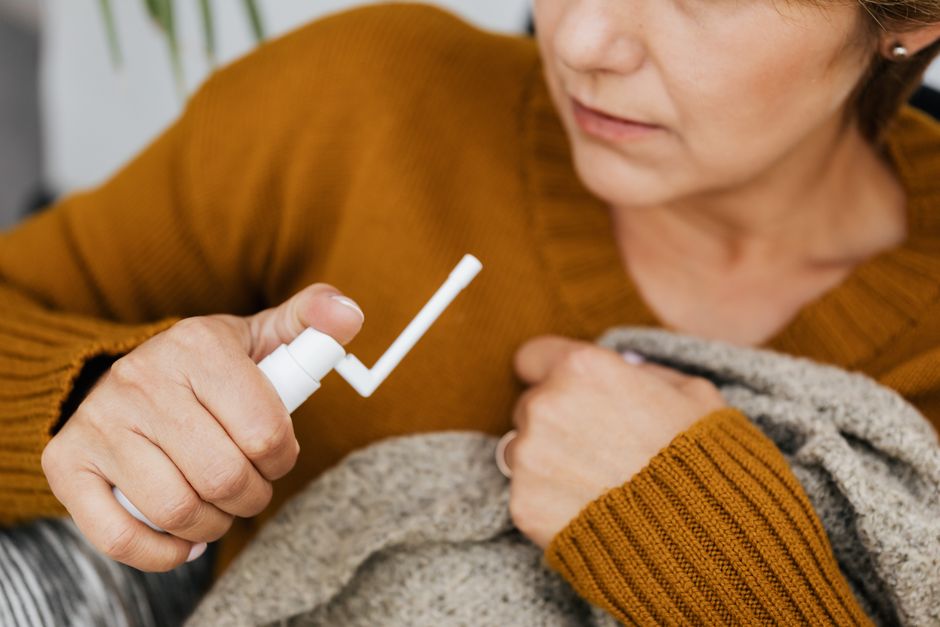
Saline spray does not stop a nosebleed that is still actively bleeding, and it is not a first-aid step. Its real role comes afterward — once the bleeding has stopped, keeping the inside of the nose moist can help prevent the dry, crusted tissue that makes another bleed more likely. If you are bleeding right now, pinch and lean forward first. Save the saline for later.
What Actually Stops a Nosebleed?
Pressure and position. That is the whole first-aid protocol, and it works for most everyday nosebleeds.
Sit upright and lean slightly forward. Leaning back sends blood down the throat, which can cause nausea and makes it hard to judge how much you are losing. Pinch the soft part of your nose — the fleshy section below the bony bridge — between your thumb and index finger. Breathe through your mouth. Hold steady pressure without letting go to check.
Most nosebleeds from the front of the nose stop within a few minutes of continuous pressure. Front nosebleeds, called anterior epistaxis, start from a dense network of small vessels on the septum known as Kiesselbach’s plexus. This area sits close to the surface, so it dries out easily and bleeds readily. The vast majority of nosebleeds originate here.
Saline spray plays no part in this step. A spray cannot compress a bleeding vessel, and spraying into an actively bleeding nose may disturb a forming clot.
Why Saline Spray Gets Recommended After a Nosebleed
Once the bleeding stops, the lining of the nose is often dry, irritated, and scabbed. That environment sets the stage for the next bleed.
Saline — a mild saltwater solution — adds moisture to nasal tissue. Keeping the nasal lining moist helps it heal and may reduce the crusting that leads to repeat bleeding. This is the logic behind using saline after a nosebleed, and it is a reasonable one.
What is the actual evidence? Here is where honesty matters. Saline nasal sprays are widely used and generally well tolerated, and they are a standard part of nasal care. But large, well-controlled trials specifically testing whether saline spray prevents future nosebleeds are limited. Much of the support comes from general nasal-moisture research and clinical practice rather than from dedicated nosebleed prevention trials.
So the fair statement is this: saline is a low-risk way to keep the nose moist, and moisture matters for healing. Whether it specifically lowers your rate of repeat nosebleeds is not firmly established by strong trial evidence.
Should I Use Saline Spray After a Nosebleed or Something Else?
Saline is one option among several, and for many people it is a sensible one because it is gentle and does not sting.
Other approaches that add moisture or protect the nasal lining include:
- A thin layer of petroleum jelly or a water-based nasal ointment applied just inside the nostrils
- A humidifier in the bedroom, especially in dry climates or during winter heating
- Drinking enough fluids to stay hydrated
- Avoiding dry, heated indoor air when possible
Some clinicians recommend saline, some recommend ointments, and some recommend both. The choice often comes down to what feels comfortable and what you will actually use. There is no strong evidence that one moisturizing method clearly beats the others for preventing nosebleeds.
If you use a medicated nasal spray — such as a steroid spray for allergies — that is a different product with different purposes. Do not assume a medicated spray and a saline spray are interchangeable.





How Should You Use Saline Spray Safely?
Use saline only after the bleeding has fully stopped, not during an active bleed.
General guidance for saline nasal spray:
- Blow your nose gently first if it is not tender
- Insert the nozzle just inside the nostril, aiming slightly outward toward the side wall rather than straight up the middle
- Spray while breathing in gently through the nose
- Wipe the nozzle clean after each use
- Do not share a bottle with anyone else
Saline sprays are generally considered safe for regular use, and they do not contain the rebound-congestion risk that medicated decongestant sprays carry. That said, no product is right for everyone. If you have had nasal surgery, a recent injury, or a known bleeding disorder, ask your clinician before starting any nasal product.
One non-obvious point: saline comes in different forms — isotonic (roughly the salt concentration of your body) and hypertonic (saltier). Both are used, and both can help with moisture and congestion. For simple post-nosebleed moisture, either may work. If you are unsure which to choose, that is a reasonable question for a pharmacist.
When a Nosebleed Is Not Routine
Most nosebleeds are minor. Some are not, and knowing the difference matters.
Seek medical care if:
- Bleeding does not stop after about 15 to 20 minutes of continuous pressure
- Blood loss is heavy or you feel faint, weak, or short of breath
- The nosebleed follows a head injury or a fall
- You are taking blood thinners or have a bleeding disorder
- Nosebleeds keep returning frequently
- You also have unusual bruising or bleeding elsewhere
Bleeding that starts far back in the nose — posterior epistaxis — tends to be heavier and harder to control with pinching. It is more common in older adults and can be serious. This type usually needs medical treatment and is not something saline spray addresses.
Frequent nosebleeds also deserve a medical look. They can stem from dry air and nose-picking, but they can also relate to high blood pressure, blood-clotting problems, or other conditions. A clinician can sort out which is which.
What Causes Nosebleeds in the First Place?
Dry air is the most common trigger. Low humidity dries the nasal lining, which cracks and bleeds. Winter heating and arid climates both drive this.
Other common causes include:
- Nose-picking or blowing the nose forcefully
- Colds, allergies, and sinus infections that irritate the lining
- Nasal steroid sprays used incorrectly or too often
- Blood-thinning medications such as aspirin or warfarin
- Injuries to the nose or face
- Structural issues like a deviated septum
Understanding your trigger helps you prevent the next one. If dry air is your problem, moisture — from saline, ointments, or a humidifier — targets the root cause rather than just the symptom.
Preventing the Next Nosebleed
Prevention is where moisture habits pay off. Keeping the nasal lining from drying out is the single most practical step for people who get repeat nosebleeds.
Practical measures:
- Keep indoor air from getting too dry — a humidifier helps in winter
- Use saline or a nasal ointment to keep the lining moist
- Trim fingernails and avoid picking
- Blow your nose gently, one nostril at a time
- Use nasal steroid sprays as directed, aiming away from the septum
None of these is a guaranteed fix, and none is a substitute for medical care if bleeding is heavy or frequent. They are reasonable, low-risk habits supported by the basic physiology of how the nose heals.
Frequently Asked Questions
Does saline spray stop a nosebleed?
No. Saline spray does not stop active bleeding because it cannot compress a blood vessel. Use pressure and a forward lean to stop the bleed, then use saline afterward to keep the nose moist.
How soon after a nosebleed can I use saline spray?
Wait until the bleeding has completely stopped, since spraying too early can disturb the forming clot. Once bleeding has stopped, gentle saline use is generally considered safe.
Can saline spray prevent nosebleeds from coming back?
Keeping the nasal lining moist may reduce the dryness and crusting that lead to repeat bleeds, but strong trial evidence that saline specifically prevents nosebleeds is limited. It is a low-risk moisture option, not a proven prevention treatment.
When should I see a doctor for a nosebleed?
Get medical care if bleeding does not stop after about 15 to 20 minutes of pressure, if it follows a head injury, or if you take blood thinners or feel faint. Frequent or heavy nosebleeds also warrant a medical evaluation.
