
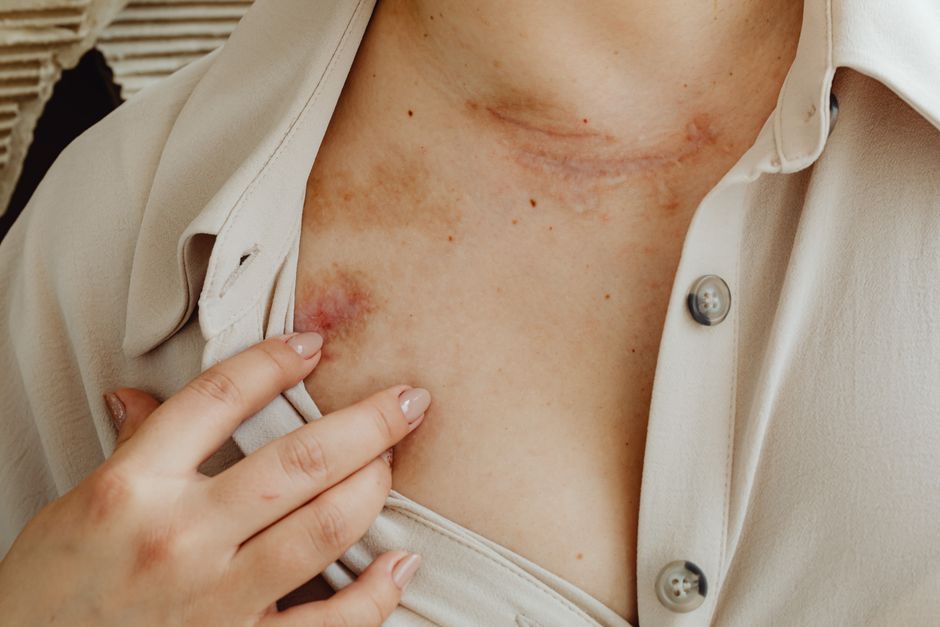
Picking at a scab feels satisfying for about two seconds. Then it bleeds again, and the healing clock resets. The short answer: leave it alone. A scab is not dried-up junk sitting on your skin — it is a working bandage your body built on purpose, and pulling it off tears open the repair job underneath.
That said, there are real exceptions. A scab that traps pus, cracks and bleeds repeatedly, or sits over a wound that is spreading redness deserves a closer look. Knowing the difference between a healthy scab and a problem is the whole game.
What Is a Scab Actually Made Of?
A scab is a clot that has dried on the surface of your skin. When you cut yourself, platelets in your blood rush to the site and clump together. They release signals that trigger a cascade of clotting proteins, which weave a mesh of fibrin — a stringy protein — that traps red blood cells and platelets into a plug.
What you see on top is that plug after it loses water and hardens. It is mostly fibrin, dead cells, and dried blood. Underneath, the real work is happening.
The scab is not just a lid. It is a scaffold. New skin cells called keratinocytes migrate along the tissue beneath it, using the clot as a surface to crawl across. Blood vessels regrow. Immune cells clear out bacteria and debris. The scab keeps this construction zone moist, protected from friction, and shielded from most of the bacteria in the outside world.
Should I Remove a Scab? Why Its Best to Let It Heal
No — in most cases, a scab should be left alone until it falls off on its own. Removing it early interrupts the healing process at a stage your body cannot skip.
When you pick a scab off, you are pulling apart the fibrin mesh that new skin cells are still using. The wound reopens. Bleeding restarts. The inflammatory phase — the part where your body sends immune cells to clean the wound — kicks in again. This resets the timeline.
There is also a scarring angle. Wounds that heal under a scab with minimal disruption tend to scar less. Repeatedly reopening a wound increases the chance of a thicker, more visible scar. This is why dermatologists often advise against picking at surgical incisions, acne, and minor cuts alike.
One more thing worth knowing: the itch. A healing wound itches because of histamine release and nerve regrowth, not because something is wrong. Scratching or picking to relieve the itch is the most common reason people reopen wounds that were healing fine.
How Long Should a Scab Stay On?
There is no single correct number. It depends on the size, depth, and location of the wound, plus your general health.
Small surface scrapes often form a scab within a day and shed it within about a week. Deeper cuts, or wounds on areas that move a lot like knees, elbows, and knuckles, can take longer. Scabs on the face tend to heal faster than scabs on the lower legs, partly because of blood supply.
Rather than watching the calendar, watch the scab itself. A healthy scab gets drier, thinner, and starts to lift at the edges. When it falls off, the skin underneath should look pink or slightly shiny — that is new tissue, and it is still fragile.
If a scab is still firmly attached after two weeks, or if the wound underneath looks worse rather than better, that is a reason to have a clinician look at it.




What Happens If You Keep Picking at It?
Every time you pull a scab off, you create a fresh wound on top of a healing one. The risks stack up:
- Infection. An open wound is a doorway. Your fingers carry bacteria, and so does the environment around you.
- Scarring. Repeated trauma to the same spot increases the chance of a raised or dark scar.
- Slower healing. Each reopening restarts part of the inflammatory response.
- Bleeding. Small vessels that had just closed get torn open again.
- Pigment changes. Darker or lighter patches can linger long after the wound closes, especially in people with darker skin tones.
There is a psychological piece too. Compulsive skin picking is a recognized behavior, sometimes called excoriation disorder, and it is not just a bad habit. If you find you cannot stop picking at scabs or skin, that is worth discussing with a doctor or mental health professional. It is treatable.
When Is a Scab a Sign of Something Wrong?
Most scabs are boring. Some are not. Seek medical care if you notice any of the following:
- Spreading redness, warmth, or swelling around the wound
- Thick yellow or green pus under or around the scab
- A foul smell
- Increasing pain rather than improving pain
- Red streaks moving away from the wound
- Fever or chills
- A scab that keeps bleeding or will not close
These can point to a wound infection, which may need antibiotics or drainage. Do not try to treat a suspected infection by picking the scab off yourself. That can push bacteria deeper.
People with diabetes, poor circulation, or weakened immune systems should be more cautious. Wounds on the feet in particular deserve prompt attention in these groups, because small problems can escalate quickly.
How Should You Care for a Scab?
Gentle is the rule. Wash the area with mild soap and water, pat it dry, and leave it alone. If the scab cracks or catches on clothing, a loose bandage can help protect it without sealing it in.
Do not soak a scab for long periods, and do not apply hydrogen peroxide or alcohol to a healing wound. Both can damage new tissue and slow healing. Plain water and mild soap are enough.
If it itches, try a cool compress or an over-the-counter anti-itch cream applied around — not on — the scab. Keeping the area moisturized at the edges can reduce cracking.
For wounds that are still open and oozing rather than fully scabbed, modern wound care often favors a moist healing environment using appropriate dressings. This is a different situation from a formed scab, and a clinician can advise on what fits your wound.
Does Picking a Scab Always Cause a Scar?
No. Many picked scabs heal without a lasting mark. But the risk goes up with each time you reopen the wound, and with how deep the original injury was.
Scarring is also influenced by genetics, age, skin tone, and the location of the wound. Some people form keloids — raised, thickened scars — more easily than others. If you know you scar easily, giving scabs time to fall off on their own matters more, not less.
Freshly healed skin is fragile for weeks after the scab drops off. It is more sensitive to sun and more likely to darken. Sun protection over that area during the first months can reduce the chance of a lasting dark mark.
Frequently Asked Questions
Should I remove a scab if it is itchy?
No. Itching is a normal part of healing and does not mean the scab needs to come off. Try a cool compress or anti-itch cream around the edges instead of picking.
What happens if I accidentally pick off a scab?
The wound may bleed and healing restarts from an earlier stage. Clean the area gently, cover it if needed, and let a new scab form.
How long does it take for a scab to fall off?
Small scabs often shed within about a week, while deeper or higher-movement wounds can take longer. If a scab is still firmly attached after two weeks or the wound looks worse, see a clinician.
Can a scab get infected underneath?
Yes. Pus, spreading redness, warmth, increasing pain, or fever can signal infection under a scab. Do not pick it off — seek medical care instead.
